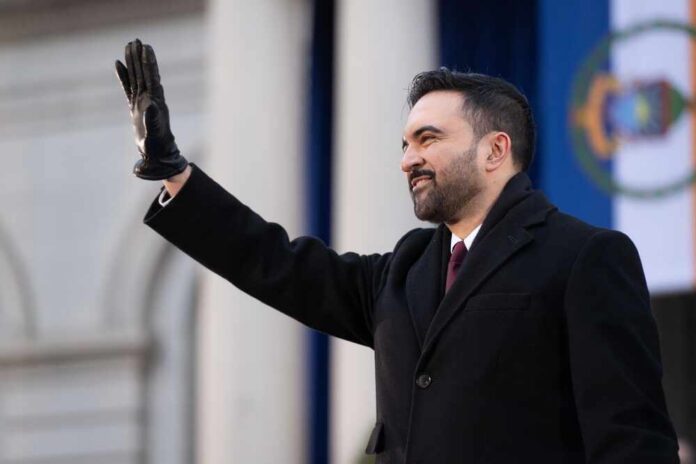
New York City Mayor Zohran Mamdani’s highly publicized Ramadan celebrations have sparked fierce backlash from conservatives and Jewish community leaders, raising alarms about divisive identity politics and security threats in America’s largest city.
Story Highlights
- Mamdani hosts unprecedented public iftars at City Hall, Rikers Island, and Harlem, framing Muslim visibility as defiance against critics
- Far-right activists and politicians link events to ISIS and 9/11, while an ISIS-inspired bomb plot targeting the mayor was thwarted by FBI
- Jewish community leaders express concern over Mamdani’s pro-Palestinian gatherings amid ongoing Middle East tensions
- Mayor dismisses criticism as “bigotry and racism,” vowing to continue controversial religious celebrations in public spaces
Mamdani’s Ramadan Push Divides New Yorkers
Zohran Mamdani, New York City’s first Muslim mayor, has thrust Islamic observances into the public square with a series of high-profile Ramadan events that have ignited controversy across political and religious lines. Since taking office less than four months ago, Mamdani has hosted iftars at City Hall, Rikers Island, and throughout Harlem, positioning these gatherings as celebrations of NYC’s one million Muslim residents. Conservative critics view this aggressive promotion of religious identity as government overreach that favors one faith while deepening cultural divisions during a time of heightened Middle East conflicts.
Security Threats and Extremist Rhetoric Escalate
The mayor’s religious celebrations have attracted dangerous attention, culminating in an ISIS-inspired bomb plot on March 7, 2026. Two Pennsylvania men were arrested after attempting to attack the mayor, with the FBI confirming the devices failed to detonate. Far-right activists including Laura Loomer and radio host Sid Rosenberg have escalated their rhetoric, with Loomer alleging ISIS salutes at Gracie Mansion and Rosenberg calling Mamdani a “cockroach” whose policies “scare New Yorkers.” Senator Tommy Tuberville amplified these concerns by reposting 9/11 imagery alongside Mamdani’s events, labeling him the “enemy inside the gates.” This pattern raises legitimate questions about whether public officials should use their platforms to promote specific religious practices that inflame tensions.
Pro-Palestinian Activism Strains Jewish Relations
Mamdani’s City Hall iftar featured the family of Palestinian activist Mahmoud Khalil, a decision that alarmed Jewish community organizations already concerned about the mayor’s pro-Palestinian stance. Jewish leaders have raised objections to Mamdani’s gatherings with pro-Palestinian activists, viewing them as insensitive given ongoing conflicts in Gaza and heightened antisemitic incidents nationwide. The mayor’s criticism of President Trump’s Iran policy further antagonized conservatives who support strong action against Iranian terrorism. These controversies echo Mamdani’s earlier World Hijab Day post on February 6, 2026, where he praised the hijab as “devotion and pride” while ignoring Iran’s brutal enforcement of mandatory hijab laws that have sparked women’s rights protests.
Constitutional Concerns Over Religious Favoritism
Economist Timur Kuran warned that such government-sponsored religious displays risk favoritism that deepens America’s political rifts, a concern that resonates with constitutional principles of limited government and religious neutrality. While Mamdani frames his actions as normalizing Muslim life in NYC, his defiant stance—stating “Let there be as much outrage” and “This is me just being a Muslim New Yorker”—suggests a deliberate provocation rather than genuine inclusion. The mayor’s aunt reportedly avoided wearing hijab on subways post-9/11 due to safety concerns, yet Mamdani now uses executive power to amplify religious identity in ways that previous mayors avoided. This selective government promotion of faith undermines the American tradition of keeping personal religious expression separate from official duties, especially when such displays coincide with security threats and community divisions.
Mamdani Celebrates Eid Mubarak by Lighting Up NYC and No One Is Impressedhttps://t.co/b5p7LAFsF0
Like my writing? Check out my first book: Gaslight, How the Democratic Party Lost Its Mind to Radical Leftism and Abuses Voters in the Process, available now on Amazon!… pic.twitter.com/kBZVKGb2fl
— Amy Curtis (@RantyAmyCurtis) March 20, 2026
Mamdani’s tenure highlights the dangers of identity politics infiltrating city governance. His four-month administration has prioritized religious symbolism over the practical concerns of New Yorkers facing crime, inflation, and economic uncertainty. By framing legitimate security concerns and constitutional objections as mere “bigotry,” the mayor dismisses the valid frustrations of residents who expect leaders to unite rather than divide. The escalating violence, from street protests to bomb plots, demonstrates the real-world consequences when elected officials prioritize progressive identity agendas over public safety and social cohesion. As Ramadan observances continue, the question remains whether Mamdani will moderate his approach or further polarize the city he was elected to serve.
Sources:
Mamdani’s Public Observance Of Ramadan Highlights Islam In NYC – WUSF
New York Mayor Mamdani Faces Backlash Praising Hijab Symbol Muslim Heritage Devotion – India Today
Mamdani’s Public Observance Of Ramadan Highlights Islam In NYC – TPR
NYC Jewish Groups Raise Concern About Mamdani’s Gatherings With Pro-Palestinian Activists – JTA
Mamdani Put Ramadan At The Center Of NYC’s Cultural Life Bringing Joy And A Backlash – WSHU