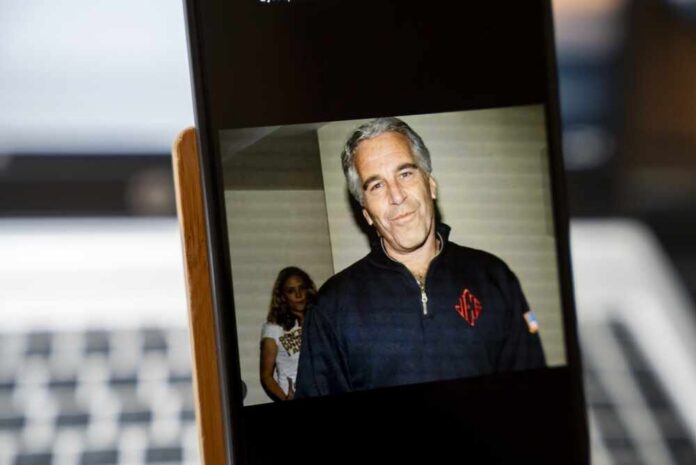
Newly released surveillance footage reveals federal prison guards systematically ignored mandatory safety checks during the hours leading to Jeffrey Epstein’s death, exposing catastrophic failures in a case where government officials assured Americans all protocols were followed.
Story Highlights
- Corrections officers failed to conduct required 30-minute check-ins on Epstein throughout the night he died in federal custody
- Independent video analysts conclude an orange-clad figure seen approaching Epstein’s tier was more likely an inmate than a guard, contradicting official government claims
- Attorney General Pam Bondi made false statements about surveillance system resets that were later contradicted by government sources
- Prison guard reported suspicious document shredding to FBI days after Epstein’s death, suggesting potential evidence destruction
- Multiple cameras covering critical areas mysteriously failed to record, while released footage appears to be screen recordings rather than raw files
Federal Prison Protocols Ignored on Critical Night
Prison guards at Manhattan’s Metropolitan Correctional Center systematically failed to conduct mandatory 30-minute welfare checks on Jeffrey Epstein during the night of August 9-10, 2019. The convicted sex trafficker was last seen on surveillance footage at 7:49 p.m. after completing an unmonitored phone call with his girlfriend in Belarus. Despite federal regulations requiring regular inmate checks in the Special Housing Unit, no guard verified Epstein’s condition until officers discovered his body at 6:30 a.m. the following morning. This eleven-hour gap without required supervision represents a fundamental breakdown in institutional protocols designed to prevent exactly this outcome.
Mysterious Orange Figure Contradicts Official Narrative
At 10:39 p.m., surveillance cameras captured an orange-colored shape moving up the stairs toward Epstein’s housing tier—the last documented approach to his cell area. While government investigators initially claimed this figure was definitively a corrections officer carrying linens, newly released FBI documents reveal agents believed the individual could possibly be an inmate. Independent video analysts consulted by CBS News determined the movement pattern was more consistent with someone wearing an orange prison uniform than a corrections officer. Prison employees told investigators that moving an inmate at that hour would be highly unusual, raising questions about who actually accessed Epstein’s tier and why.
Top Officials Make Contradictory Claims About Evidence
Attorney General Pam Bondi publicly stated the prison’s security system had a nightly reset causing one minute of lost video footage each night. Government sources subsequently told CBS News this statement was factually incorrect, though the Bureau of Prisons initially confirmed Bondi’s claim before the contradiction emerged. The Justice Department Inspector General’s report acknowledged chronic staffing shortages and failures to maintain quality camera coverage throughout the facility. Multiple cameras that could have provided crucial angles of the Special Housing Unit common area inexplicably failed to record. Additionally, videos from two other strategic locations—the elevator bank and guard desk—have never been released to the public despite their obvious relevance.
Evidence Tampering and System Failures Raise Accountability Questions
A correctional officer contacted the FBI in March 2026 reporting suspicious document shredding that occurred days after Epstein’s death, according to the Miami Herald. This revelation suggests potential destruction of evidence during a critical period when all materials should have been preserved for investigation. The surveillance footage released by the government contains visible cursor movements and onscreen menus, indicating officials provided screen recordings rather than raw DVR files despite attestations the footage was unaltered. The FBI seized the prison’s entire digital video recorder system five days after Epstein’s death, yet questions persist about the completeness and authenticity of evidence provided to investigators and the public.
The Bureau of Prisons Northeast regional director acknowledged the unmonitored phone call Epstein made was extremely concerning, admitting investigators will never know what transpired during that conversation or whether it contributed to subsequent events. While the official conclusion remains suicide, the investigation’s credibility has been severely undermined by documented procedural failures, contradictory official statements, and unexplained gaps in surveillance coverage. For Americans who expect transparency and accountability from federal institutions, this case exemplifies how government agencies can control narratives through selective evidence release and contradictory explanations that erode public trust in official conclusions.
Sources:
CBS News: Jeffrey Epstein jail video investigation
Miami Herald: Prison guard reported suspicious document shredding to FBI