As blue-state regulators push to police what pregnancy centers can say, a major court fight now tests whether “consumer protection” will be used to choke off pro-life speech while mail-order abortion pills expand nationwide.
Quick Take
- California’s attorney general is suing Heartbeat International and RealOptions Obria over claims about “abortion pill reversal,” with trial expected in April 2026.
- Thomas More Society argues the case is about First Amendment protections and whether states can restrict pregnancy centers from advertising information they say helps women who regret starting a chemical abortion.
- National pro-life legal groups view abortion pill reversal litigation as a strategic battleground that could reshape regulation of crisis pregnancy centers.
What the California lawsuit is really about
California Attorney General Rob Bonta filed suit in September 2023 against Heartbeat International and RealOptions Obria, seeking to block them from advertising abortion pill reversal as “safe and effective.” The case has moved past early procedural fights; a court rejected certain challenges in 2024, and the litigation is proceeding toward an expected April 2026 trial date. At stake is whether the state can treat certain pro-life advertising claims as unlawful medical marketing.
Heartbeat International operates the Abortion Pill Rescue Network, a hotline that connects women who have taken mifepristone—but not yet the second drug, misoprostol—to providers who may prescribe progesterone. Supporters describe that protocol as a potential way to counter mifepristone’s effects during a narrow time window. Critics, including state officials in litigation, argue the safety-and-efficacy message is not adequately proven and should not be promoted as established medical fact.
How “abortion pill reversal” became a legal flashpoint
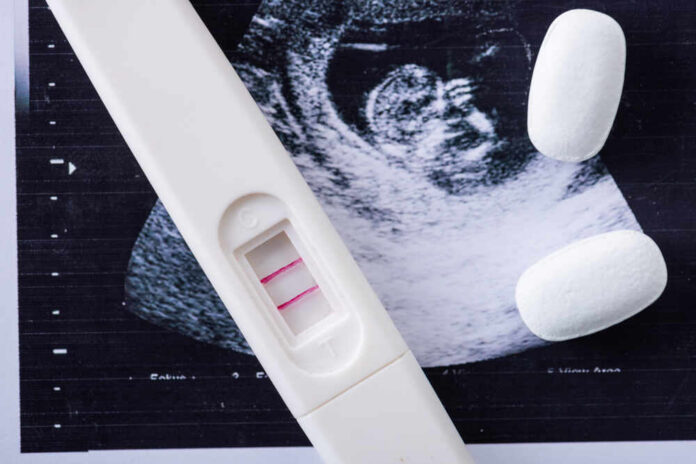
The medication abortion process typically involves two drugs: mifepristone, which blocks progesterone, and misoprostol, which causes contractions. Abortion pill reversal is generally described as giving progesterone after mifepristone but before misoprostol. After the Supreme Court’s Dobbs decision in 2022, more than a dozen states moved toward policies requiring abortion providers to inform patients about the possibility of reversal, accelerating political and legal conflict over what providers must say.
Independent reporting describes abortion pill reversal as a “linchpin” in a broader strategy to expand legal protections for crisis pregnancy centers by framing state oversight as unconstitutional “chilling” of speech. Those recordings and accounts point to an organized approach: challenge blue-state enforcement actions, seek precedent limiting regulation of pregnancy-center messaging, and use speech protections to shield centers from scrutiny.
Mail-order abortion pills and the new pressure on regulation
Thomas More Society and Heartbeat International have also criticized the FDA’s rollback of certain safety protections related to mifepristone distribution, including broader availability through mail. Their argument, as presented in their own materials, is that remote distribution increases risks such as coercion, missed medical complications, and weaker safeguards that would normally occur with in-person evaluation.
That dispute matters because it highlights an uncomfortable policy contradiction that even some outside observers have pointed out: pro-life groups often oppose telehealth models for dispensing abortion pills, yet the Abortion Pill Rescue Network itself relies on a hotline model to connect women to progesterone prescriptions. From a constitutional perspective, the looming question is whether regulators will treat one side’s telehealth messaging as protected speech while punishing the other side’s claims as unlawful advertising, depending on political priorities.
What’s strong evidence—and what’s still unclear
The strongest, most verifiable facts are procedural and institutional: who sued whom, when the complaint was filed, the existence of parallel litigation in New York, and the timeline pointing to an April 2026 trial in California.
Heartbeat International has publicly claimed the network has “saved more than 7,000 lives,” but this figure is not independently verified in the materials supplied. For readers trying to cut through the noise, the practical takeaway is straightforward: courts will likely decide first what each side is legally allowed to say and advertise, and only second how regulators may police disputed claims. That ordering can shape public debate long before medical questions are resolved.
Why conservatives are watching this case beyond abortion politics
For many Americans, the core issue is not whether California favors abortion rights—it plainly does—but whether state power can be used to narrowly target disfavored viewpoints under the banner of “protecting consumers.” When government decides which advocacy messages may be advertised, the risk of viewpoint discrimination rises, especially in ideologically one-party states. At the same time, states do have authority to regulate medical advertising, creating a real constitutional tension the courts must untangle.
With the trial date approaching, the immediate reality is that this fight sits at the intersection of abortion policy, speech rights, and the expanding mail-order medication landscape shaped during the prior administration. The case could set precedent for how aggressively states can regulate crisis pregnancy centers—either by tightening oversight of claims or, paradoxically, by prompting rulings that limit oversight in the name of free speech.
Sources:
https://www.thomasmoresociety.org/news/the-fight-to-protect-abortion-pill-reversal
https://www.osvnews.com/new-york-attorney-sues-pro-life-groups-over-abortion-pill-reversal-process/
https://www.thomasmoresociety.org/case/apr
https://www.thomasmoresociety.org/news/tms-weekly-dispatch-2-27-26