California taxpayers are watching a wildlife “crossing” balloon to about $114 million—then hearing the project’s leadership point the finger at Trump-era tariffs and the weather.
Quick Take
- The Wallis Annenberg Wildlife Crossing over US-101 near Agoura Hills is now pegged at roughly $114 million, up from earlier estimates around $92 million.
- In February 2026, the California Transportation Commission approved $18.8 million more to push the project toward completion.
- Supporters argue the crossing reduces wildlife-vehicle collisions and reconnects fragmented habitat for mountain lions and other species.
- Critics argue the price tag, timeline slips, and public funding share raise basic accountability questions during ongoing state budget stress.
A $114 Million Crossing Becomes a Symbol of California’s Spending Culture
California’s Wallis Annenberg Wildlife Crossing—spanning ten lanes of US-101 between Calabasas and Agoura Hills—has become a lightning rod because the price has climbed to about $114 million. Early reporting put project estimates around $92 million, with a mix of private and public funding, before overruns and new allocations pushed the total higher. The project is designed to link the Santa Monica Mountains with nearby protected lands and restore wildlife movement across a major freeway.
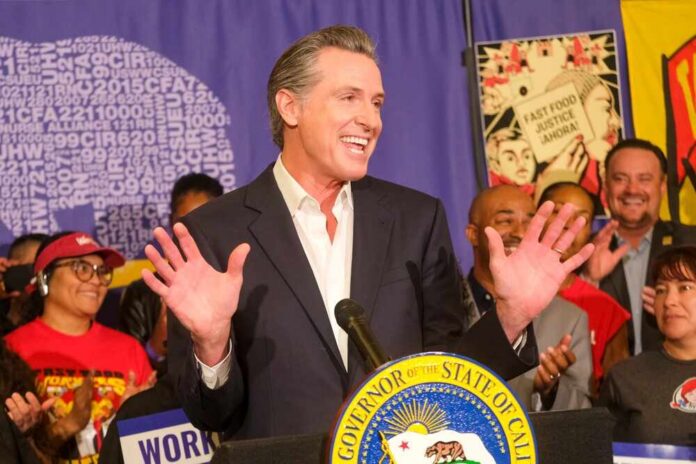
Governor Gavin Newsom broke ground in 2022 and publicly framed the project as a model for balancing conservation and development. That vision has continued in official messaging that highlights driver safety and habitat connectivity. At the same time, critics have seized on the gap between a big, photogenic promise and the hard realities of costs, deadlines, and who ultimately pays. The state’s role matters because public funding, not philanthropy, becomes the backstop when budgets run short.
Where the New Money Came From—and What Still Isn’t Finished
In February 2026, the California Transportation Commission approved an additional $18.8 million, described as a final funding push. State announcements and local coverage say the core bridge structure over the freeway is substantially complete, but the work is not “done” in the practical sense. Reports indicate the remaining scope includes hillside connections and an Agoura Road tunnel, plus finishing the habitat buildout—soil layers, plantings, and sound walls meant to guide animals safely across.
Construction milestones show real progress. One update described the structure as massive—tens of millions of pounds of concrete—while another highlighted staged habitat work such as soil placement and plans for thousands of native plants. Even with that momentum, the schedule has shifted; multiple reports now point to fall 2026 as the likely completion window rather than earlier targets. For taxpayers, the political question is straightforward: when the timeline slips, does oversight tighten or does the project simply receive another check?
The Blame Game: Tariffs, Inflation, Labor, and Weather
Project leadership has publicly rejected the “boondoggle” label and attributed overruns to factors like tariffs, inflation, and labor pressures—along with weather—arguing such challenges are common in large infrastructure projects. Those explanations may resonate with anyone who has watched costs rise in construction nationwide. Still, what remains unclear from public reporting is which overruns were unavoidable versus which were driven by planning choices, contracting assumptions, or scope expansion. Without clear, itemized accountability, finger-pointing becomes a substitute for transparency.
There is also a political wrinkle that conservatives are not ignoring: blaming “Trump-era tariffs” may work as a talking point, but it does not resolve the basic management problem—California officials are the ones administering the project and approving new public allocations. With President Trump back in office in 2026, the contrast is sharper: Washington is no longer run by the Biden-era crowd that tolerated endless spending sprees, but California’s one-party leadership still operates as if budgets are optional and overruns are routine.
Safety and Conservation Claims vs. Cheaper Alternatives
Supporters emphasize two benefits: fewer wildlife-vehicle collisions for the roughly 300,000 daily drivers on US-101 and improved genetic connectivity for a small, isolated mountain lion population. Conservation reporting has noted that habitat fragmentation can trap wildlife in shrinking ranges. Critics counter that connectivity can sometimes be addressed through less expensive measures. A frequently cited academic point in the coverage is that periodic translocation—moving a single lion per generation—could reduce genetic risk at far lower cost, raising questions about proportionality.
Even if the crossing delivers real ecological benefits, the policy debate is about tradeoffs and precedent. California has highlighted this project as a “global model” while also allocating substantial sums for additional wildlife crossings statewide. If the largest crossing in the world requires repeated cash infusions and extended timelines, lawmakers and taxpayers deserve proof that the process will not become a template for future cost overruns. Public trust erodes when “mitigation” programs feel like blank checks rather than carefully audited commitments.
What Accountability Looks Like as the Project Nears the Finish Line
With major structural work reportedly complete and habitat installation underway, the project is entering the phase where California should be able to publish clear deliverables: final costs, firm completion dates, and measurable safety outcomes such as collision reductions. That kind of documentation is how government demonstrates competence and respect for taxpayers. When officials ask working families to accept inflation, higher taxes, and endless “fees,” the least they can provide is receipts, timelines, and results.
For conservatives watching from across the country, the story is not really about butterflies versus mountain lions. It is about a familiar governing pattern: big promises, big spending, and excuses when the bill comes due. The wildlife crossing may eventually function as intended, but California’s leaders still have to answer why a project sold with clear numbers and deadlines needed repeated rescues. In a time when Americans are demanding fiscal sanity, this is exactly the kind of test that exposes whether leaders serve citizens or special-interest narratives.
Sources:
California: The Wallis Annenberg Wildlife Crossing: A $114 Million Butterfly Bridge
California to provide $18 million to finish wildlife crossing on 101 Freeway in Agoura Hills
Wildlife Bridge California US101
World’s largest wildlife crossing in CA hits milestone amid safety, cost concerns
California closes in on completing the world’s largest wildlife crossing