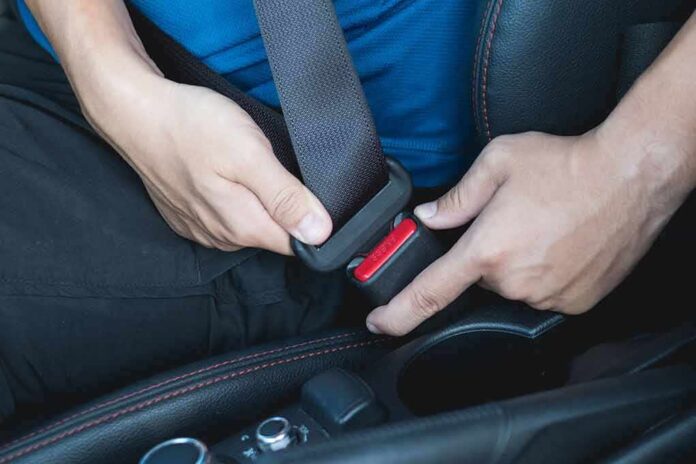
California will soon judge if a teen’s seat belt “fits right” and fine drivers when it doesn’t, turning a family errand into a legal test of posture, belt angle, and thigh contact.
Story Snapshot
- California’s AB 435 ties booster use to a five-part seat-belt fit test, not age alone.
- The rule becomes operative January 1, 2027; outcome data do not exist yet.
- Reports cite fines near $490 for improper restraint of a child under 16, though figures vary.
- Studies link booster laws to fewer serious injuries, but effects by older ages are mixed.
What California’s New Rule Actually Requires
California’s AB 435 changes how parents decide if a child needs a booster. The law sets a five-part test based on anatomy and belt fit. The child must sit all the way back. The knees must bend over the seat edge. The shoulder belt must cross the middle of the chest and shoulder, not the neck. The lap belt must rest low on the thighs. The child must hold that position for the whole trip. If the belt fails this test, a booster is expected.
Lawmakers tied this to existing child passenger code and set the new provisions to start January 1, 2027. That means families, schools, and carpools have time to adjust. It also means there are no results yet. No one can point to crash data under the new test. Claims about effects on injuries or tickets are still projections. Clear guidance and public education will matter before the rule takes hold statewide.
Safety Rationale And The Evidence We Have
Supporters link the test to basic injury science. Neck contact from a shoulder belt can hurt the airway. A lap belt across the belly can injure organs. Better belt position should lower risk. Past research found booster laws were tied to a 17 percent drop in fatal or incapacitating injuries among children overall, with broader injury reductions as well. Older California data showed injury drops for ages 0 to 3, but no clear drop for ages 4 to 7 in that period.
That mixed record matters. It suggests seat rules can help, but results vary by age, car design, and how people comply. AB 435 moves beyond age and height alone. It checks how the belt sits on a real child’s body. That aim makes sense on paper. Still, the state has not shown that this exact five-step test has been validated against crash outcomes for older kids. Without those numbers, questions about real gains for ages 8 to 15 will persist.
Enforcement, Fines, And Real-World Friction
Reports say drivers can face a fine near $490 if a child under 16 is not properly restrained, but different summaries do not match on the exact penalty. One mentions higher totals once fees are added. The final figure will depend on the code, court schedules, and surcharges, which need clarification before 2027. This uncertainty fuels public doubt and gives both sides ammo in the debate over fairness and government reach.
🇺🇸 Newsom's new law could require even 15-year-olds to ride in booster seats
Starting January 1, 2027, California children aged 8 to 15 must pass a five-step seat belt fit test.
The requirements include:
* Back resting against the seat.
* Knees bending over the seat's edge.… pic.twitter.com/R6Vz0wy2Cb
— Mario Nawfal (@MarioNawfal) November 26, 2026
Critics focus on enforcement. They argue posture cannot be policed in moving traffic and that teens will slouch or shrug off the rules. They warn that a detailed checklist shifts power to the state and adds another large fine to family budgets. A Newsmax panel framed the change as “nanny state” control and questioned how officers would judge a child’s position during an ordinary stop. Those concerns reflect a wider distrust of rules that feel micromanaging.
Costs, Compliance, And Who Bears The Burden
Parents will shoulder the cost of new boosters for shorter or smaller teens. Drivers will carry the legal risk if any one of the five points fails. Families with multiple kids or carpool routines may face extra hassle. On the flip side, if the test drives better belt fit, it could spare children severe injuries in rare but life-altering crashes. That is the public tradeoff. The law’s promise rises or falls on clear guidance, even-handed enforcement, and proof the rule saves lives.
What To Watch Before 2027
Watch for the state to publish a plain-language guide with photos for each step. Look for training plans for police and school resource officers. Expect updates on the actual fine amount and whether first offenses bring warnings. After launch, independent studies should track crash injuries for ages 8 to 15. If injuries drop, support will grow. If tickets spike without safety gains, pressure to revise the rule will rise.
Sources:
pjmedia.com, leginfo.legislature.ca.gov, thebulldog.law, laist.com, legiscan.com, pubmed.ncbi.nlm.nih.gov