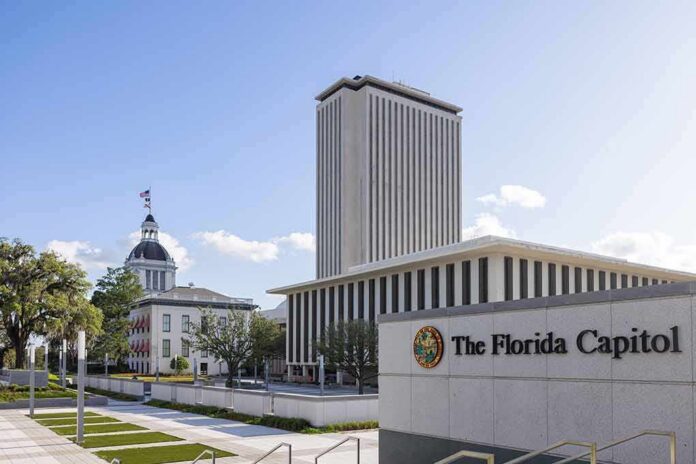
Florida’s new terror-designation law forced a major Muslim civil-rights group to shut its Florida operations after a federal judge refused to block the label.
Story Snapshot
- Florida formally labeled CAIR a domestic terrorist organization; the designation took effect November 5, 2026.
- A federal judge denied CAIR’s bid to halt the label, allowing state limits on funding and contracts to kick in.
- CAIR’s Florida chapter suspended operations, citing the legal and financial fallout from the designation.
- The court shielded legal-service providers from “material support” enforcement while the case continues.
What Florida Did And Why It Mattered This Week
Governor Ron DeSantis and the Florida Cabinet voted on September 29 to designate the Council on American-Islamic Relations and its Florida chapter as domestic terrorist organizations under a new state law. The designation took effect November 5, after a federal judge declined to block it the day before. The law, described in reports as House Bill 1471, ties the label to state penalties. These include strict limits on state funding, contracts, and other benefits for listed groups.
Chief U.S. District Judge Allen Winsor rejected CAIR’s emergency request to stop the designation on November 4. The court said CAIR had not shown it was likely to win at this stage. Because the judge denied that relief, the state’s action went into effect as planned. The ruling did not end the case, but it set the near-term rules that now govern CAIR in Florida.
Immediate Fallout: CAIR-Florida Suspends Operations
As the designation took effect, CAIR’s Florida chapter announced it was suspending operations. Local and national outlets reported that advocacy work and other services were winding down or stopping. The shutdown followed the new law’s penalties, which can cut off funding and block state business for listed groups. CAIR called the move forced and said the label harms Muslim communities it serves, but the organization said it plans to keep fighting in court.
Florida officials framed the result as proof the law has teeth. The governor’s chief of staff publicly praised the court’s decision and linked it to CAIR-Florida’s closure. The state argues the designation fits the statute and protects the public. Reports attribute the state’s rationale to alleged ties to groups like Hamas and the Muslim Brotherhood, though those materials were not published in the accounts reviewed.
What The Judge Actually Decided — And What He Did Not
The court’s decision was a preliminary ruling. Judge Winsor did not make final findings that CAIR is a terrorist organization. He decided only that CAIR had not met the high bar for an early block on the law, so Florida could proceed for now. He also granted narrow protection for legal-service providers. Prosecutors cannot treat lawyers helping CAIR or its staff as giving banned “material support” while the case continues.
That carve-out suggests the court sees real constitutional stakes for access to counsel. But the larger designation stood. The judge also noted the system is unusual because the federal government has handled most terror listings in the past. Even so, the court allowed Florida’s approach to run while the legal fight advances.
Civil Liberties Clash With State Power
CAIR and its allies say the label is baseless and violates the First Amendment and due process. They stress that neither CAIR nor CAIR-Florida has been charged or convicted of a crime. They argue the regime punishes speech and advocacy by cutting off funding and scaring off donors and partners. CAIR-Florida’s director compared the law to systems where leaders punish dissent without fair process, and the group says it will appeal.
JUST IN: Federal Judge Hands Florida Major Win In CAIR Terror-Designation Fight .https://t.co/UEkxf4FyA6 pic.twitter.com/OFYhDsx8PQ
— Tater Salad (@VanScheurich) November 6, 2026
Supporters of the law say Florida must not wait on Washington to act. They point to past federal cases that examined links between U.S. groups and foreign terrorist organizations. They argue that cutting off state benefits to suspect entities is common sense. They also say the court’s refusal to freeze the label shows the state met its early burden under the new statute, at least for now.
Why This Fight Hits A National Nerve
This case blends two deep worries many Americans share. People on the right fear weak enforcement against groups they see as risky. People on the left fear the government will use labels to silence groups it dislikes. Both sides see an elite political class turning rules into weapons. This story shows a state using new power to hit a well-known civil-rights group with swift, sweeping penalties, before a final court ruling on the facts.
What To Watch Next
Watch for appeals and a fuller record. The public reporting so far does not include the state’s detailed evidence behind the designation. Future filings may reveal more about how Florida applied each part of the statute to CAIR. Also watch whether donors, cities, and schools change their ties to groups on the list. Finally, look for other states to copy Florida’s model, which could expand this clash far beyond one chapter.
Sources:
lifesitenews.com, sun-sentinel.com, religionnews.com, wfla.com, cltampa.com, wctv.tv, wlrn.org, tallahassee.com, wusf.org