President Trump publicly blasted his onetime lawyer Alina Habba Mildon over a reported $50 million contract tied to a pardoned financier, reviving fears that power and money still mingle too easily at the top.
Story Snapshot
- Trump called Habba Mildon’s reported $50 million deal “not acceptable” after a related pardon drew scrutiny.
- Reports say the Herrera family hired Habba Mildon weeks before President Trump granted Julio Herrera Velutini a pardon.
- Habba Mildon denies any work on, payment for, or contact about a pardon, calling links to the deal false.
- The clash spotlights how broad pardon power and private access can erode public trust.
What Triggered Trump’s Public Rebuke
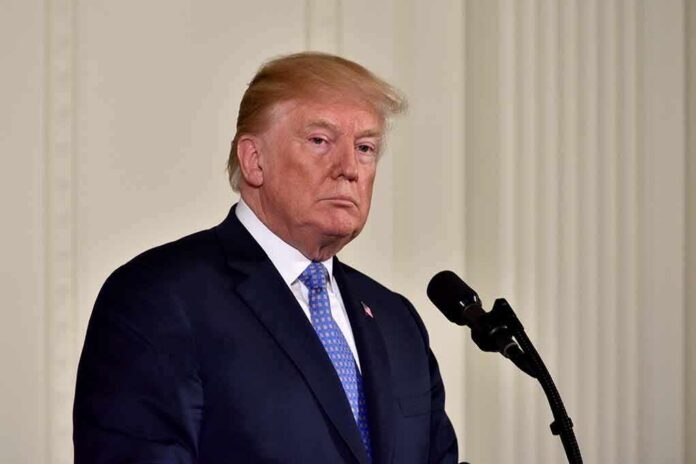
Reuters and several outlets reported that President Trump labeled Alina Habba Mildon’s reported $50 million arrangement with the family of Julio Herrera Velutini “not acceptable.” The reports followed a New York Times account stating the Herrera family guaranteed Habba Mildon more than $50 million over four years. That agreement began in early 2026, and Trump later granted Herrera a full and unconditional pardon. Trump’s comments came at a Mar-a-Lago event and in follow-on coverage.
Angry Trump trashes his ex-lawyer Alina Habba at Halloween party: 'Totally obnoxious". https://t.co/dSgu9hCViw Upset that he didn't get a piece of the pie for his purchased pardon, Trump publicly turned on one of his most loyal former lawyers on Saturday. He called Alina Habba… pic.twitter.com/v0Gz3CpDjM
— TexasBlue (@MakeTexasBlue22) November 1, 2026
The New York Times described Habba Mildon becoming general counsel to Concord Partners, an entity linked to Herrera’s family, and outlined the compensation structure. The reporting placed the employment start date weeks before the pardon. That sequence sparked claims of a troubling overlap between large private payments and official clemency. The Times story did not present proof that Trump received money or that a direct exchange was agreed. It focused on timing and the size of the package.
What Habba Mildon Says Did Not Happen
Habba Mildon has denied any role in securing a pardon. She said she was never paid to obtain clemency, never met with anyone at the White House or the Department of Justice about a pardon, and never did any pardon work for anyone. She also called any link between her job and the pardon false and defamatory. She suggested another attorney handled the relevant work. Multiple outlets carried her denials soon after the Times report drew attention.
The denials address three key points: payment, contact, and work. They do not claim that President Trump was promised any share of her compensation. Reports that Trump was upset about not getting a “cut” surfaced in partisan media chatter, but the firmer record shows Trump publicly condemning the arrangement, not claiming entitlement. Without documents or testimony to the contrary, the on-the-record dispute centers on optics, timing, and judgment, not a proved quid pro quo.
Why This Matters Beyond One Feud
The Constitution gives presidents sweeping pardon power. Courts have framed clemency as a core executive act, which makes it hard to police lines between poor judgment and corruption. Congress has few tools to limit it. That legal reality means even the appearance of private influence can damage trust. People on the left and the right see a system where insiders buy access while regular citizens wait in line and follow rules they did not write.
Trump attacked his former lawyer, Alina Habba Mildon over her $50 million deal with a Venezuelan family who wanted a pardon from him. saying it was “totally obnoxious and outrageous."
Translation, Alina didn't give him a cut.
— Janice Hough (@leftcoastbabe) November 1, 2026
History shows these storms come up often. Fights over pardons trailed many presidents, from Andrew Johnson to Bill Clinton. Watchdogs warn that when big money sits near unchecked power, confidence falls. That fear cuts across party lines. It feeds the belief that elites play by different rules. Even without a proven crime, the cycle of pay, access, and favors teaches the public to expect the worst and stop believing leaders act for the common good.
What We Know—and Do Not Know—Right Now
We know the reported contract was large, unusual in structure, and began weeks before a pardon. We know President Trump disapproved of the arrangement in strong terms. We know Habba Mildon denies any role in the clemency process. We do not have official findings that the pardon was bought or that Trump sought a payment. Until investigators or records show more, the solid facts concern timing, statements by both sides, and the broader risk to public trust.
Sources:
mediaite.com, yahoo.com, timesofindia.indiatimes.com, rawstory.com, newsobserver.com