In modern American cities, fights about a single protest video are rarely about a single sentence; they are referendums on who sets the rules for force, what obligations police owe in charged immigration contexts, and how mayors should exercise real—not symbolic—oversight of their chiefs.
The Short Version
- Raman’s since-deleted campaign clip criticized Chief Jim McDonnell’s leadership and called for new LAPD leadership; her team says the “fascist liars” line targeted ICE and Trump-era immigration policy, not LAPD brass.
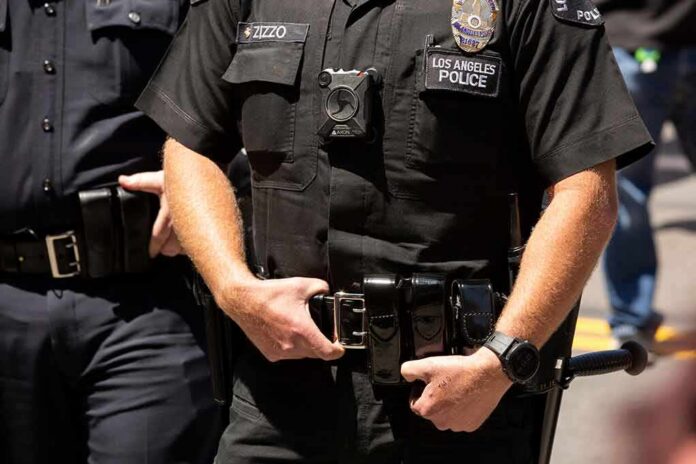
- LAPD force against anti-ICE protests—hard-foam rounds, other less-lethal munitions—anchors Raman’s critique; McDonnell counters with a public-safety frame, citing 52 injured officers and attacks with commercial-grade fireworks.
- The evidentiary center of gravity is mixed: force occurred, officers were injured; the record offered here does not independently resolve proportionality, command authorization, or whether LAPD “protected ICE” over residents.
- Los Angeles has a long architecture for police accountability; leadership disputes are a feature of that system, not an aberration, and often sharpen around immigration enforcement.
What this controversy is actually about: authority over public order in an immigration flashpoint
The video roiled because it bound two combustible strands—LAPD’s posture at anti-ICE protests and a mayoral candidate’s promise to replace a sitting chief. In the clip, Nithya Raman argued Chief Jim McDonnell “has not met this moment,” pledged a chief attentive to immigrant Angelenos, and linked that critique to LAPD’s uses of tear gas and other less-lethal force at protests over federal immigration arrests. The line “Only you can stop fascist liars,” placed on screen as McDonnell and Mayor Karen Bass were visually referenced, detonated the politics; Raman’s campaign later said the phrase referred to ICE and the Trump administration, not to McDonnell or LAPD officers, and blamed editing context before deleting the post.
McDonnell responded by shifting the lens from rhetoric to operational risk: 52 officers injured, with concussive and hearing damage, fireworks fired directly at police, and what he cast as a disciplined response under duress. That contrast—protesters’ rights and departmental restraint versus officer harm—has structured countless policing disputes. It does again here.
The factual core: what is known, what is asserted, and what is missing
Some facts are clear. Less-lethal munitions were used at anti-ICE demonstrations; the Los Angeles Times and local broadcasters reported on hard-foam projectiles and chemical agents deployed in crowd control. McDonnell’s injury count—52 officers injured—is a specific, on-record figure he repeated in interviews, paired with detailed claims about fireworks, concussive effects, and hearing loss. Raman publicly tied her leadership critique to those protest responses and promised a cultural shift and new leadership, not merely policy tweaks.
But key adjudicative elements are absent in the record provided. We do not see LAPD’s incident command logs, body-worn camera compilations, dispersal-warning timelines, or authorizations governing chemical agents. Without those, proportionality—whether the force used matched actual threats at given times and places—cannot be resolved from this file. Nor can a causal line be drawn from the chief’s office to specific deployments at street level. Likewise, the allegation that LAPD “protected ICE” over residents lacks documentary ballast here—no mutual-aid directives or interagency orders are presented to show preferential posture.
The rhetoric problem: why a three-word phrase overwhelms a structural argument
Campaigns know short clips beat memos; that is why the three-word phrase became the story frame. ABC7 and others described the video’s juxtaposition of the line with images of city leadership; deletion then acted as an accelerant, allowing reposts and screenshots to fix the association in public memory. Raman’s clarification is plausible on its face—her broader immigration-policy critique runs toward federal enforcement—but it competes with an indelible visual edit. In electoral settings, edit context rarely defeats what people believe they saw. That dynamic, not a resolved factual finding about who is a “fascist,” explains the staying power of the controversy more than anything else.
McDonnell and the police union leveraged that dynamic effectively, reframing the issue as readiness and public safety—and warning of staffing flight if a reform-forward mayor prevails. Those are advocacy claims, not neutral findings, but they resonate because they are specific (injury counts, fireworks, hearing loss) and human-scale; numbers and bodies often decide public reception long before policy white papers arrive.
How Los Angeles got here: oversight by design, conflict by necessity
Los Angeles rebuilt its police-governance architecture after the Rodney King era precisely so that chiefs and mayors would be forced to answer for crowd control and use of force. The Christopher Commission’s blueprint, voter-approved Charter Amendment F, and subsequent strengthening of the Police Commission created a model where leadership tenure is limited and civilian oversight is not ornamental but expected to intervene on matters of culture, tactics, and accountability. In that system, a candidate’s promise to replace a chief is not a norm breach; it is the point of civilian control. Recurring disputes over protest tactics, immigration enforcement posture, and accountability reflect this structure working—messily—rather than failing.
That said, the structure works best when claims are tested against records. In past cycles, the Commission and inspector general have demanded comparative use-of-force analyses and after-action reviews; similar document-driven scrutiny would separate rhetoric from governance here as well. Absent that paper trail, both sides are arguing from narrative: one of civil-liberties overreach tied to culture at the top; the other of officer endangerment and discipline under assault.
Where the real debate belongs: three questions that decide substance
First, proportionality and policy compliance: Were chemical agents and kinetic impact projectiles authorized and used in line with LAPD policy and constitutional standards during the anti-ICE protests? That answer lives in use-of-force reports, body-cam footage, dispersal orders, supervisor sign-offs, and injury documentation on both sides.
Second, command responsibility: What did the chief, incident commanders, and the Police Commission authorize or prohibit, and when? Leadership critique is strongest when tethered to documented directives and review findings rather than to title alone; depositions and command emails clarify where decisions were made and why.
Third, interagency posture: Did LAPD operationalize crowd-control decisions in ways that functionally privileged ICE movements over residents’ protest rights? Interagency agreements, radio traffic, staging maps, and escort protocols are the evidence—not slogans—for that claim.
LAPD Chief Jim McDonnell answered DSA mayoral candidate Nithya Raman.
She posted, then deleted, a campaign video with the line “Only you can stop fascist liars,” while images of Mayor Karen Bass and McDonnell hit the screen. In the same clip she said McDonnell “has not met this… pic.twitter.com/v2nnTV5enj
— Patricia 🇺🇸 (@1109Patricia) October 9, 2026
What to watch going forward
Rhetoric will keep winning headlines, but records will decide governance. If Commission or inspector-general reviews surface detailed timelines, authorization chains, and comparative force data, the city can judge both the crowd-control response and the leadership that shaped it. If those documents stay out of view, the injury count and the viral clip will carry the argument by default—a poor way to make policy in a department whose legitimacy has always turned on transparent, specific accountability. In Los Angeles, chiefs come and go by design; the standard for changing them should be the evidentiary one the city built for itself after its hardest lessons.
Sources:
nbclosangeles.com, abc7.com, yahoo.com, nypost.com, latimes.com, calmatters.org