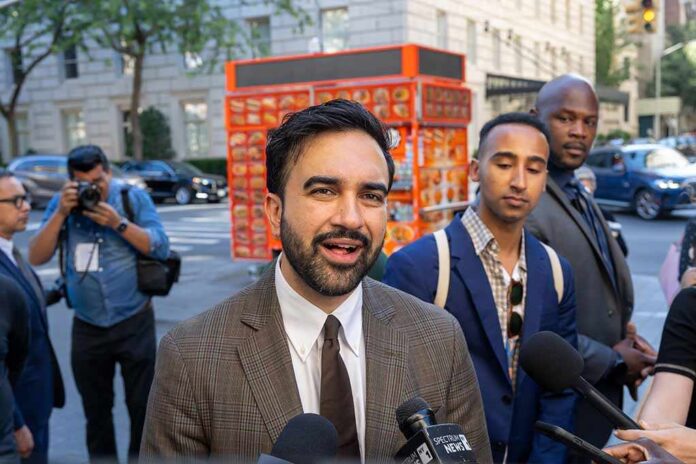
New York City’s mayor marked October 7 by mourning Israeli victims—then ignited fury by calling Israel’s Gaza war an “ongoing genocide.”
Story Snapshot
- Mayor Zohran Mamdani honored Israeli victims of October 7, then condemned Israel’s Gaza campaign as “ongoing genocide.”
- Israeli officials blasted the statement, calling Mamdani a “mouthpiece for Hamas propaganda.”
- Jewish and pro-Israel outlets said he politicized a day of mourning and attacked Israel.
- Mamdani has used similar language in past statements, tying remembrance to criticism of occupation and apartheid.
What Mamdani Said, And Why It Landed Like A Match
On October 7, 2026, Mayor Zohran Mamdani issued a formal statement. He called the Hamas assault “horrific war crimes,” mourned those killed, and cited the hostages taken that day. Then he said the suffering “did not begin nor end that day,” and condemned what he called Israel’s “ongoing genocide” in Gaza, along with “occupation,” “apartheid,” and “war crimes.” City outlets and national sites posted the full text soon after, making the wording and sequence clear to readers.
The choice to press genocide language on the anniversary triggered instant backlash. The New York Post highlighted the “ongoing genocide” claim. A regional outlet summarized the critique that he turned a remembrance into a political attack. Jewish and pro-Israel platforms argued he gave brief condolences, then framed Israel as the main wrongdoer. Supporters countered that he condemned Hamas first and pushed for human rights for everyone. The raw text supports both readings of order and emphasis.
Israel’s Official Rebuke And The Escalation Cycle
Israel’s government answered with unusually sharp words. The Foreign Ministry said Mamdani echoed Hamas propaganda and “normalized antisemitism.” That line hardened the response across media and social platforms. It also ensured the fight would center on labels and timing, not only on policy. Major outlets documented that Israel’s rebuke targeted the genocide charge and the shift of focus on a memorial day, which many leaders elsewhere use to condemn antisemitism and honor victims.
Mamdani’s record made the clash more intense. Prior coverage showed he linked peace to ending occupation and dismantling apartheid in 2023. That history led critics to see the 2026 message as part of a pattern, not a one-off lapse. At the same time, reporting noted that he opened by mourning Israeli victims and calling Hamas’s act a war crime. Those facts weaken claims that he denied Israeli suffering, while still leaving his strongest labels aimed at Israel’s conduct in Gaza.
Why This Matters To Voters Beyond New York
Americans on the right and left see a larger problem here. Leaders often speak in ways that divide people instead of building trust. Many citizens feel the “elites” protect themselves while they dodge hard truths. On charged dates, words carry extra weight. When a mayor pairs grief with harsh legal claims, even if sincere, it can look like politics first, community second. That fuels anger in a city already wary of rising hate and fraying civic norms.
🇺🇸🇮🇱🇵🇸 NYC Mayor Zohran Mamdani’s October 7 statement sparks backlash
On the third anniversary of the October 7, 2023 Hamas attack on Israel, New York City Mayor Zohran Mamdani acknowledged that Hamas killed more than 1,100 Israelis and abducted 251 people.
However, much of his… pic.twitter.com/0wgtS7L6YF
— GLOBAL UPDATES (@GLOBALUPDAw6o3) October 7, 2026
The lesson for leaders is simple, but hard in practice. Speak plainly about victims. Name the attackers. Then, if you raise policy, ground it in facts and next steps, not only in labels. Mamdani’s statement did start with grief and accountability for Hamas. But the pivot to “ongoing genocide” on this day guaranteed a fight over framing. That choice overshadowed his closing call for everyone to live with freedom, safety, and dignity—and kept the public locked in another bitter loop.
Sources:
thegatewaypundit.com, politico.com, redstate.com, washingtonexaminer.com