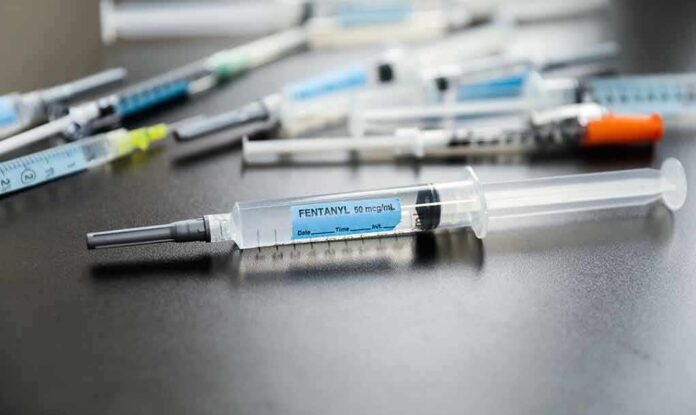
Illicit opioids, driven mainly by fentanyl, cost Americans an estimated $2.7 trillion in 2023 — a price tag that raises hard questions about what the Biden-era fentanyl strategy really delivered for the people who paid for it.
Story Snapshot
- The Biden administration poured billions into fentanyl enforcement and border security, calling it a “historic” push against the overdose epidemic.
- Federal spending for drug control agencies, including the Drug Enforcement Administration (DEA), climbed above $46 billion a year, funded by taxpayers.
- Despite big seizures and new technology, fentanyl stayed cheap and widely available, and the opioid crisis cost Americans $2.7 trillion in 2023 alone.
- Both right and left now question whether Washington’s expensive fentanyl gamble fixed the problem or mostly fed a growing enforcement bureaucracy.
The Bill for Biden’s Fentanyl Fight
White House budget documents show that the Biden administration treated fentanyl as a top national crisis and spent big to prove it. The fiscal year 2024 plan asked Congress for about $46.1 billion for national drug control agencies, a jump of $2.3 billion over the prior year. The fiscal year 2025 highlights list $6.5 billion for drug interdiction and a separate $1.0 billion for international drug control work, including efforts to disrupt supply chains abroad. All of this money comes from taxpayers, whether through income taxes, borrowing, or higher costs passed on through public programs.
The administration also requested a $1.2 billion national security supplemental to “build longer-term capacity to counter fentanyl.” That package included funding for 1,000 more United States Customs and Border Protection officers, added Homeland Security Investigations resources, and “cutting-edge” detection technology at ports of entry. On paper, this looked like a major escalation at the border. For many Americans on both sides of the aisle who worry about illegal drugs and weak borders, it sounded like Washington was finally getting serious. But the question remains: did this spending change what was happening in their communities, or just grow the enforcement footprint?
DEA Budgets and Seizures: Action or Just Activity?
Inside the Department of Justice, the Drug Enforcement Administration’s own budget grew alongside the White House plan. DEA’s fiscal year 2025 budget request totaled about $3.77 billion, including $2.687 billion for salaries and expenses and more than $650 million from its diversion control fee account. DEA Administrator Anne Milgram told Congress that DEA expected roughly $90 million in added costs just to keep current operations running, even as she touted big fentanyl seizures. In 2022, DEA reported seizing over 50.6 million fake prescription pills laced with fentanyl and more than 10,000 pounds of fentanyl powder, which its lab said equaled about 379 million potentially deadly doses.
On the surface, those numbers sound like clear victories. Agents stopping hundreds of millions of lethal doses should mean fewer dead Americans. But drug-market research paints a more troubling picture. A peer-reviewed study of illegally made fentanyl found that the purity-adjusted price of fentanyl powder fell by more than 50 percent between 2016 and 2021, with annual declines of about 17 percent. Falling prices usually signal that supply is steady or growing, not shrinking. That means traffickers kept finding ways around the very enforcement systems taxpayers were funding, and the market for fentanyl stayed strong despite record busts.
The $2.7 Trillion Question: What Did Taxpayers Get?
While budgets and seizure counts climbed, the human and economic damage from opioids stayed staggering. A 2025 White House analysis estimated that illicit opioids, mainly fentanyl, cost Americans about $2.7 trillion in 2023 alone, equal to nearly 10 percent of the entire U.S. economy. Of that total, around $1.1 trillion was tied to deaths, using 74,702 opioid fatalities and the “value of statistical life” plus related healthcare and productivity losses. Another $1.34 trillion came from lost quality of life for people living with addiction and its fallout. The study also put healthcare costs at $107 billion and labor productivity losses at another $107 billion, with crime-related costs adding $63 billion.
BIDEN’S DEA TOLD NOT TO SEIZE FENTANYL, BUT TO TRACK IT.
‘We Walk Fentanyl’: 3rd Whistleblower Emerges in DOJ Probe of Biden-Era DEA Scandal https://t.co/5Lki0S83w9
— Keith Ainsworth (@AinsworthKeith) August 5, 2026
These numbers matter for everyday Americans because they show how the crisis hits their wallets even if they never use drugs. Higher health insurance premiums, more strain on Medicaid, and hospital care that is never fully repaid all loop back into what families pay for coverage and taxes. Lost work hours and lower productivity affect wages and business growth. Crime costs mean more money for police, courts, and prisons. In short, the fentanyl epidemic drains the economy, and taxpayers fund both the damage and the response. For many citizens, especially those already upset about inflation, high energy bills, and wasteful spending, this feels like paying twice for government failure.
Americans’ Shared Frustration: Spending Without Proof of Success
State officials from both parties have warned Washington that current efforts are not enough. In September 2022, a group of attorneys general from multiple states wrote to President Biden urging “immediate and decisive action” on fentanyl threats, signaling frustration with the status quo. Conservatives often point to open borders, “woke” distractions, and bloated agencies that do not fix problems. Liberals complain about harsh enforcement that misses root causes, deep inequality, and systems that seem to favor elites over working families. Both sides see the same pattern on fentanyl: big headlines, big budgets, but a crisis that still wrecks towns and families.
The public record backs their doubts. We can see how much money was spent and how many pills were seized, but we lack clear evidence that these steps cut smuggling or deaths in a lasting way. Key data are missing: how much fentanyl still gets through, how overdose trends shift by region, and whether enforcement choices match the reality on the ground. The federal government controls most of this information, and decisions about prosecutions, wiretaps, and interdiction strategy stay largely hidden. That secrecy feeds the feeling that a distant “deep state” makes costly choices without showing results or owning mistakes.
Why This Matters in Trump’s Second Term
Today, with President Trump back in the White House and Republicans running Congress, many voters expect a sharper break from Biden-era drug policies. They want fewer press releases and more proof that dangerous drugs are actually kept off the streets. Yet the core challenge remains the same: Americans are still paying huge sums, directly and indirectly, for an opioid crisis shaped by fentanyl. Unless Washington measures success by lives saved and communities healed, not just money spent and drugs seized, both parties risk repeating the same patterns under new branding. For citizens who feel locked out of the American Dream, that looks less like a change in course and more like another expensive gamble made over their backs.
Sources:
pjmedia.com, bidenwhitehouse.archives.gov, dea.gov, whitehouse.gov, presidency.ucsb.edu, pmc.ncbi.nlm.nih.gov