One federal case just flipped from vandalism to a botched government project, and that reversal now raises fresh questions about how fast Washington points fingers.
Quick Take
- The Justice Department moved to drop its case against former Olympian David Hearn.
- Prosecutors said new information showed the Reflecting Pool damage came from flawed contractor work.
- The filing said the evidence now made vandalism hard to prove beyond a reasonable doubt.
- Defense lawyers had already raised concerns about preserved evidence and pool repairs.
Justice Department Reverses Course
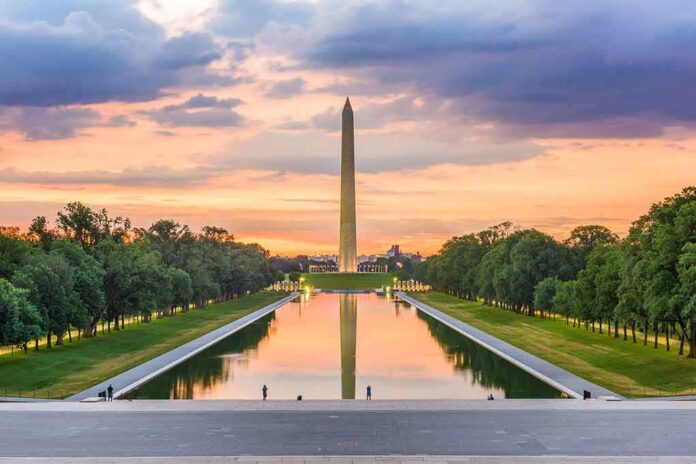
Federal prosecutors in Washington moved to dismiss the criminal case against David Hearn, who had been accused of damaging the Lincoln Memorial Reflecting Pool. The Justice Department said it received new information after the indictment that undermined the original theory. According to the filing, the damage was caused by flawed installation work by the contractor, not by vandalism.
The case mattered because it tied a high-profile National Mall project to a criminal charge. Reports said the renovation was a Trump-prompted $14 million job rushed ahead of America 250 events, and prosecutors later said more Interior Department records changed their view. The filing also said the office did not have that Interior Department information when it first went to a grand jury.
Why Prosecutors Pulled Back
The strongest part of the government’s reversal is its own wording. Prosecutors said the newly received documents showed the pool damage came from a flawed contractor installation and made it difficult to blame vandalism at all. Reuters and The Washington Post both reported that the filing described the facts as too weak to prove the charge beyond a reasonable doubt.
That language is important because it is more than a quiet case drop. It is a direct public admission that the original charge no longer fit the evidence prosecutors had in hand. ABC News and National Public Radio reports said the motion pointed to contractor error, while the court filing said the Office of the Interior Department had information that was not shared before indictment.
What the Case Says About the Process
Defense lawyers had already argued that the government failed to preserve the part of the pool liner tied to the charge. NBC Washington reported that a judge rejected that motion without prejudice, meaning it could be renewed later if the defense showed the repairs harmed the evidence. That issue now looks less like a side dispute and more like a warning about how fragile the case may have been.
JUST IN: DOJ Drops Charges Against 3 More Reflecting Pool Vandalism Defendants – Pirro Meets With Trump at White House Following Scathing Rebuke (VIDEO)
“It was not until after the return of the indictment [of Hearn], that the [Department of Interior] provided additional…
— 🇺🇸⭐️OUR-VOICES⭐️🇺🇸 (@iswho) August 4, 2026
The broader lesson is not partisan, even if the politics around it are loud. When a federal case turns on technical damage, rushed work, and missing records, the public has reason to question both the first accusation and the official fix that came later. In this case, the Justice Department’s own filing is the key fact: prosecutors now say the pool was damaged by a bad installation, not by the defendants.
Sources:
townhall.com, abcnews.com, politico.com, cnn.com, reuters.com, apnews.com, washingtonpost.com, thehill.com, youtube.com, cnbc.com