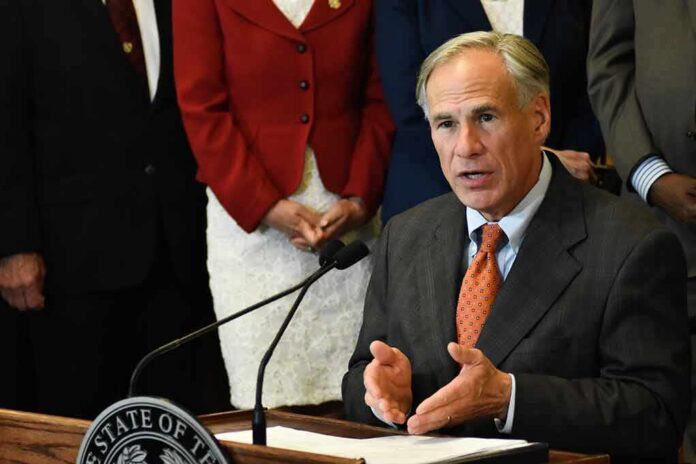
As record Texas floods wash away homes and roads, the fight over federal disaster aid is exposing how fragile our government’s promise of help has become.
Story Snapshot
- Texas Governor Greg Abbott has asked President Donald Trump for a major federal disaster declaration after “historic” flooding and deadly storms across the state.
- Abbott has already declared state disasters for dozens of counties and signed a 20‑page request to unlock Federal Emergency Management Agency (FEMA) funds for hard‑hit communities.
- The Stafford Act says only the governor can trigger this federal aid process, but approval still depends on the White House and can take weeks or even months.
- Past delays and political fights over Texas disaster aid fuel a growing belief on both the right and left that Washington’s “system” is failing ordinary Americans in times of crisis.
Abbott Moves To Unlock Federal Help For Historic Texas Floods
Texas Governor Greg Abbott is pushing hard for federal help after days of extreme rain and flash flooding tore through communities across the state. Abbott has already declared a state disaster for dozens of counties, giving local officials access to Texas resources for rescue, shelters, and repairs. Now he has signed and submitted a roughly 20‑page request for a presidential major disaster declaration, aimed at unlocking Federal Emergency Management Agency (FEMA) funding for 28 of the hardest‑hit counties where lives and livelihoods are at risk.
Abbott’s letter to the president describes “catastrophic flash flooding” and “historic river flooding,” along with destructive hail, wind, and tornado damage dating back to late April. Local governments report tens of millions of dollars in destroyed roads, bridges, utilities, and other public infrastructure, on top of the cost of emergency response and debris removal. Flooded homes, ruined small businesses, and displaced families are spread across both rural towns and growing suburbs, raising pressure on leaders to act quickly rather than drown communities in red tape.
How Disaster Aid Is Supposed To Work — And Why It Often Feels Broken
Under the Robert T. Stafford Disaster Relief and Emergency Assistance Act, the governor must formally ask the president to declare a “major disaster” before most federal help can flow. That request is a legal document with damage data and maps, routed through FEMA and limited to specific counties and programs. Only after the president signs the declaration can families apply for federal housing aid and small grants, and communities seek help to rebuild roads, schools, and utilities. Without that signature, state and local budgets carry most of the burden, even for billion‑dollar storms.
This three‑step chain — local report, governor request, presidential approval — is meant to keep disaster aid focused on real emergencies. But in practice, the timeline has become longer and less predictable. One analysis found that under Trump, major disaster approvals averaged over a month after the governor’s request. In a past Texas flood, 33 counties waited nearly four months for federal help. For families living in motel rooms or sleeping on relatives’ couches, those delays are not just “process”; they are lost jobs, missed school, and medical bills that pile up while leaders argue over paperwork.
Texas, Washington, And A Pattern Of Frustration On Both Sides
Texas is no stranger to disaster politics. The state has seen repeated clashes with Washington over how much aid is “enough” and how fast it should arrive. After Hurricane Harvey, Abbott called a White House aid request “completely inadequate” for Texas and other storm‑hit states, saying the proposal failed to match the damage on the ground. In other cases, when FEMA denied or limited requests, Abbott turned to the Small Business Administration for backup disaster loans, pointing to holes in the federal safety net. These fights have fed a broader story many Americans now believe: when crisis hits, elites debate while regular people fend for themselves.
3 AM Top-of-the-Hour News
After the deadly floods in Hill Country last year … Texas moved to improve its system of flood warnings and beefed up infrastructure.
While storms this week triggered flash floods … two deaths have been confirmed.
Governor Greg Abbott says the… pic.twitter.com/xanIvalxs4— Worldwide News Network (@WorldwideNNX) July 19, 2026
Recent years show both quick action and painful delay. In some disasters, presidents approved Texas declarations in a day, allowing FEMA to open centers and accept applications almost immediately. In others, Texas officials and the White House traded blame over who moved too slowly, as seen in later storms where each side pointed to the other for missed timelines. The current flooding request lands in that tense history, at a time when many conservatives and liberals alike feel the federal government works better for insiders than for flood victims watching their savings, homes, and hopes wash away.
What Abbott’s Request Means For Flooded Texans Right Now
If President Trump grants Abbott’s request, families in designated counties could get temporary housing help, small grants for basic needs, and access to low‑interest loans to repair or replace homes and businesses. Counties and cities could seek federal money to fix roads, water systems, schools, and other damaged public facilities. That aid will not make everyone whole; it is designed as a safety net, not a full insurance payout. But for many working families, it may be the only lifeline that keeps a flood from turning into long‑term poverty.
For Texans who already doubt “the system,” this moment is another test of whether government serves people or politics. Conservatives see yet more proof that Washington’s spending priorities ignore basic infrastructure while pushing global agendas. Liberals see the growing gap between wealthy donors and ordinary families who cannot afford to rebuild. Both sides, though, can look at these floods and agree on one thing: when Americans are fighting rising water, they should not also have to fight their own government just to get the help they were promised.
Sources:
gov.texas.gov, ksat.com, instagram.com, kxan.com, youtube.com, govfacts.org, texasrestorationauthority.com, eenews.net, usafacts.org, washingtonpost.com, tdem.texas.gov, tx.cpa