The U.S. government is now telling some Americans in Congo they cannot fly straight home, forcing them into a 21-day detour because of a fast-moving Ebola outbreak.
Story Snapshot
- The Trump administration has ordered strict Ebola-related travel limits tied to time spent in Congo, Uganda, and South Sudan.
- Non‑U.S. citizens and green card holders who were in those countries within 21 days are temporarily barred from entering the United States.
- U.S. citizens can still come home but face rerouting to specific airports, intensive health screening, and possible “do‑not‑board” orders.
- Health experts question whether such travel rules truly stop Ebola, fueling broader distrust of how the federal government uses crises.
What the new Ebola travel rules actually do
In May 2026, the U.S. Department of Health and Human Services issued an order responding to an Ebola outbreak caused by the rare Bundibugyo strain in the Democratic Republic of Congo and Uganda. The order says blocking entry for some travelers is “necessary to protect the health of the United States” from Ebola disease. It targets people who have been in Congo, Uganda, or South Sudan within the last 21 days, matching the known incubation period for Ebola, and is set to last 30 days at a time.
Under this order, certain foreign nationals who were in those countries in the past 21 days cannot enter the United States at all. Reporting shows the Trump administration later expanded this ban to include lawful permanent residents, also known as green card holders, if they had recently been in the affected region. This means some long‑time residents with ties to the U.S. are treated like visitors when it comes to Ebola, raising tough questions about fairness and government power.
How the rules affect U.S. citizens coming from Congo
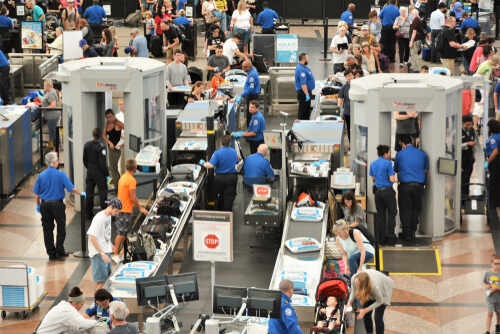
U.S. citizens and nationals are not fully banned, but their travel has become far more controlled. Federal guidance says Americans who have been in Congo, Uganda, or South Sudan within the last 21 days may still enter the country, yet they must go through enhanced public health screening. Many are routed to specific airports such as Washington Dulles for questioning, temperature checks, and review of any possible exposure to Ebola. After arrival, they are told to monitor their health closely for 21 days and avoid more international travel.
Separate reporting describes a “do‑not‑board” list used under transportation law to block some U.S. citizens in Congo from flying home right away. This list can keep people who might be sick or exposed off commercial flights, even if they hold a valid passport. At the same time, the administration has discussed sending exposed Americans to Kenya for observation instead of bringing them directly to U.S. hospitals. These steps leave many travelers feeling like pieces on a chessboard, moved by distant officials with little say of their own.
Why 21 days matters — and where experts disagree
The 21‑day rule is tied to how Ebola works in the body. Health agencies, including the Centers for Disease Control and Prevention (CDC) and the World Health Organization, say people exposed to Ebola should be watched for 21 days, since symptoms usually appear within that window. CDC guidance tells returning travelers to take their temperature daily, watch for symptoms, and stay in the United States during this period. If they get sick, they should isolate and call their local health department for help and safe care.
Over 1,900 Ebola cases and 702 deaths have been confirmed in the DRC. The IRC @RESCUEorg warns that transmission is accelerating, reaching major transit hubs and drastically raising the risk of cross-border spread into South Sudan https://t.co/ZQXalfMHsK
📷: WHO pic.twitter.com/qdm7q6WA8z— ReliefWeb (@reliefweb) July 13, 2026
Many infectious disease experts, however, argue that broad travel bans are a blunt tool that often fails to stop outbreaks once they are moving. One specialist told reporters that travel bans “don’t stop spread of viruses and can actually impede efforts to contain them,” pointing to past outbreaks like H1N1 flu, Covid‑19, and earlier Ebola events. Studies of the 2013–2016 West Africa Ebola crisis found many countries broke World Health Organization advice by blocking travelers, without clear proof that those bans slowed the disease.
What this says about power, trust, and the ‘deep state’
The Ebola rules land in a United States already divided and tired of feeling pushed around by distant elites. Conservatives who backed the “America First” agenda may see the travel limits as tough protection of the homeland, yet they also worry about unelected health officials using emergencies to grow federal power. Liberals may welcome strong action on global health but are uneasy about green card holders and citizens losing basic travel rights by bureaucratic order. Both sides share a growing sense that ordinary people have little voice.
For many Americans, the deeper issue is trust. The government says these bans are vital, but offers little public data proving that a 21‑day transit rule or detour truly prevents Ebola from reaching the United States. At the same time, experts warn that travel crackdowns can hurt fragile countries and push movement into the shadows, making outbreaks harder to track. This tension — between visible shows of control and quieter scientific doubt — feeds the belief that crises are often managed more for optics and control than for the people most at risk.
Sources:
cbsnews.com, straitstimes.com, stacks.cdc.gov, statnews.com, nytimes.com, trumpwhitehouse.archives.gov, thehill.com, govinfo.gov, blog.wego.com, cdc.gov, npr.org, pmc.ncbi.nlm.nih.gov, youtube.com