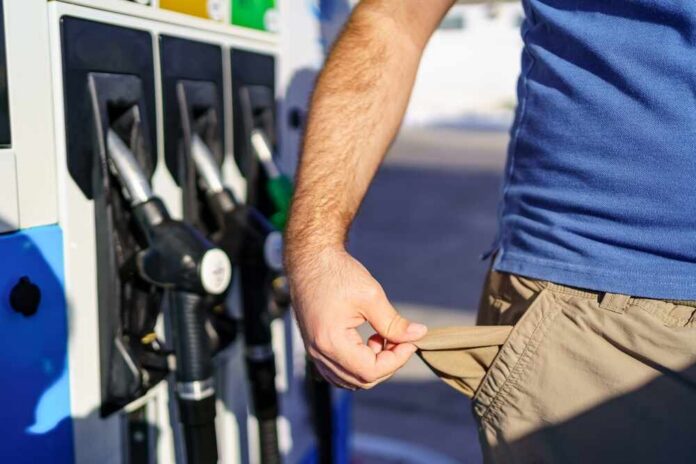
President Trump reversed his administration’s position within a week, now pushing to suspend the federal gas tax as Americans face fuel prices exceeding $4.50 per gallon due to the Iran conflict—but Senate Republican leadership remains skeptical about a measure that would drain billions from crumbling infrastructure while doing little to address the root cause of soaring costs.
Story Snapshot
- Trump announced support for temporarily suspending the 18.4-cent federal gas tax after prices surged over 50% since the Iran war began in February 2026
- Multiple Republican lawmakers introduced competing suspension bills ranging from 90 days to 18 months, costing taxpayers between $13 billion and $39 billion in lost infrastructure revenue
- Senate Majority Leader John Thune expressed concern the suspension won’t significantly lower prices and would devastate Highway Trust Fund projects
- The announcement represents a dramatic policy reversal—just one week earlier the White House stated a gas tax suspension was “not under consideration”
Trump’s Abrupt Policy Reversal on Gas Tax
President Donald Trump announced Monday during a CBS News interview his intention to temporarily suspend the federal gasoline tax, stating “We’re going to take off the gas tax for a period of time, and when gas goes down, we’ll let it phase back in.” The declaration came just seven days after White House officials told reporters that a gas tax suspension was not under consideration. Trump’s reversal follows intense public pressure as gasoline prices hit $4.52 per gallon nationally—a staggering 50% increase since the Iran conflict began blocking the Strait of Hormuz in late February. The timing, with midterm elections approaching, suggests political calculation may be driving policy more than economic necessity.
Competing Legislative Proposals Emerge
Republican lawmakers immediately introduced multiple bills with vastly different approaches. Senator Josh Hawley proposed a 90-day suspension with a potential 90-day extension, while Representative Jeff Van Drew introduced an 18-month suspension with gradual phase-in provisions. Representative Anna Paulina Luna announced plans to introduce separate House legislation this week. Democrats previously introduced their own measure suspending the tax through October 1, conveniently ending about one month before midterm elections. The competing timelines reveal fundamental disagreement over whether this represents genuine relief or election-year gimmickry. None of these proposals address the actual problem: Iran’s blockade of the Strait of Hormuz preventing millions of barrels of oil from reaching global markets daily.
Infrastructure Funding Faces Devastating Blow
The federal gas tax has funded the Highway Trust Fund since 1932, providing critical revenue for road maintenance and infrastructure development across America. Suspension would cost approximately $500 million weekly in lost federal revenue—totaling $13 billion over 90 days or $39 billion over 18 months depending on which proposal passes. This comes as American infrastructure already faces a massive maintenance backlog. State and local governments dependent on federal highway funding would see projects delayed or cancelled entirely. Senate Majority Leader John Thune warned of these consequences, noting “I’ve not in the past obviously been a fan of that idea” while acknowledging political pressure from colleagues. His skepticism reflects a core concern: sacrificing long-term infrastructure needs for short-term political gain creates future problems while providing minimal immediate relief.
Limited Consumer Benefit Versus Massive Cost
Transportation economists point out the federal gas tax represents only 18.4 cents per gallon—approximately four percent of the current $4.52 pump price. Average drivers might save $50 to $100 monthly, but this modest relief does nothing to address the fundamental supply crisis caused by Iran’s actions. Thune correctly observed that reopening the Strait of Hormuz “would normalize gas prices as much as anything.” The suspension creates a dangerous precedent: using temporary tax holidays to mask government failures in addressing root causes. Taxpayers ultimately bear the burden twice—first through degraded infrastructure from lost revenue, then through higher long-term transportation costs as roads deteriorate. This represents the kind of Washington short-term thinking that frustrates Americans across the political spectrum who recognize elected officials prioritizing reelection over solving actual problems.
The proposal has never succeeded despite multiple historical attempts, and infrastructure advocates warn it establishes a precedent that threatens the long-term viability of the Highway Trust Fund. While consumers deserve relief from punishing fuel costs, genuine solutions require addressing the Iran conflict disrupting global oil supplies—not raiding infrastructure funds to create the illusion of action. Both parties share responsibility for this theatrical response to a crisis demanding substantive foreign policy and energy independence strategies instead of budget gimmicks that mortgage America’s infrastructure future for marginal election-year savings.
Sources:
CBS News – Trump interview on suspending gas tax amid Iran war
ABC News – Trump floating gas tax holiday amid rising fuel costs
Politico – John Thune on Trump gas tax proposal
Axios – Trump to suspend federal gas tax