Washington, D.C. is posting a stunning drop in murders and carjackings after President Trump’s federal crackdown—raising a blunt question: why did it take Washington this long to enforce the law in its own backyard?
Quick Take
- Federal and local officials credit a Trump-era enforcement surge with major year-over-year crime declines in Washington, D.C.
- Reported figures show homicides down 60%, carjackings down 68%, robberies down 49%, and overall crime down 32% from end of 2024 to 2025.
- U.S. Attorneys have emphasized higher prosecution rates, fugitive arrests, and illegal gun seizures as key drivers.
- One serious caveat: strangulation offenses reportedly rose 59%, showing progress is uneven and some threats are shifting.
What the Trump administration says changed in D.C.
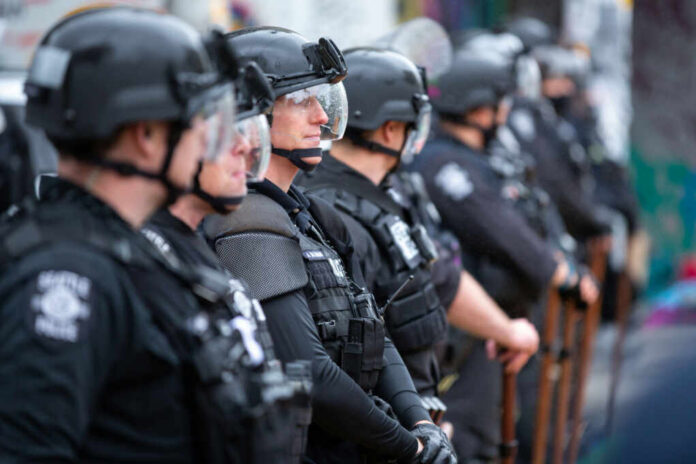
White House-aligned messaging and statements from the U.S. Attorney’s office describe Washington, D.C. as a test case for an “enforce-the-law” approach that prioritizes arrests, prosecution, and coordinated operations. The timeline centers on a March 2025 rollout of “Make D.C. Safe Again,” followed by an August 2025 surge of federal law-enforcement resources. Officials also point to cooperation from D.C. leadership and police as the crackdown expanded.
Reported numbers attached to the initiative are attention-grabbing and politically potent because they speak to daily life: safer commutes, fewer armed robberies, and less fear of being carjacked in broad daylight. Officials cite a 60% reduction in homicides, more than a 30% reduction in violent crime, and a 32% reduction in overall crime when comparing end-of-2024 conditions to 2025 outcomes. Those figures, if sustained, represent a major reversal from the “out of control” narrative that dominated prior years.
The mechanics: arrests, gun seizures, and prosecutions
Federal prosecutors have highlighted volume and follow-through—two things voters routinely complain government fails to deliver. Enforcement tallies tied to the task force include 9,137 violent fugitives arrested, with subsets involving homicide suspects, narcotics offenders, weapons cases, sex offenses, and identified gang members. Officials also report 924 illegal firearms removed from D.C. streets, and they’ve publicized snapshots like a single day with 40 arrests and nine illegal guns seized.
The policy argument embedded in those figures is straightforward: when police arrest repeat offenders and prosecutors pursue cases consistently, crime can fall quickly—especially in a compact city with heavy federal presence. That claim also lands in the broader 2026 political mood where many Americans, left and right, see government as captured by insiders who talk big but avoid hard choices. In D.C., the administration’s pitch is that results came only after priorities shifted from rhetoric to enforcement.
A political fault line: prosecution choices and public trust
U.S. Attorney Jeanine Pirro has contrasted current prosecution levels with the prior administration, saying her predecessor “didn’t prosecute 60% of the crime.” Whether one accepts that framing or not, it puts a spotlight on a core point conservatives have raised for years: laws on the books mean little if officials decline to charge, downgrade offenses, or cycle offenders back onto the street. Republicans argue that accountability is compassion for victims—and that deterrence protects working families first.
Limits and warnings inside the “good news” numbers
Even as officials tout broad declines, one statistic should temper any victory lap: strangulation offenses reportedly rose 59%. That matters because it suggests violence can migrate into different forms even when headline categories like homicide drop. It also underscores a practical reality for D.C. and other cities trying to copy the model: enforcement must be paired with targeted strategies for domestic violence, repeat abusers, and high-risk offenders, not just street crews and illegal gun cases.
Washington, DC is seeing a MASSIVE decrease in crime since President Trump's crackdown in the capital his initial deployment of the National Guard in 2025.
New stats from the Metropolitan Police Department show four MAJOR milestones compared to just one year ago: homicide,… pic.twitter.com/O5Gw9R8C80
— Fox News (@FoxNews) April 20, 2026
The bigger takeaway is less partisan than it sounds: Americans are exhausted by excuses. If D.C.—the seat of federal power—can demonstrate measurable reductions after tightening coordination, increasing prosecutions, and prioritizing public order, voters will demand to know why similar urgency isn’t applied everywhere. The data in these reports is promising but still limited to a narrow timeframe and specific comparisons; the real test will be whether the declines persist through the next cycles of politics, budgets, and leadership turnover.