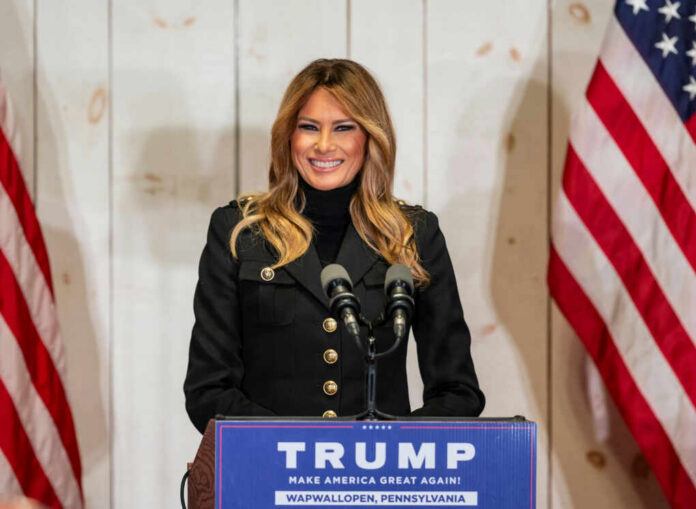
First Lady Melania Trump is pushing Congress to transform a temporary executive order into permanent law, framing foster care reform as a moral imperative and a birthright for America’s most vulnerable youth.
Story Snapshot
- Melania Trump testified before the House Ways and Means Committee urging lawmakers to codify the “Fostering the Future” executive order into statutory law
- The executive order, signed in November 2025, established public-private partnerships with over 20 universities and federal agencies to support foster youth transitioning to adulthood
- The initiative addresses critical gaps in education, employment, housing, and financial literacy for the 20,000+ youth aging out of foster care annually
- Trump emphasized that opportunity for foster youth should be “their birthright,” not dependent on temporary executive actions or government aid
From Executive Order to Permanent Law
On November 13, 2025, President Donald Trump and First Lady Melania Trump signed the “Fostering the Future for American Children and Families” executive order at the White House. The order directed the Department of Health and Human Services to establish partnerships with private-sector organizations, academic institutions, and nonprofits to create educational and employment pathways for youth in or transitioning out of foster care. Within months, the initiative expanded to include partnerships with over 20 universities, including LSU, University of Virginia, University of Texas, and Ohio State.
A Bipartisan Call for Action
On April 15, 2026, Melania Trump appeared before the House Ways and Means Committee to escalate her advocacy. Speaking directly to bipartisan lawmakers, she called for converting the executive order into permanent legislation. She stressed that “action over awareness” is essential and that providing foster youth with pathways to financial independence, job readiness, and entrepreneurship represents a fundamental commitment to national integrity. Her testimony marked a significant shift from executive initiative to legislative necessity.
Addressing Real Gaps in Foster Care
The foster care system has long struggled to support the roughly 400,000 children in care annually. Youth aging out at eighteen face alarming outcomes: 20 to 25 percent experience homelessness, many lack stable employment, and financial literacy remains a critical gap. The Fostering the Future initiative addresses these realities through concrete programs. The Department of Housing and Urban Development and Treasury Department announced roundtables with foster youth nationwide to develop financial literacy programs. The Administration for Children and Families launched a pilot program distributing decommissioned federal laptops to bridge the digital divide.
Public-Private Partnerships as a Model
The executive order demonstrates an alternative to traditional government spending: leveraging private-sector and academic resources. Universities committed to creating employment pipelines and mentorship programs. Federal agencies coordinated with nonprofits like the National CASA/GAL Association, whose CEO Tara Perry participated in the November signing. This model reduces dependency on expanded government budgets while expanding opportunity through voluntary partnerships, aligning with principles of limited government and private initiative.
Why Permanent Law Matters
Executive orders are temporary by nature, vulnerable to reversal by future administrations. Melania Trump’s push for legislation reflects recognition that foster youth cannot depend on the continuity of executive action. Permanent law would standardize support mechanisms, ensure consistent funding, and guarantee that opportunity remains accessible regardless of political transitions. For a population historically overlooked by policymakers, statutory protection represents genuine commitment.
Melania Trump challenges Congress to make her foster care executive order permanent law: 'Their birthright'https://t.co/JeUJkcBOIw
— Spreading Fox News (@SpreadFoxnews) April 15, 2026
The Fostering the Future initiative represents rare common ground in an otherwise divided Congress. Foster care reform transcends typical partisan divides because the stakes are personal and moral. Lawmakers from both parties recognize that helping young people transition successfully to independence strengthens communities and reduces long-term social costs. Whether Congress acts on Melania Trump’s call for permanent law will signal whether bipartisan consensus can translate into legislative action on issues affecting America’s most vulnerable citizens.
Sources:
First Lady Melania Trump Champions New Foster Care Legislation in Congress
Federal executive order prioritizes youth transitioning out of foster care
Executive Order: Fostering the Future for American Children and Families
HUD and Treasury Build on First Lady Melania Trump’s Fostering the Future Initiative
Fostering the Future for American Children and Families