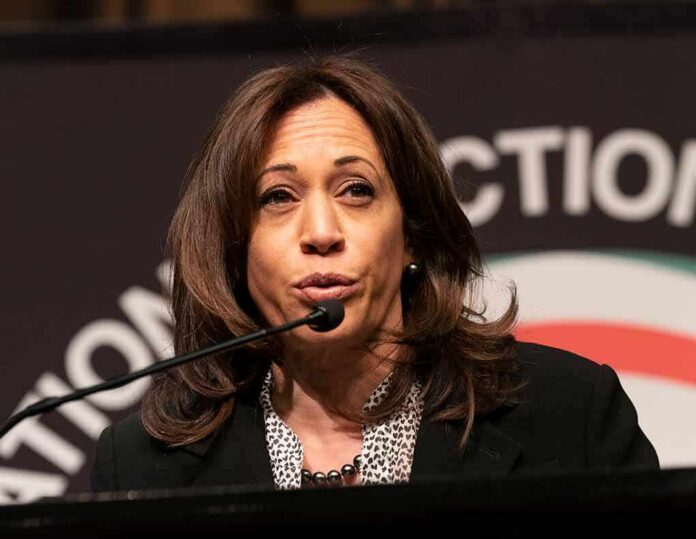
Calling President Trump a “tyrant,” Kamala Harris is urging voters to use the midterms to curb his power — and the White House is firing back with a victory list.
Story Highlights
- Kamala Harris says midterm wins are needed to restore checks and balances on President Trump.
- Harris labels Trump’s approach “brutal” and harmful, framing the vote as a constitutional check.
- The White House cites border, crime, energy, and tax results to counter claims of tyranny or incompetence.
- History shows presidents often lose midterm seats, making Congress a practical check regardless of party.
Harris’s Case: Midterms As A Constitutional Check
Kamala Harris is telling supporters the fastest way to check President Trump is through the midterm vote. She argues Congress must reassert its role and restore “checks and balances” on what she calls an “unchecked and unbalanced” presidency. In a Substack post, Harris urges winning enough seats to constrain the executive branch’s reach. On the trail, she has called Trump a “tyrant,” saying the founders built limits for moments like this and pressing volunteers to turn anger into action before Election Day.
Harris’s language is sharp by design. She links what she calls “brutality” in policy to harm felt by families, then channels that frustration toward turnout and organizing. Her pitch blends a legal frame — separation of powers — with a mobilizing frame — stop the “madness” by changing who holds the gavel. Support stops in Wisconsin and California echoed the same message: flip enough seats to force oversight hearings, slow the agenda, and rewrite priorities through budgets and subpoenas.
The White House Reply: Results, Not “Tyranny”
The White House rejects Harris’s claims and promotes a record of wins. Officials point to a sealed border, a drop in violent crime, an energy surge, and tax cuts for working families. They say this shows competence and a mandate, not abuse. A January recap calls the first year “transformative,” citing lower migration, new investment, and bureaucracy cuts. Another release credits detention and removal policies with nine straight months of zero illegal crossings at the southern border.
Supporters also cast Trump’s approach as a lawful, “muscular” presidency backed by voters. Coverage notes they argue the Constitution allows strong executive action within clear bounds. Some backers flip the “tyranny” label onto the prior administration, showing how the word has become a partisan weapon rather than a legal finding. Others say Trump kept core promises, which they see as proof against claims of chaos or incompetence. These defenses focus on outcomes and voter consent, not on expanding formal checks.
What History Says About Midterms As A Check
Political history supports one part of Harris’s framing: midterms often reduce a president’s power. Since 1938, the president’s party almost always lost House seats in midterm elections, which shifted leverage toward oversight and bargaining. Scholars tie those results to presidential approval and economic mood. When approval slips, the losses usually grow, and committee chairs change, bringing hearings and investigations that can stall or reshape an agenda.
That pattern does not prove any claim of tyranny. It does show how voters use midterms to balance Washington when they feel ignored. Many Americans in both parties worry elites serve themselves first. They see rising costs, weak services, and little accountability. For them, midterms are a rare lever. A new majority can force disclosure, revisit spending, and test policies in public view. That basic check exists whether the White House is popular or not, and it can calm a divided country by widening debate.
Why This Fight Resonates Across The Aisle
Harris channels concerns from the left about rule of law and rights. The White House answers with jobs, safety, and border control. Both messages tap a shared fear that government power is unaccountable and outcomes favor the well‑connected. Voters who feel priced out, policed by rules they did not write, or shut out of decisions want proof someone will listen. A Congress that holds real hearings and sets clear budgets is one way to test promises against facts in daylight.
The stakes are simple. If Harris’s side gains ground, expect more subpoenas, slower confirmations, and tighter purse strings. If Trump’s party keeps control, expect faster action on energy, immigration, and tax policy, with fewer roadblocks from Capitol Hill. Either way, citizens should demand records, audits, and open meetings. Sunlight is not partisan. It is how a free people keep leaders — any leaders — from drifting away from the limits the Constitution sets.
Sources:
youtube.com, kamalaharris.substack.com, seacoastonline.com, yahoo.com, louderwithcrowder.com, jsonline.com, realclearpolitics.com, foxnews.com, dawn.com, latimes.com, apnews.com, whitehouse.gov, newstatesman.com, cambridge.org