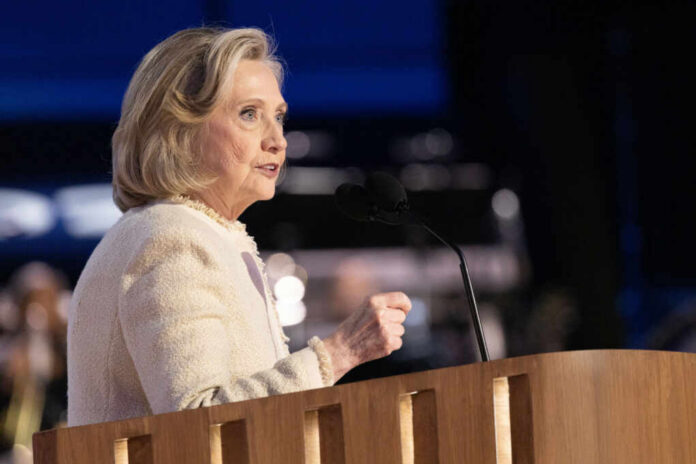
Hillary Clinton just told an international audience that migration “went too far” and called it “disruptive and destabilizing,” a statement that would have been unthinkable from the 2016 Democratic presidential nominee who championed deferred enforcement and opposed border walls.
Story Snapshot
- Clinton declared migration “went too far” at the Munich Security Conference on February 14, 2026, marking a dramatic shift from her 2016 campaign positions
- She advocated for “secure borders” while emphasizing humane implementation, a rhetorical balance that distances her from both progressive open-border advocates and aggressive enforcement critics
- The remarks came during a panel titled “The West-West Divide: What Remains of Common Values,” suggesting Clinton views immigration as a wedge issue threatening Western unity
- Conservative analysts interpret the comments as tacit admission that Democratic immigration policies destabilized America, though Clinton provided no specific policy proposals or apologies
- Her statement that borders should “not torture and kill people” appears aimed at Trump administration enforcement methods while simultaneously acknowledging security concerns
The Rhetorical Earthquake Nobody Expected
Clinton stood before an international audience in Munich and delivered words that would have torpedoed her 2016 presidential campaign. She acknowledged that migration trends became “disruptive and destabilizing” and required fixing. This represents more than political repositioning; it signals recognition that voters across Western democracies rejected the immigration approach Democrats championed for years. The timing matters too. Speaking at a security conference rather than a domestic campaign event allows Clinton to frame immigration as a transatlantic concern rather than partisan American politics, though the implications for Democratic messaging remain unmistakable.
When Yesterday’s Convictions Become Today’s Liabilities
Clinton’s 2016 platform opposed large-scale border wall expansion and supported Obama’s executive actions deferring enforcement against millions residing illegally in America. She advocated ending family detention and characterized immigration enforcement raids as unnecessarily aggressive. In 2018, she argued that both legal and undocumented immigrants strengthened America’s economy through workforce contributions and larger families. These positions aligned perfectly with progressive immigration advocacy organizations that viewed enforcement itself as inherently problematic. Now Clinton describes the results of those very policies as destabilizing, though she offers no acknowledgment that her previous positions contributed to the problems she now identifies.
The “Humane” Escape Hatch
Clinton’s call for secure borders comes packaged with the qualifier that implementation must be “humane” and not “torture and kill people.” This phrasing accomplishes several objectives simultaneously. It allows her to criticize Trump administration enforcement methods while advocating border security, positioning herself as the reasonable middle ground between open borders and aggressive enforcement. The language also provides cover against progressive critics who might otherwise accuse her of abandoning immigrant rights. Yet this rhetorical strategy dodges the fundamental question: how exactly does one maintain genuinely secure borders while simultaneously ensuring no enforcement action ever causes hardship to those attempting illegal entry?
What Security Conferences Reveal About Political Positioning
Clinton chose an international security forum rather than a domestic political venue to articulate these views, which proves instructive. European nations face their own migration challenges, with voters across the continent punishing politicians perceived as weak on border security. Speaking to this audience allows Clinton to frame immigration restrictionism as responsible internationalism rather than nativist populism. The panel’s title, “The West-West Divide: What Remains of Common Values,” telegraphs the message that uncontrolled migration threatens the cohesion necessary for Western democracies to address shared challenges. This framing positions immigration restrictionism as sophisticated geopolitical strategy rather than reactionary politics, though the substance remains identical.
The Admission That Wasn’t Quite an Admission
Clinton’s statement stops short of acknowledging that Democratic policies produced the destabilization she now decries. She identifies problems without accepting responsibility, criticizes outcomes without repudiating the philosophy that generated them, and advocates solutions without explaining how they differ substantively from approaches she previously opposed. This represents classic political repositioning: acknowledge voter concerns without alienating your base, signal moderation without specifying what you’d do differently, and maintain plausible deniability about past positions. American voters deserve better than rhetorical gymnastics from political figures who spent years dismissing border security concerns as xenophobic, only to discover that voters across Western democracies rejected that dismissiveness at the ballot box.
Sources:
Hillary Remarks on Illegal Immigration at Munich Security Conference
Hillary Clinton says migration went too far, needs to be fixed in humane way
Hillary Clinton says migration went too far, needs to be fixed
Hillary Clinton: Migration ‘Destabilizing’ at Munich Security Conference