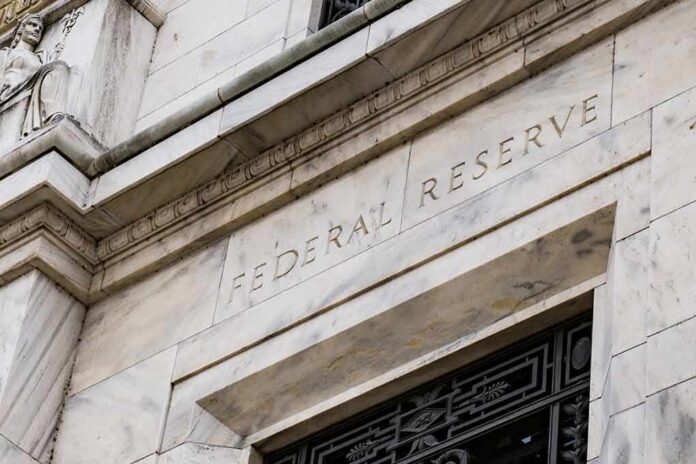
The Federal Reserve kept interest rates in check while warning it will not promise the next move, putting price stability ahead of market comfort.
Story Snapshot
- The Federal Reserve held the policy rate at 3.5% to 3.75% in June and later raised it in September.
- Chair Kevin Warsh says the goal is price stability, not advance promises about rate paths.
- Officials want clear proof that underlying inflation is moving toward target fast enough.
- Markets keep hunting for clues, but Warsh rejects forward guidance as a rule.
What The Fed Decided And Why It Matters
Federal Reserve Chair Kevin Warsh has stressed a simple priority: restore price stability. In July testimony, he noted the Federal Reserve held the target range at 3.5% to 3.75% in June to assess conditions before changing course. In mid-September, the Federal Reserve raised the rate by a quarter point to 3.75% to 4%, signaling restraint to fight inflation. Warsh said officials will judge incoming data, not market wishes, when choosing the next step.
Fed Holds Rates Steady, Hike Still on the Table: Warsh Signals a “Gradual Fight” and Meeting Changes
The Fed kept rates unchanged at 3.75%–4.00% at its October 27–28 FOMC meeting, as expected. It was Kevin Warsh’s fourth meeting and the final decision before the U.S. midterms,… pic.twitter.com/J375qNrPV0
— For-Exx KriptoEn (@ForexxKriptoEn) October 28, 2026
Warsh’s bar for change is clear. After the September hike, he said the committee must be confident that underlying inflation is moving toward the Federal Reserve’s objective “clearly and at sufficient speed,” and that this standard had not been met at that time. That rule speaks to families paying more for food, fuel, and loans. When prices rise too fast, paychecks buy less and savings shrink. Slower inflation helps workers plan and keeps borrowing costs steadier over time.
Warsh’s Message: Data Dependence, Not Promises
At an October event, Warsh said the Federal Reserve promised price stability, and he would not prejudge meetings or offer advance signals on rates. He also pushed back on the idea of forward guidance as a default tool, which means he will not map out a fixed path months ahead. That approach gives policymakers room to react to fresh data. It also frustrates traders who want certainty, but it aims to protect credibility if the economy shifts.
Media coverage before the decision often focused on whether Warsh would hint at a hike or a pause, and on odds from futures markets. That focus can blur the Federal Reserve’s message about inflation and data. Research and experience show central bank words can move markets, but the effect weakens when people question credibility or disagree on the outlook. By avoiding hard promises, Warsh limits wrong guesses that could later harm trust or force bad choices.
How This Hits Households, Businesses, And Politics
Rate levels affect mortgages, car loans, credit cards, and business financing. A quarter-point move can raise monthly payments for many families and small firms. Warsh’s stance tries to cool price growth without choking the economy. That balance is hard. Some readers blame years of overspending and easy money for high prices. Others worry rate hikes risk jobs and widen gaps between the haves and have-nots. Both groups see a system that feels stacked and slow to fix basics like affordable living.
Fed Holds Rates Steady, Hike Still on the Table: Warsh Signals a “Gradual Fight” and Meeting Changes
The Fed kept rates unchanged at 3.75%–4.00% at its October 27–28 FOMC meeting, as expected. It was Kevin Warsh’s fourth meeting and the final decision before the U.S. midterms,… pic.twitter.com/J375qNrPV0
— For-Exx KriptoEn (@ForexxKriptoEn) October 28, 2026
Today’s message fits a principle most Americans share: leaders should do the job, not talk the market into a trance. Warsh is telling Wall Street and Washington that the Federal Reserve will act when inflation data justify it, and will not offer soothing scripts. That cuts against the “manage-the-headlines” habit many distrust. It also puts outcomes over optics. The caveat: the record we have does not include a full official transcript of the specific live video referenced, so quotes here rely on public testimony and major outlet reports.
Sources:
youtube.com, federalreserve.gov, us.cnn.com, cnbc.com, equiti.com, usatoday.com, ibtimes.com