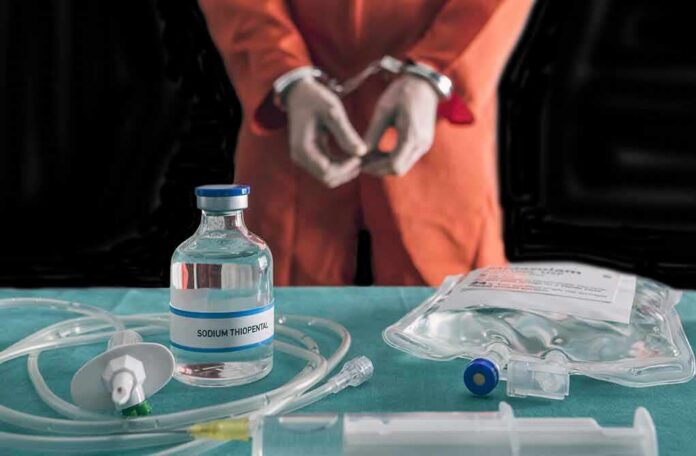
Witnesses say Tennessee gave Christa Pike two lethal injections, lowered the curtain twice, and still drove her to a hospital alive.
Story Snapshot
- Media witnesses and court filings say two doses of pentobarbital failed to kill Pike.
- Tennessee officials say they followed every step of the state’s execution protocol.
- Pike’s lawyers allege cruel and unusual punishment and sought emergency court relief.
- The scene raised fresh questions about lethal injection secrecy and reliability.
What Happened Inside Tennessee’s Death Chamber
Reporters inside the witness room said officials appeared to administer two syringes of pentobarbital. They said Pike remained alive, breathing and snoring, as the curtains dropped and rose during the attempt. Her attorneys echoed that account in an emergency filing, saying she still had a heartbeat and had not lost consciousness. Corrections staff then ended the process and moved Pike for medical care, according to news reports and legal filings that night.
Attorneys told broadcasters that hospital staff were giving life-saving treatment after the attempted execution. That detail, if accurate, suggests medical steps to reverse or manage the drug’s effects. The unusual sequence followed a day of rapid legal moves. Courts weighed emergency motions as the timeline shifted by hours. The United States Supreme Court allowed the state to proceed earlier in the day, but the effort to complete the execution ultimately failed on site.
The State’s Position and Protocol Claims
The Tennessee Department of Correction said it followed every step of the state’s lawful, established execution protocol. The department also said the protocol does not allow extra procedures beyond what staff carried out. This message aimed to show compliance and limit claims of error. It also left key questions open, such as drug sourcing and handling, vein access, and who decides when to stop the process if signs of life persist.
The clash over “we did it by the book” versus “the book is broken” is not new. States often cite protocol to protect legitimacy when executions go wrong. Defense teams counter that secrecy hides avoidable risks. Courts have held that challenges to execution methods must name a feasible and safer alternative to win. That standard, set by the Supreme Court, shapes what lawyers argue after nights like this one and what judges will accept going forward.
The Defense’s Allegations of Unnecessary Suffering
Pike’s lawyers told courts the attempt caused unnecessary agony. They wrote that both syringes were pushed and that Pike remained alive and audibly snoring. They said that violated her right to be free from cruel and unusual punishment, and they asked judges to halt the process. Their filing also raised recurring concerns: hard vein access, possible drug degradation, no clear medical backup, and a protocol shielded from public view by policy and law.
Christa Pike — Tennessee's failed execution left her hospitalized on life-saving measures; Gov. Bill Lee has ordered a third-party review and postponed the state's remaining 2026 execution. Story: https://t.co/bonm653J4Z
— CancelPeople.com (@cancelpeoplenow) October 1, 2026
These claims echo broader data on lethal injection problems. Researchers and advocates have tracked a higher error rate for lethal injection than for older methods. The data sets differ, but they show that a small percent of executions each year involve serious trouble. That history does not decide what happened in Tennessee. It does put Wednesday’s events in a pattern that scholars and reporters have watched for decades, across states and drug formulas.
Why This Botched Attempt Matters Beyond One Case
The scene inside that chamber cut across politics because it hit a nerve on government competence. People on the right and left both ask how a state can fail at the most solemn act it can take. Supporters of capital punishment want a system that works fast, fair, and sure. Opponents see proof that secrecy and broken incentives risk human suffering. Both sides see agencies closing blinds and issuing tight statements after the fact—and trust keeps eroding.
Taxpayers fund these systems. Families of victims wait years for closure. Corrections staff carry the burden when plans fall apart. Lawmakers write protocols yet rarely face the room where they play out. When the curtain drops, the public loses visibility. When it rises again to confusion, faith in the process drops with it. If Tennessee orders a full, public review with facts—not spin—it could start to rebuild that trust. If not, the divide will likely deepen.
What To Watch Next in Courts and Policy
Courts will now parse medical records, timelines, and witness accounts. Judges may demand details on drug quality, storage, and staffing choices. Defense lawyers will press for a halt and for changes to the method. State officials will weigh their options, from revising the protocol to pausing executions. Each step will test whether leaders choose open fact-finding or narrow damage control. That choice will signal how the state treats truth when the stakes are life and death.
Sources:
washingtonexaminer.com, reuters.com, newschannel5.com, cnn.com, usatoday.com