When a local mayor threatens to arrest a foreign leader at the United Nations, and a U.S. ambassador flatly says it will never happen, it exposes how political theater is replacing serious government.
Story Snapshot
- New York City Mayor Zohran Mamdani vows to have police arrest Israeli Prime Minister Benjamin Netanyahu under an International Criminal Court warrant.
- U.S. Ambassador to the United Nations Mike Waltz says this arrest “is not going to happen,” calling Mamdani’s plan pure political theater.
- Federal law, head-of-state immunity, and United Nations agreements all block local officials from arresting visiting world leaders.
- The clash shows how leaders use global crises and legal claims to rally voters while basic governance and trust in institutions keep eroding.
Ambassador Waltz shuts down Mamdani’s arrest threat
U.S. Ambassador to the United Nations Mike Waltz publicly pushed back against New York City Mayor Zohran Mamdani’s threat to arrest Israeli Prime Minister Benjamin Netanyahu during a planned visit for the United Nations General Assembly. Waltz wrote that the arrest “is not going to happen” and labeled Mamdani’s plan “pure political theater,” underscoring that foreign policy and high-stakes diplomacy are not up to city officials. His comments frame the episode as a political stunt, not a real legal option.
In his response, Waltz laid out four specific reasons Mamdani’s promise cannot be carried out. He noted that the United States is not a party to the Rome Statute, the treaty that created the International Criminal Court, so its arrest warrants have no direct force on U.S. soil. He also pointed to the United Nations Headquarters Agreement, which gives protections to visiting heads of government, long-standing head-of-state immunity in international law, and the basic fact that federal authority over foreign affairs overrides any mayor’s wishes. Together, these show why the pledge is legally hollow.
Mamdani’s pledge and the push to use ICC warrants locally
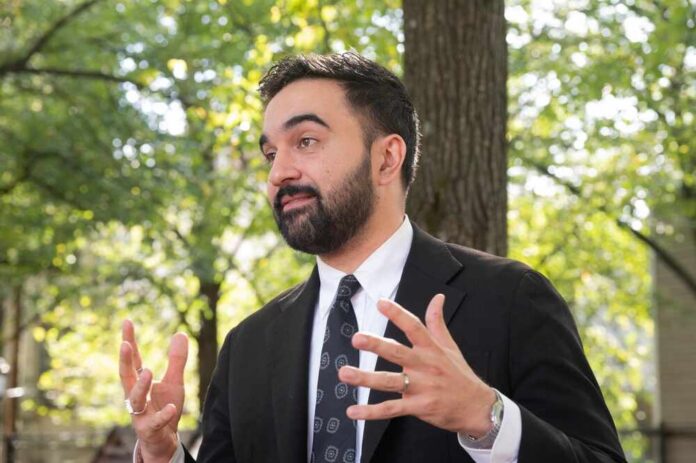
Mayor Zohran Mamdani has repeatedly promised that, as New York’s leader, he would instruct the New York Police Department to detain Netanyahu if he travels to the city. He bases this on the International Criminal Court’s 2024 arrest warrant, which accuses Netanyahu of war crimes tied to Israel’s military operations in Gaza. Mamdani has said he wants New York to be “a city that upholds international law,” and he claims a moral duty to treat Netanyahu as a war criminal rather than a protected visitor. This message appeals to voters who feel global elites act with impunity.
Fact-checkers and legal scholars agree Mamdani has made this promise, but they also stress he likely cannot deliver on it. Analysts note that the United States does not recognize the International Criminal Court’s authority and has passed federal laws to block cooperation with the court. They explain that only the federal government can manage foreign affairs and that any attempt by a mayor to have local police seize a sitting foreign leader would run into constitutional limits and immediate federal pushback. That gap between rhetoric and reality fuels public cynicism about political promises.
Federal and state officials reject the arrest idea
New York Governor Kathy Hochul has bluntly said that the New York City mayor does not have the power to arrest Netanyahu, even if he visits. She pointed out that the International Criminal Court has no jurisdiction in the United States, and that federal law bars local governments from helping the court or obstructing foreign officials, including heads of state. Legal experts cited by her office and in independent coverage have called Mamdani’s threat “baseless,” reinforcing Waltz’s view that the pledge is legally unenforceable. These statements show a rare moment of unity between state and federal leaders.
National and international commentators add that Mamdani’s vow clashes with long-standing United States foreign policy. The United States government, now under President Donald Trump and a Republican Congress, has already moved to punish the International Criminal Court over its warrants for Israeli leaders, including Netanyahu. That stance means Washington is not only unlikely to help enforce such warrants; it is actively trying to weaken the court’s reach. A mayor promising to do the opposite highlights the deep split between local activist politics and federal priorities.
What this clash reveals about power, principle, and public frustration
The fight over Netanyahu’s possible arrest shows how different levels of government pull in opposite directions while everyday problems go unsolved. Mamdani’s supporters see his pledge as a stand for human rights and a way to hold powerful leaders accountable when global bodies seem too weak. Critics, including Waltz, see it as a symbolic move that risks diplomatic chaos without real legal grounding. Both sides tap into anger at elites, yet the result is another noisy showdown that does not fix crime, prices, immigration, or trust in institutions.
New York City Mayor Zohran Mamdani said in an interview with The New York Times that he was in “an active conversation” with the city’s Law Department on whether he had the authority to arrest Israeli Prime Minister Benjamin Netanyahu, if he comes to New York City as expected for
— Wunderkind (@EngineerNGR) July 19, 2026
For many Americans on the right and the left, this episode fits a pattern they recognize all too well. Local and national leaders use dramatic gestures around foreign conflicts to excite their base, while the rules that protect diplomatic relations, international cooperation, and constitutional order stay in place above the drama. People frustrated with the “deep state” see that mayors cannot suddenly rewrite treaty law, and ambassadors cannot rebuild broken trust at home. The gap between bold talk and hard limits is one more sign of a government that feels distant, divided, and focused on performance over problem-solving.
Sources:
redstate.com, jpost.com, stefanik.house.gov, youtube.com, yahoo.com, jns.org, thenationalnews.com