With DHS workers going unpaid for 50 days, President Trump just used emergency authority to get them checks—raising a bigger question about who really controls the federal purse during a shutdown.
Quick Take
- President Trump signed a memo directing DHS to pay all employees during the partial shutdown, targeting more than 35,000 workers who have been unpaid.
- The shutdown began in mid-February amid a congressional standoff tied to immigration enforcement funding, leaving parts of DHS operating without full appropriations.
- The memo orders DHS and OMB to reprogram funds with a “reasonable and logical nexus” to DHS functions, but reporting notes the memo does not spell out a specific funding source or detailed legal basis.
- The move expands beyond earlier targeted efforts—such as TSA back pay and payments to certain DHS components—by covering all DHS employees.
Trump’s memo: paychecks now, shutdown politics later
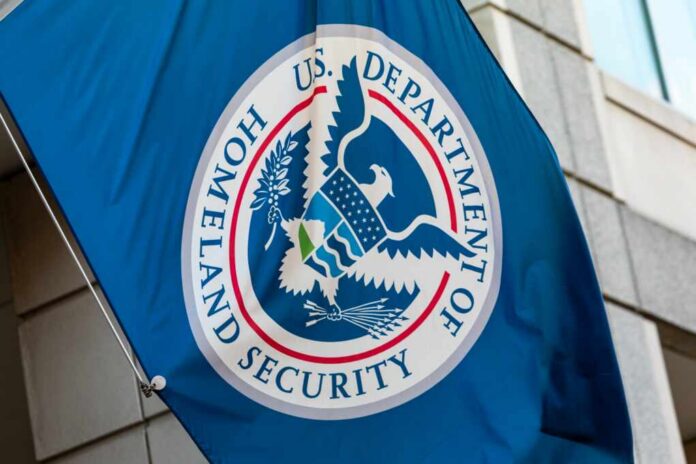
President Trump signed a presidential memo on Friday, April 4, 2026, directing the Department of Homeland Security to pay all DHS employees as the partial government shutdown hit day 50. Reporting says the directive would cover more than 35,000 unpaid workers, including civilian Coast Guard employees as well as staff at FEMA and CISA. The memo tasks DHS Secretary Markwayne Mullin and OMB Director Russell Vought with executing the plan through internal fund moves.
Trump previewed the action the day before on Truth Social, telling supporters he would “soon sign an order to pay ALL of the incredible employees” at DHS and emphasizing the strain on families. That framing matters politically: it puts the spotlight on Congress while positioning the White House as the only institution acting with urgency. But it also places the administration squarely responsible for how the federal government handles a shutdown stalemate in a second Trump term.
How the shutdown started: immigration enforcement funding at the center
The DHS shutdown began in mid-February 2026 after lawmakers hit an impasse over funding connected to immigration enforcement priorities—specifically money tied to Immigration and Customs Enforcement and Customs and Border Protection. Reporting describes repeated House failures to pass Senate measures that would fund DHS through September, including a failed vote on Thursday, April 2. For many conservative voters, this fight is not abstract: it’s directly tied to border security capacity and the ability to sustain enforcement operations.
Even in a shutdown, some DHS operations remain “essential,” but the pressure lands hard on the workforce and readiness. DHS employees include cyber personnel at CISA, disaster-response staff at FEMA, and Coast Guard civilians supporting maritime operations. Leaving people unpaid for weeks creates predictable stress on family budgets and creates real operational risk, even when workers are still required to show up. The memo’s core argument is that prolonged nonpayment becomes a national security concern, not just a labor dispute.
What’s new—and what’s unclear—about the funding mechanism
The memo reportedly authorizes shifting funds that have a “reasonable and logical nexus” to DHS functions to cover payroll. That phrase signals a reprogramming strategy rather than a new appropriation, and coverage notes the directive does not specify the exact funding source or provide a detailed legal roadmap. That lack of specificity may matter if Congress, watchdogs, or courts challenge whether the executive branch can move money this broadly during a lapse in appropriations.
Supporters will see the memo as a necessary workaround to legislative paralysis and an overdue defense of the people who keep the country safe. Skeptics—including some conservatives who prioritize tight adherence to constitutional separation of powers—may still ask whether setting an “emergency” precedent for broad payroll reprogramming invites future administrations to bypass Congress for less defensible reasons. The hard truth is that shutdown brinkmanship keeps incentivizing unilateral fixes, and each fix shifts power expectations.
Precedent and escalation: from targeted pay fixes to “all employees”
This isn’t the first payroll-related executive action in the current shutdown. Reporting notes Trump previously directed TSA back pay—four weeks’ worth—after earlier disruption, and some DHS components had already been paid through other funding channels. What makes the new memo different is its scope: it aims to cover all DHS employees rather than selected units. That broader approach can relieve hardship quickly, but it also magnifies scrutiny about where the money comes from and who authorized the shift.
What to watch next: timing, legal exposure, and congressional leverage
The biggest near-term question is timing—when the payments actually hit—and whether DHS and OMB provide a clearer explanation of the legal and budget mechanics. If checks go out promptly, the memo could reduce immediate family-level pain and stabilize staffing. If implementation stalls, it could deepen distrust in Washington and fuel a perception that shutdowns are used as leverage with little regard for the people ordered to keep working.
The longer-term question is leverage. If the administration can pay employees during a shutdown through reprogramming, Congress loses one of the pressure points that historically forces a deal—while still retaining control over broader policy and spending. That may sound like relief to Americans exhausted by shutdown drama, but it also shifts how future fights play out. For constitutional conservatives, the key is demanding transparency: pay the workforce, protect national security, and still insist on clear authority and accountability.
Sources:
Trump orders DHS to pay all employees despite shutdown
Trump says he’ll pay all DHS workers after House again fails end shutdown