Trump’s second-term push to tie NATO loyalty to an Iran war is putting America’s alliances—and his own “no new wars” promise—on a collision course.
Quick Take
- Spain, Italy, and France have reportedly refused to offer bases, airspace, or ports for potential U.S.-Israel strikes tied to the Iran conflict.
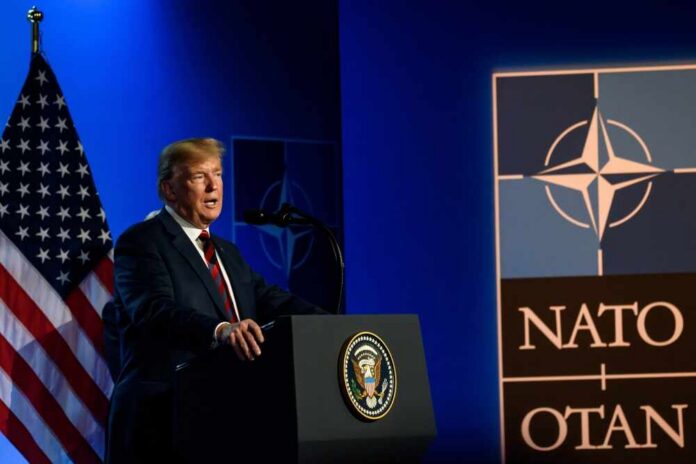
- President Trump has publicly signaled deep frustration with NATO, including talk of withdrawal, while administration allies argue the alliance is “one-sided.”
- Sen. Lindsey Graham has floated sanctions on Spain, raising alarms that security cooperation is being treated as conditional political leverage.
- Energy-market blowback from the Iran war—especially disruption around the Strait of Hormuz—has driven higher oil prices that can punish U.S. families and aid Russia.
Europe’s refusal exposes a new NATO fault line over Iran
European governments have drawn a hard line on the U.S.-Israel confrontation with Iran, with reporting that Spain, Italy, and France are unwilling to provide their territory, airspace, or ports for operations linked to strikes. That matters because NATO was built for collective defense of member states, not as an automatic platform for every U.S. Middle East escalation. The immediate result is a public split that makes alliance coordination harder precisely when global risk is already elevated.
For conservative voters who backed Trump to end the era of open-ended interventions, the politics are complicated. Many still support Israel’s right to self-defense, but they are increasingly skeptical of missions that look like regime-change drift, especially when U.S. taxpayers pay the bill and U.S. troops take the risks. The European “no” is also a reminder: foreign governments will pursue their own national interests, even when Washington demands solidarity.
Trump’s NATO pressure campaign raises constitutional and strategic questions
President Trump has voiced “disgust” with NATO in a recent interview and has signaled he is weighing withdrawal. Secretary of State Marco Rubio has echoed the argument that the arrangement is “one-sided,” framing U.S. commitments as a bad deal unless allies meet U.S. expectations. Sen. Lindsey Graham’s call to sanction Spain adds another layer, turning defense relationships into coercive tools rather than stable treaties.
That posture creates a basic governance concern conservatives will recognize: war policy and treaty posture can’t be run like a business negotiation without consequences. Using threats and sanctions to force foreign basing support can also drag the United States deeper into conflict dynamics voters never clearly approved.
An “off-ramp” message collides with war realities and energy pain
Another thread running through the coverage is the administration looking for ways to de-escalate, including discussion of an “off-ramp” related to reopening or stabilizing shipping through the Strait of Hormuz. At the same time, analysts and commentators point to the real-world consequences of fighting near a chokepoint that can disrupt global energy flows. Higher oil prices do not stay “over there”; they hit American commuters, small businesses, and family budgets quickly.
The strategic knock-on effects extend beyond the pump. Research inputs highlight concerns that energy shocks can boost Russia’s revenues and complicate Western posture in other theaters, including ongoing support questions related to Ukraine. The stress on U.S. stockpiles and debates over how allied funding and defense production should be allocated. Those pressures sharpen a familiar conservative complaint: Washington can’t keep promising strength everywhere while writing checks it can’t cash.
MAGA divisions deepen as Israel support meets “endless war” fatigue
The political tension inside the GOP coalition is no longer theoretical. A sizable part of Trump’s base wants secure borders, lower inflation, and cheaper energy—and they see Middle East escalation as a direct threat to all three. Others emphasize a strong U.S.-Israel relationship and view Iran as a serious adversary. The research reflects that split: some voices describe the conflict as a war of choice, while other analysis frames alignment and deterrence as central to U.S. interests.
The bottom line for conservative readers is that slogans are meeting governing reality. Trump campaigned against new wars, and now his administration owns the consequences of federal decisions, including alliance pressure tactics and the economic fallout of instability. No confirmed U.S. withdrawal from NATO or enacted sanctions on Spain, but the rhetoric alone is enough to rattle markets, allies, and voters—especially those who believed America First meant fewer foreign entanglements.
Sources:
https://time.com/article/2026/04/02/trump-iran-off-ramp/
https://www.theamericanconservative.com/trump-is-trading-europe-for-netanyahus-war/