The same Washington machine that promised “security” is now admitting it buys Americans’ location data—while Congress fights over whether reforming the FBI is making us safer or weaker in a hot war moment.
Story Snapshot
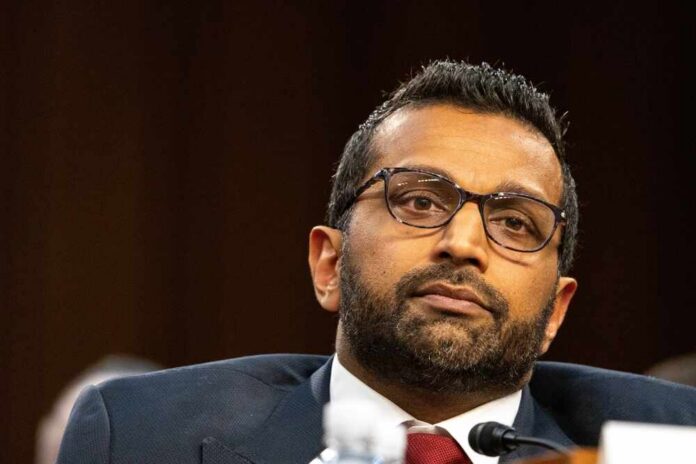
- FBI Director Kash Patel confirmed the Bureau is still purchasing Americans’ location data, and he did not commit to stopping the practice when pressed by Sen. Ron Wyden.
- Sen. Sheldon Whitehouse accused Patel of endangering national security by firing counterintelligence personnel linked to Iran-related work and a prior Trump documents probe.
- Patel and GOP allies argue the reforms are aimed at ending politicization and refocusing agents on “Main Street” crime rather than Beltway power struggles.
- The clash lands as Americans debate surveillance, civil liberties, and foreign-policy priorities during U.S. military conflict with Iran.
Wyden vs. Patel: Location Tracking and the Fourth Amendment Problem
Sen. Ron Wyden confronted FBI Director Kash Patel in a Senate hearing over the Bureau’s purchase of Americans’ location data, a practice civil-liberties critics say sidesteps the warrant process. Patel acknowledged the purchases continue and resisted giving Wyden a clean pledge to end them. The dispute matters because location histories can paint an intimate picture of a person’s life, raising core Fourth Amendment questions about unreasonable searches.
Conservatives who watched the federal government grow under years of “emergency” logic—pandemic rules, censorship-by-proxy fights, and expanding surveillance—see this as a familiar pattern. The research does not show Patel created the practice, but it does show he wouldn’t commit to stopping it when questioned. If the Bureau can buy what it would otherwise need a warrant to obtain, that becomes a constitutional end-run regardless of which party controls DOJ.
Whitehouse’s Charge: Iran Threats, Counterintelligence Firings, and Oversight Escalation
Sen. Sheldon Whitehouse used a March 26, 2026 hearing to attack Patel for firing roughly a dozen agents and analysts from the FBI’s counterintelligence unit described as tracking Iran and its proxies. Whitehouse argued the firings weaken the country’s defenses at a time when Iran-related threats remain central. He also tied the personnel changes to the prior Jack Smith investigation into Trump’s handling of classified documents, framing the episode as politicized retaliation.
The available information leaves key details unresolved, including the full scope of the unit’s responsibilities and how quickly capabilities can be rebuilt. What is clear is the political collision: Democrats are treating staffing moves as a national-security alarm, while Patel’s supporters see an overdue cleanup after years of FBI credibility problems. In 2026—with Americans already paying for conflict abroad—voters are less tolerant of opaque bureaucracy that claims “trust us” while expanding surveillance at home.
Patel’s Reform Case: Decentralizing the Bureau and Ending “Weaponization” Claims
Patel and Senate Republicans have argued that the FBI needs to be pushed away from Washington-centric politics and back toward conventional law enforcement. Reporting highlighted Patel’s shift of more than 1,000 D.C.-based agents to field offices and a broader message that the Bureau must focus on public safety rather than partisan-infused investigations. Sen. Chuck Grassley praised the direction as a return to core mission priorities and “real security.”
That reform pitch is politically potent with a conservative audience that felt targeted by selective enforcement and narrative-driven leaks in prior years. At the same time, the research also reflects a basic tension: reorganizing an agency does not automatically fix constitutional compliance. A Bureau that is “depoliticized” in personnel terms can still violate civil liberties if it continues warrantless data pipelines. Reform, in other words, has to be both cultural and procedural—or it risks becoming a branding exercise.
Why This Fight Hits Harder in 2026: War Weariness, Israel Debates, and Trust in Institutions
These hearings are unfolding in an America that is at war with Iran and increasingly divided on foreign entanglements, even within the MAGA coalition. The research does not directly connect Patel’s surveillance answers to war policy, but the timing shapes public reaction: families facing high energy costs and years of fiscal strain are skeptical of “security” arguments that expand federal power. Many voters also question whether Washington’s priorities match their own.
For conservatives, the immediate takeaway is simple: the Constitution doesn’t become optional because Washington says the threat level is high. If the FBI believes it needs location data, the clean standard is a warrant and clear oversight—especially when trust in institutions is already strained by years of partisan conflict and shifting narratives.
Sources:
Kash Patel Brags That the FBI Is Buying Your Location Data
Kash Patel touts crucial FBI reforms many Americans may not know about: ‘real security’
In Response To Graham, Kash Patel Confirms Politicization Of FBI Will End