A deadly shootout off Cuba’s coast has become Havana’s latest excuse to portray Trump’s pressure campaign as “terrorism”—even as U.S. commanders say an invasion isn’t on the table.
Story Snapshot
- Cuban border forces say they intercepted a Florida-registered speedboat near Villa Clara province, triggering a firefight that left four dead and six wounded.
- Cuba claims the group carried weapons, explosives, Molotov cocktails, and large amounts of ammunition; the U.S. says the boat was stolen and denies government involvement.
- Trump’s January 2026 executive action declared a national emergency regarding Cuba and authorized tariff pressure on countries supplying Cuba with oil.
- As fuel shortages worsened, Cuba suffered major blackouts and rising unrest, while U.S. Southern Command emphasized defensive readiness—not invasion plans.
Speedboat Clash Sparks Competing Narratives
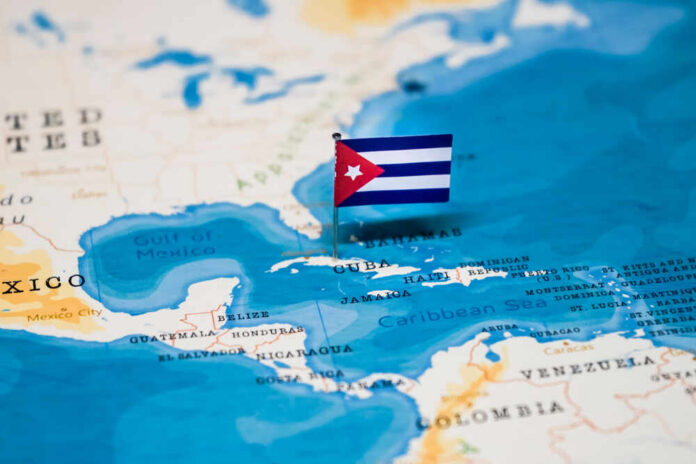
Cuban officials say border forces intercepted a Florida-registered speedboat near Cayo Falcones in Villa Clara province on February 25, 2026, carrying 10 anti-government Cuban exiles arriving from the United States. Cuban authorities allege the group attempted an armed infiltration and that a firefight followed, killing four and wounding six. Cuba also reported recovering rifles, handguns, Molotov cocktails, and large quantities of ammunition from the scene.
U.S. officials rejected claims of government involvement and said the vessel had been stolen, a key detail that undercuts Havana’s attempt to tie the incident directly to Washington. Secretary of State Marco Rubio publicly stated the U.S. had no role and pledged an investigation. That leaves a central question unresolved: whether this was a rogue operation by militants, a criminal venture, or something else entirely—facts that matter before anyone uses the clash to justify escalation.
Trump’s Economic Pressure Targets Cuba’s Energy Lifeline
Trump’s late-January 2026 executive action declared a national emergency related to threats posed by the Cuban government and authorized tariff penalties aimed at foreign suppliers delivering oil to the island. The policy’s practical impact is straightforward: Cuba’s system depends heavily on imported fuel, and pressure on suppliers creates immediate strain. Unlike the Biden-era approach of easing and messaging, the Trump posture prioritizes leverage and deterrence—tightening the screws without committing U.S. forces to combat.
The near-term effects inside Cuba have been severe. Multiple reports describe nationwide electrical grid failures tied to fuel shortages, with cascading impacts on daily life, commerce, and basic services. When the lights go out, the regime’s legitimacy takes another hit, and unrest becomes harder to suppress. For Americans, especially in Florida, instability in Cuba raises predictable concerns about a sudden migration surge—an issue that has repeatedly tested U.S. border and maritime enforcement.
U.S. Military Emphasizes Defense, Not an Invasion
Senior U.S. military testimony in March 2026 drew a bright line between political rhetoric and operational planning. Gen. Francis Donovan of U.S. Southern Command told lawmakers the U.S. military is not preparing to invade Cuba. Donovan described readiness priorities that focus on protecting U.S. personnel and facilities, including the U.S. Embassy and Guantanamo Bay, while preparing for contingencies like migrant flows and regional instability.
Donovan’s assessment also highlighted practical constraints that rarely make it into cable-news speculation. Guantanamo Bay’s infrastructure has faced disrepair and weather damage, a reminder that “readiness” often means basics—maintaining facilities, securing perimeters, and ensuring rapid response options. For a constitutional-minded audience wary of endless foreign interventions, the key point is that the public record points to a defensive posture, even as tensions rise and Cuba tries to frame every pressure tactic as an existential attack.
Why Havana’s “Terrorism” Claim Doesn’t Close the Case
Cuba’s government labeled the speedboat incident “terrorism” and used it to reinforce a familiar storyline: foreign-backed aggression threatening Cuban sovereignty. The available facts support that violence occurred and that weapons were reportedly recovered, but they do not prove U.S. state sponsorship. The U.S. denial, the stolen-boat claim, and Rubio’s pledge to investigate create a more limited, more responsible conclusion: attribution remains disputed, and policy decisions should follow verified evidence.
Meanwhile, Cuba’s relationships with adversarial powers remain part of the strategic picture cited by U.S. sources and analysts. Concerns about foreign intelligence footholds in Cuba help explain why Washington uses economic tools and heightened scrutiny. The constitutional bottom line is this: Americans can reject both reckless war talk and soft-headed appeasement. Clear deterrence, secure borders, and fact-based accountability serve U.S. interests better than emotional escalation—or pretending the regime’s internal failures are America’s fault.
Sources:
Cuba and U.S. Tensions Escalate (YIP Institute Rapid Response)
US military not preparing for Cuba invasion, senior US general says
Cuba Plunged into Darkness: Nationwide Blackout Signals Deepening Crisis
Addressing Threats to the United States by the Government of Cuba