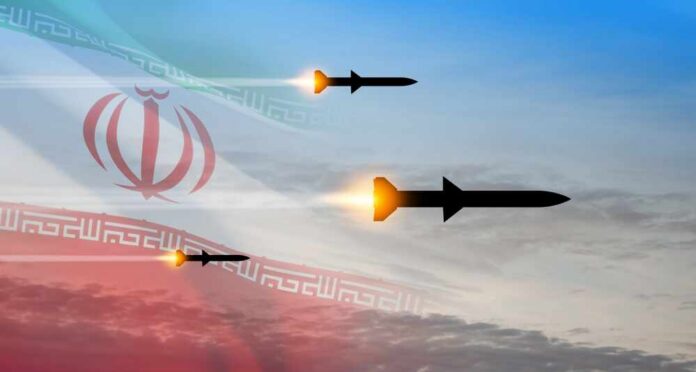
As Iran fires back, the real question isn’t whether Operation Epic Fury is hitting hard—it’s whether America can keep every base and ally protected if missile-defense interceptors get stretched too thin.
Quick Take
- Operation Epic Fury began Feb. 28, 2026, and U.S. officials say more than 1,700 targets were struck in the opening 72 hours.
- The Trump administration describes the campaign as “laser-focused” on Iran’s missiles, production networks, air defenses, and naval threats—not open-ended nation-building.
- Headlines claiming the U.S. is “running out” of Patriot/THAAD interceptors are not confirmed in official releases; the risk is real, but evidence is limited.
- Iranian retaliation against Israel and regional U.S. positions raises the operational pressure on air-and-missile defenses even when strikes are tactically successful.
What Epic Fury Is Targeting—and Why It Started
President Donald Trump authorized Operation Epic Fury after U.S. officials said Iran positioned missiles and drones in ways that threatened American forces and allies. Public descriptions of the campaign emphasize disabling Iran’s launch capability and the infrastructure behind it, including command nodes, air defenses, and maritime assets tied to threats against shipping. The operational theory is straightforward: destroy the tools that make a nuclear program and regional coercion survivable.
Within the first days, administration-aligned messaging stressed speed and scale, pointing to strikes against missile launchers and broader military infrastructure. Reporting and official summaries also frame the operation as distinct from previous long occupations in the region. Instead of “forever war” occupation models, the stated aim is capability denial—hitting what Iran would use to attack neighbors, threaten U.S. bases, or protect strategic programs from pressure.
“Running Out of Missile Defenses”: A Claim With Thin Public Proof
The “full-blown crisis” narrative focuses on a potential shortage of missile-defense interceptors—often discussed in the context of Patriot and THAAD systems—under sustained Iranian missile and drone retaliation. That concern is plausible in general terms because interceptors are finite and expensive, and high-volume salvos can force defenders into difficult tradeoffs. But the provided material also acknowledges a key limitation: official releases do not confirm depletion.
U.S. and Israeli defenses are being tested, and that Epic Fury could last “weeks or longer” according to outside analysis. Until transparent figures or official confirmation emerge, claims of the U.S. “running out” should be treated as unverified, not as settled reality.
Early Results: Large Strike Numbers, Naval Losses, and Leadership Shock
As of early March, public reporting tied to the operation describes a broad strike set and major effects: more than 1,700 targets hit in 72 hours, significant pressure on missile forces, and continued action across domains. One reported development includes a U.S. submarine sinking an Iranian frigate (IRIS Dena) on March 4.
For the administration, those facts support a “peace through strength” narrative—crushing military capacity quickly rather than bargaining from weakness. For skeptics, they raise questions about escalation dynamics and legality that are being debated in policy circles. What is clear from the sourced summaries is that the operation is designed to degrade Iran’s ability to strike back and to reduce the protective “shield” around nuclear ambitions and proxy activity.
The Strategic Tension: Capability Denial vs. Defensive Overstretch
Operation Epic Fury’s logic assumes offense can reduce incoming fire by eliminating launchers, storage, production, and command-and-control. But defense still has to hold in the meantime. Iran’s retaliatory pressure against Israel and U.S. regional positions is the stress test that fuels the interceptor-shortage storyline. Even without confirmed depletion, sustained defense requires stockpiles, logistics, and prioritization—especially when protecting dispersed bases and partners across CENTCOM’s footprint.
‘Full-blown Crisis’: The U.S. Military is Running Out of Missile Defenses During Operation Epic Fury in Iranhttps://t.co/Law2JdRLfj
— 19FortyFive (@19_forty_five) March 5, 2026
The key public uncertainty is measurement: officials have described objectives and strikes, but not detailed interceptor burn rates. That leaves Americans with an open question about readiness that should be answered with facts, not slogans. A conservative, common-sense takeaway is that missile-defense capacity is a core national security requirement—because protecting U.S. troops and deterring adversaries is not optional, and defensive shortfalls invite risk regardless of who occupies the White House.
Sources:
https://www.foxnews.com/politics/us-unleashes-operation-epic-fury-strikes-1700-iran-targets-72-hours
https://www.csis.org/events/epic-fury-campaign-against-irans-missile-nuclear-infrastructure
https://www.csis.org/analysis/operation-epic-fury-and-remnants-irans-nuclear-program
https://www.army.mil/article/290823/hegseth_says_epic_fury_goals_in_iran_are_laser_focused
https://www.war.gov/Spotlights/Operation-Epic-Fury/
https://www.centcom.mil/OPERATIONS-AND-EXERCISES/EPIC-FURY/
https://internationalpolicy.org/publications/epic-fury-international-law/