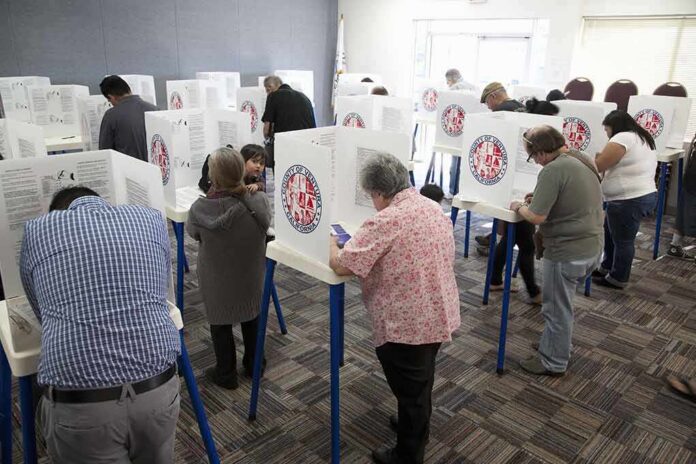
The Pentagon has ordered U.S. Cyber Command and defense intelligence to mobilize against foreign interference in the 2026 elections, marking a clear expansion of election defense operations from the military side.
Story Snapshot
- A memo directs Cyber Command and key intelligence agencies to prioritize election defense.
- The order calls for using existing authorities and working with the Department of Homeland Security.
- The Pentagon says the focus is stopping foreign actors, not running domestic election administration.
- Officials highlight joint work with federal, state, and local partners to protect voting systems.
What The New Pentagon Order Actually Does
Defense Secretary Pete Hegseth signed a memorandum instructing U.S. Cyber Command and the broader defense intelligence enterprise to “prioritize and deploy advanced intelligence and cyber capabilities” against foreign interference targeting U.S. elections, according to multiple outlets. Reports say the memo was released publicly on Sept. 28. The directive tasks the Pentagon with identifying, disrupting, and neutralizing foreign threats to democratic processes while staying within existing legal authorities and roles.
The order names specific agencies and leaders. It addresses U.S. Cyber Command and its close partners at the National Security Agency, the Defense Intelligence Agency, and the National Geospatial-Intelligence Agency, signaling a whole-of-defense approach rather than a single unit effort. Coverage describes three main lines of effort: targeted intelligence collection, active cyber defense, and joint operations with the Department of Homeland Security to blunt foreign cyber activity aimed at election systems.
How The Mission Fits Long-Running Election Security Work
Pentagon statements frame the mission as protecting voting mechanisms and lawful voters from foreign manipulation, not managing ballots or overseeing polling places. Spokespeople emphasize working “in lockstep” with federal, state, and local partners to defend systems and expose malign influence campaigns. This matches common election-defense practice, which focuses on hardening targets, sharing threat intelligence, and countering foreign interference attempts before they can disrupt public confidence or operations.
Reporting also notes that Cyber Command and intelligence agencies played election-defense roles in past cycles, so the new memo may align and intensify existing efforts rather than create a brand-new mission set. The memo reportedly instructs teams to use their current legal authorities, which keeps the work within known boundaries and requires close coordination with the Department of Homeland Security, the lead on election infrastructure security at the federal level.
What We Do Not Know Yet About Scope And Measures
Public coverage does not identify specific foreign adversaries or a trigger incident behind the order. The reports describe a general foreign threat environment rather than naming a country or campaign tied to the memo’s timing. Outlets also have not published detailed benchmarks, timelines, or success metrics, so it is unclear how the Pentagon will measure disruption or neutralization of threats in practice based on available materials.
🚨 TWO MORE MAJOR ELECTION-SECURITY DEVELOPMENTS
Our Election Infrastructure Security Timeline continues to grow — and these two developments are particularly significant because they involve the federal government's cybersecurity and national-security infrastructure.
🇺🇸… pic.twitter.com/6xnRdLxuVr
— Jim Meadows (@jcmeadows) October 2, 2026
Without the full memo text in open sources, finer points on legal contours and internal definitions remain out of public view. Still, the core action is clear in press accounts: Cyber Command and key intelligence agencies are directed to prioritize election-focused intelligence, defend against foreign cyber operations, and conduct joint work with the Department of Homeland Security to protect election infrastructure ahead of the 2026 vote.
Sources:
nextgov.com, abcnews.com, thehill.com, militarytimes.com, insidedefense.com, washingtonexaminer.com, usatoday.com