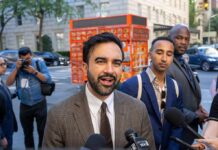
A newly released police bodycam from the Paul Kessler killing is raising fresh questions about what prosecutors, defense lawyers, and the public were told about how a political protest turned deadly.
Story Snapshot
- New bodycam video from the scene appears to clash with key defense claims about distance, timing, and how Paul Kessler fell.
- Court records already show the suspect, professor Loay Alnaji, admitted striking Kessler with a megaphone and causing great bodily injury.[7]
- The case highlights how fast media and officials lock in a story even when early evidence is incomplete or conflicting.[1][5]
- The fight over self-defense versus assault fits a broader pattern where political rage, identity, and protest violence blur basic facts.[13]
Deadly Protest And A Shifting Official Story
On November 5, 2023, dueling pro-Israel and pro-Palestine protests met at a busy intersection in Thousand Oaks, California. About 75 to 100 people gathered, including 69-year-old Jewish American Paul Kessler, who was counter-demonstrating with an Israeli flag. During the protest, Kessler and pro-Palestinian supporter Loay Alnaji got into a confrontation. At some point, Kessler fell backward, struck his head on the ground, and later died at the hospital from blunt-force head trauma.[1][4][10]
Early statements from the Ventura County Sheriff’s Office painted a murky picture. Officials said surveillance and bystander video did not give a clear view of the clash and that witnesses disagreed about who started the fight and what caused the fall. A short clip showed Kessler on the ground, but not the moment of impact. For days, law enforcement said they lacked enough evidence to make an arrest, even as national outlets framed the case as an assault on a Jewish protester at a heated political rally.[1][4][5]
What The New Bodycam Footage Adds To The Record
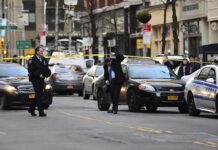
The newly surfaced bodycam video, shared online as an exclusive release, does not show the exact moment Kessler is hit. Instead, it captures officers arriving, the immediate aftermath, and interactions with protesters and witnesses at the scene. That footage matters because the defense long argued that Alnaji stood six to eight feet away when Kessler fell, and did not cause the fall. A bodycam that shows Alnaji’s position, movements, and words right after the incident can challenge or support that claim.[1]
Earlier coverage stressed that no video had confirmed the confrontation itself, which allowed both sides to push their own narratives. If the bodycam now shows Alnaji closer than claimed, holding the megaphone that later tested positive for Kessler’s blood, or describing events in ways that conflict with his court posture, that undercuts the self-defense storyline. At the same time, if the footage shows chaos, poor crowd control, or confused officer questioning, it may confirm many Americans’ fear that authorities cannot or will not untangle politically charged violence with real care.[5][8]
From Disputed Self-Defense To Guilty Plea And Forensic Evidence
Whatever the defense claimed in public, the paper trail from court is blunt. In May 2026, one week before trial, Alnaji pleaded guilty to felony involuntary manslaughter and battery causing serious bodily injury. The Ventura County District Attorney’s press release notes he admitted the special allegation that he personally inflicted great bodily injury, and he agreed to aggravating factors including use of a weapon and the victim’s vulnerability. This means he is on record as the person who caused the harm, not just someone nearby when a tragic accident happened.[1][7]
Evidence presented at a 2024 hearing fills in more gaps. Prosecutors told the judge that a megaphone Alnaji held at the protest had Kessler’s blood on its front rim, confirmed by DNA analysis. They also introduced cell phone video captured by Kessler in the seconds before he was struck, as well as medical examiner testimony that Kessler died from blunt force trauma caused by a blow from the megaphone and the subsequent fall. Those details make it hard to square the idea that Kessler simply slipped and fell while Alnaji was several feet away.[8]
Why This Case Feeds Public Distrust Across The Political Spectrum
This case hits nerves on all sides because it mixes protest politics, identity, and criminal law, and because the public story shifted as new evidence appeared. Conservatives see a Jewish man killed at a rally and worry the system downplayed possible antisemitism, while officials emphasize they found no proof of a hate crime by Alnaji. Liberals see yet another example of violent protest escalation and worry self-defense claims are used to excuse deadly force in public conflicts.[1][11][14]
🧵w/new EXCLUSIVE video showing how pro-Hamas mosque leaders in CA targeted a Jewish man, Paul Kessler, for daring to show up on a corner opposite their rally with an Israeli flag and confronted him and fatally attacked him, then essentially planted their flag on this conquered… pic.twitter.com/9RtVLnInRg
— Jennifer Van Laar (@jenvanlaar) June 29, 2026
Legal scholars note that self-defense requires an imminent threat, reasonable fear, and force proportional to the danger. In many states, expanded “stand your ground” rules have made deadly encounters more common while not clearly reducing crime. Research also shows such defenses work unevenly, often favoring some groups over others. When mixed with political rage at protests, fact-finding becomes even harder, and prosecutors tend to lean on the victim’s identity and the broader protest climate rather than clean video and neutral witness accounts.[11][12][13][14][15]
What The Bodycam Fight Says About Power And Transparency
For many Americans, the struggle over this bodycam footage is as important as the footage itself. People on both the right and the left suspect officials hide or slow-walk key videos when they might embarrass police, challenge a chosen narrative, or stir political anger. In this case, law enforcement gathered video quickly yet did not release anything that showed the critical second when Kessler was struck. That gap forced citizens to choose sides based on trust in institutions rather than direct evidence.[1][5]
Now that bodycam video from the scene is being shared outside official channels, readers can see more of what officers saw and did in real time. If that extra context exposes mistakes, bias, or spin, it will deepen the feeling that the system protects itself first and the public second. If it instead confirms the forensic and DNA evidence that already supported the guilty plea, it may show that courts, not cable networks or social media, were closer to the truth all along. Either way, the lesson is clear: when the government controls the evidence, and releases it slowly or selectively, faith in equal justice erodes.
Sources:
[1] Web – EXCLUSIVE: New Bodycam Video From Paul Kessler Murder Scene …
[4] Web – Suspect arrested for manslaughter in death of protester at California …
[5] Web – Hate crime has not been ruled out in the death of Jewish man Paul …
[7] Web – Professor arrested in Paul Kessler’s death – FOX 11 Los Angeles
[8] Web – Man arrested in Jewish protester Paul Kessler’s death – WCTI
[10] Web – Paul Kessler, a 69-year-old Jewish counter-demonstrator, died after …
[11] Web – Jewish protester Paul Kessler died last week following a … – …
[12] YouTube – Man arrested in the death of a Jewish protester in Thousand Oaks
[13] Web – [PDF] Alnaji Pleads Guilty to All Counts and Allegations in …
[14] YouTube – Lawyer for SoCal man charged in Jewish demonstrator’s death fires …
[15] Web – [PDF] Judge Rules Sufficient Evidence in Alnaji Case to Merit Trial