A little-known Trump adviser quietly tried to sideline roughly half of America’s voting machines on debunked conspiracy grounds—and the way it happened says as much about the “deep state” as it does about Donald Trump.
Story Snapshot
- White House election-security officials explored banning voting machines used in over half of U.S. states, targeting Dominion systems.
- The plan relied on conspiracy theories about foreign control and 2020 fraud that courts, audits and federal agencies had already rejected.
- Commerce Department lawyers probed national‑security powers but backed off when no hard evidence was produced.
- Both parties now point to this episode as proof that insiders and elites treat election rules like a political plaything.
How the Quiet Push to Sideline Voting Machines Unfolded
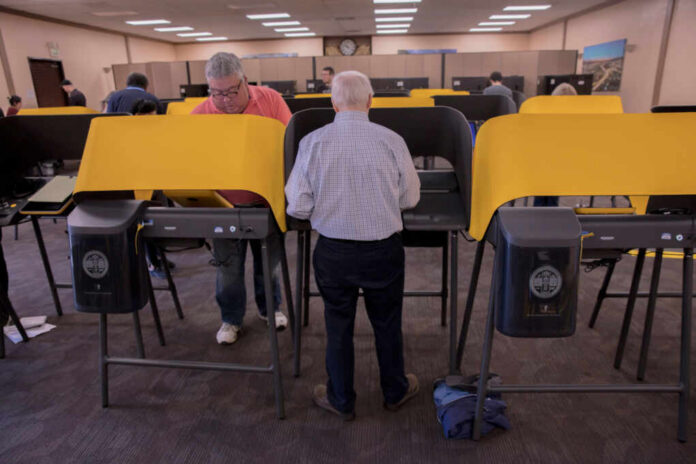
Reporting based on multiple current and former officials says that, in 2025, President Donald Trump’s election-security chief Kurt Olsen explored whether the Commerce Department could classify key components in Dominion Voting Systems machines as national security risks, a move that might effectively bar their use in federal elections across more than half of U.S. states.[3] The effort followed years of Trump allies claiming that voting machines helped “steal” the 2020 election, despite failed lawsuits and internal campaign reviews finding no credible evidence of widespread machine fraud.[2]
Sources indicate that by September 2025, Commerce Department staff had started examining what legal authorities might allow restrictions on the targeted equipment, including powers normally used against foreign telecom or technology threats.[3] Officials reportedly weighed whether chips and software used in Dominion machines could be labeled security concerns due to where they were manufactured or coded. The push reflected a broader Trump-world strategy to reframe contested election outcomes as evidence of hidden technical manipulation rather than focusing on more familiar issues like mail ballots or voter rolls.[2]
Conspiracy Claims Collide with the Evidence Record
The push to ban the machines leaned heavily on long-disputed narratives tying Dominion systems to Venezuela and alleging that software could secretly flip votes, including claims about 2020 tabulators in Antrim County, Michigan.[3] A Michigan lawsuit spun those theories into a “forensic” report, but the state’s top court ultimately dismissed the case, and state investigators concluded that initial misreported results were caused by human error, not hacking or malicious code.[3] Election experts later called the report’s conclusions false and its methods critically flawed.
Federal security agencies also undercut the fraud narrative. A 2021 assessment cited by the Brennan Center for Justice reported no indication that any foreign actor altered technical aspects of the 2020 voting process, including registration, ballot casting, tabulation or reporting.[2] The federal Cybersecurity and Infrastructure Security Agency stated there was no evidence that voting systems deleted or changed votes or were otherwise compromised.[2] A hand recount of nearly five million ballots in Georgia and multiple audits in Arizona’s Maricopa County upheld the reported outcomes, reinforcing that alleged machine-based manipulation did not hold up when checked against paper records.[2]
Why the Ban Effort Collapsed Inside the Trump Administration
According to officials familiar with the process, Olsen and colleagues were ultimately unable to provide the Commerce Department with concrete evidence that Dominion hardware or software posed a genuine national security threat, beyond contested theories and already-litigated 2020 disputes.[1][3] A federal team that had quietly seized Dominion machines used in Puerto Rico’s 2024 governor’s race reportedly found some known software vulnerabilities but no proof of Venezuelan code or successful hacking.[1][2] Inspectors did identify one chip packaged in China by U.S. firm Intel, with others packaged in Japan, South Korea and Malaysia, but such components are not normally treated as national security red flags.[2]
Without substantiating evidence, Commerce officials decided not to act on the proposed designation, and the initiative stalled.[3] This echoed an earlier pattern inside Trump’s circles: in November 2020, a Trump campaign deputy communications director had asked staff to vet the most sensational machine-fraud allegations, and the internal review concluded that the claims were baseless. Former Attorney General William Barr also told investigators that Department of Justice inquiries found fraud claims, including machine-rigging theories, to be unsupported.[4] Despite those internal findings, political advisers outside formal security channels continued pushing aggressive measures.
What This Reveals About Power, Elections and Public Trust
This episode lands in an era where many conservatives and liberals alike feel the federal government bends rules to protect its own power rather than the people’s vote. For conservatives, the story reinforces suspicions that genuine concerns about election integrity get buried when they cut against entrenched interests in Washington. For liberals, it confirms fears that those in power will weaponize national security tools and bureaucracy to shape who can vote and how, even when evidence is thin.[2]
Trump official pushed ban on US voting machines over debunked fraud claims: Reporthttps://t.co/VlUQxX7OuK
— The Telegraph (@ttindia) May 23, 2026
The deeper problem is structural. Election rules are increasingly treated as just another battlefield for partisan operatives and unelected insiders, whether through novel fraud claims, emergency executive orders, or quiet regulatory maneuvers.[2][3][4] When officials float sweeping changes—like sidelining half the country’s voting machines—based on theories that cannot survive audits, courts or internal reviews, they feed the sense that a small circle of elites experiments on the system while ordinary Americans are expected to simply trust the outcome. That perception, left unaddressed, may damage faith in the republic more than any one election ever could.
Sources:
[2] Web – Beware of Novel Claims of 2020 Election Fraud
[3] Web – Trump officials tried to ban half of U.S. voting machines
[4] Web – Trump official tried to ban half of US voting machines, citing …