A viral claim that Kamala Harris called Trump’s Iran war “bullshit” is spreading fast—yet the record shows a different, more calculated message aimed at boxing in the commander-in-chief.
Quick Take
- No credible source confirms Harris used the profane quote; her verified remarks criticize the war as a “war of choice” and a “dangerous and unnecessary gamble.”
- Harris is pressing Congress to force a War Powers vote, turning a foreign-policy crisis into a constitutional fight over who can send Americans into combat.
- Trump says the operations are necessary to stop Iran’s nuclear ambitions, while critics argue the escalation lacks clear authorization and a defined end state.
- The episode highlights how misinformation travels faster than official transcripts—and how that distorts public debate in an already distrustful political climate.
What Harris Actually Said—and What She Didn’t
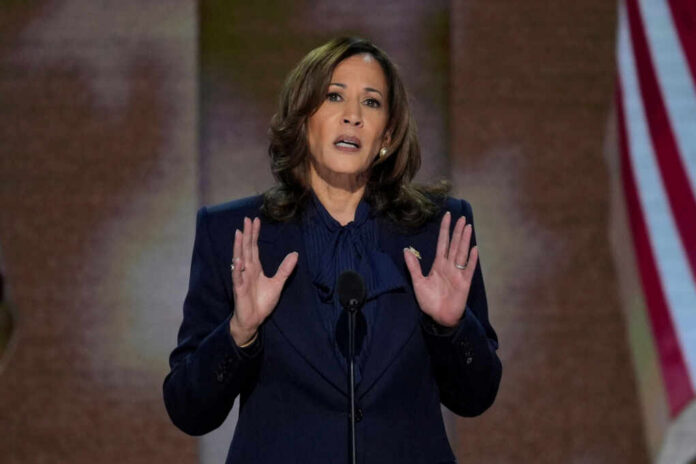
Kamala Harris’s headline-grabbing Iran comments in late February did not include the viral phrase circulating online. Reporting tied to her response describes professional but sharp language: she called the escalation a “dangerous and unnecessary gamble” and a “war of choice,” and she urged Congress to act. The gap between what’s provable and what’s viral matters, because Americans cannot judge leadership—Trump’s or Harris’s—if the public conversation runs on misquotes instead of verifiable statements.
Harris also framed her criticism around process and accountability, not profanity. In public remarks and related coverage, she pushed for a War Powers vote and argued the country should not slide into a bigger conflict without clear congressional involvement. That position lands in a sensitive spot for conservatives: many voters support strength against Iran, but they also distrust open-ended wars and executive branch decision-making that bypasses the people’s representatives.
How the Iran Escalation Unfolded Under Trump
The backdrop includes earlier U.S. strikes on Iranian nuclear sites and then a fresh jump in tension. According to coverage summarized in the research, Trump announced “major combat operations” against Iran in the early morning hours on Feb. 28, 2026. The administration’s justification centers on stopping Iran’s nuclear program and deterring further escalation in a region already on edge after missile exchanges involving Israel and Iran.
Trump’s supporters see the move as a necessary assertion of American power against a hostile regime with a long record of proxy warfare and nuclear ambitions. Critics focus on the risk of mission creep: once “major combat operations” begin, the U.S. can quickly end up committed to outcomes it cannot fully control—especially if Iran retaliates through proxies or if shipping lanes and energy markets come under pressure. The research notes oil-price sensitivity and broader economic consequences tied to the Strait of Hormuz risk.
War Powers, Congress, and the “Deep State” Problem Americans Agree On
Harris’s call for a War Powers vote is more than a talking point; it’s a test of whether Congress still meaningfully checks the executive on war. The U.S. Constitution assigns Congress the power to declare war, but modern presidents of both parties have stretched their authority through authorizations, emergency claims, and limited-strike rationales. That history fuels public cynicism—right and left—about a system that too often drifts into conflict with unclear objectives and limited transparency.
For conservatives frustrated by “deep state” inertia and unaccountable bureaucracy, the key question is simple: who is deciding, and under what authority? If elected lawmakers avoid a recorded vote while Americans fight and pay the bills, distrust grows—no matter which party holds the White House. The research also notes Harris’s claim that Trump was “pulled into” war by Israeli Prime Minister Benjamin Netanyahu, a charge that, whether proven or not, plays into a broader suspicion that foreign-policy decisions are driven by outside pressure rather than voters’ interests.
The Political Whiplash: Harris’s Past Iran Rhetoric vs. Her 2026 Message
Republicans and conservative media have pointed to an apparent contrast between Harris’s earlier hawkish framing of Iran and her 2026 anti-war posture. The research cites prior comments emphasizing Iran as a top adversary and support for Israel against missile threats. That pivot can be read two ways: supporters see a leader responding to changing facts on the ground; critics see an election-cycle repositioning designed to exploit war fatigue while still sounding tough in principle.
What can be said with confidence from the available reporting is that Harris’s most verifiable 2026 message targets legitimacy and authorization: she wants Congress on the record. Conservatives who want peace through strength can reasonably ask for both: clear objectives abroad and constitutional clarity at home. When viral lines replace transcripts, the public loses the ability to demand either one—and Washington’s incentive to manipulate narratives gets even stronger.
Sources:
https://www.advocate.com/politics/national/kamala-harris-trump-iran-war
https://www.foxnews.com/politics/harris-iran-biggest-us-adversary-china