Iran’s attempted missile strike on the joint U.S.-UK base at Diego Garcia is a blunt reminder that Tehran’s “2,000 km limit” talk never told the whole story.
Story Snapshot
- Iran launched two intermediate-range ballistic missiles toward Diego Garcia—about 4,000 km from Iran—marking an escalation beyond the Middle East.
- Reports say one missile failed mid-flight and the other was intercepted by a U.S. warship; no confirmed damage to the base has been reported.
- The attempted strike came hours after the UK announced the U.S. could use British bases, including Diego Garcia, for operations tied to Strait of Hormuz attacks.
- Iran’s IRGC used the incident to signal longer reach and threaten additional strikes, while the UK condemned the launch as reckless.
Diego Garcia Targeted as Iran Tests Reach and Resolve
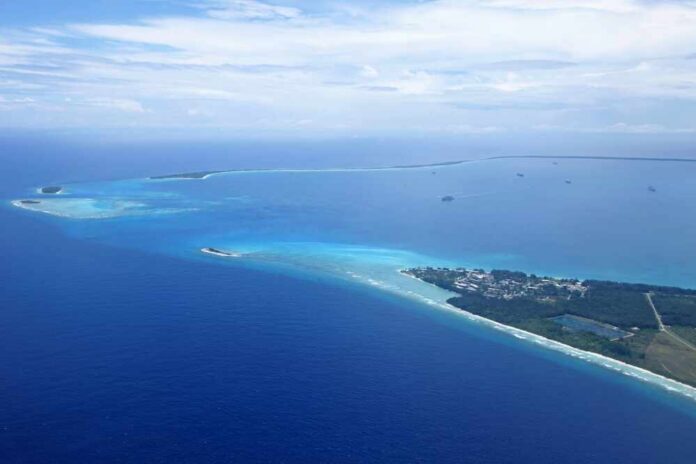
Iran fired two ballistic missiles at the U.S.-UK military base on Diego Garcia in the Chagos Islands on March 21, 2026, expanding a conflict that had largely stayed closer to Israel and the Gulf. Multiple reports place Diego Garcia roughly 4,000 kilometers from Iran—far beyond Iran’s often-cited 2,000-kilometer missile range. One missile reportedly malfunctioned in flight, while a second was intercepted, leaving no confirmed impact on the base.
UK officials publicly condemned the attempted strike, and the confirmation matters because it separates verified events from wartime propaganda. Iran’s Islamic Revolutionary Guard Corps (IRGC) framed the launch as proof of advanced capability and warned of new tactics designed to “dumbfound” the U.S. and Israel. Even with an apparent failure and an interception, the message was strategic: Tehran wants Washington and London to assume distance is no longer a shield.
UK Basing Decision Becomes an Immediate Trigger
Reports indicate the UK’s pre-launch announcement—allowing the U.S. to use British bases, including Diego Garcia—was followed within hours by Iran’s missile attempt. That sequencing suggests Tehran is trying to impose costs on allied cooperation, not just on U.S. forces. Diego Garcia’s value is not symbolic; it is a real logistics and strike hub in the Indian Ocean. When Iran aims at that node, it is testing coalition cohesion as much as air defenses.
Diego Garcia is operated by the United States under UK sovereignty and is widely described as hosting long-range bombers, submarines, and critical surveillance and resupply functions. In a conflict environment, that mix makes the base both a platform and a pressure point. Iran’s launch also signaled an intent to expand the battlespace beyond the traditional front lines. For Americans watching costs and commitments overseas, the obvious question becomes how much deterrence is enough to prevent further expansion.
What the Missile Attempt Reveals About Iran’s Capabilities
The most consequential detail is not that the missiles failed to hit; it is that Iran tried to reach a target at a distance roughly double its publicly declared range. Analysts cited in coverage described the strike as a “message” of reach rather than a battlefield success. If that characterization holds, the attempt still matters for planning: missile defense, basing, and force protection decisions must assume Iran either possesses longer-range systems or is willing to claim it does to influence behavior.
Some reporting notes longstanding Western concerns that Iran’s missile program has been obscured through dual-use activity, including space and satellite launches. That context helps explain why the Diego Garcia attempt landed like a strategic warning. At the same time, several battlefield claims remain difficult to verify independently in real time, including Iran’s assertions of successful strikes on Gulf facilities. The most solidly corroborated facts across outlets remain the launch itself, the distance involved, and the lack of confirmed damage.
War Context: Hormuz Disruption and Escalation Management
The attempted strike unfolded amid a broader Iran-U.S.-Israel conflict that has included attacks on Iranian nuclear-linked sites and Iranian retaliatory volleys of missiles and drones. Reports also describe major stress on energy routes, including disruption tied to the Strait of Hormuz. That backdrop matters because Iran’s leverage has often relied on threatening chokepoints and widening risk for global shipping. Diego Garcia sits astride the wider Indian Ocean geography that supports operations addressing those threats.
For U.S. readers who want clarity over slogans, the takeaway is straightforward: the interception prevented a base strike, but the attempt demonstrates Iran’s willingness to target allied infrastructure far from the immediate war zone. The UK’s role also shows how quickly allied decisions can become targets in Tehran’s messaging and military calculus. With President Trump back in office, the policy debate is likely to focus on deterrence, force protection, and avoiding open-ended commitments while still preventing attacks on Americans and allies.
Sources:
Iranian attack on the Diego Garcia military base: its location and strategic role