President Trump orders 5,000 Marines and warships to the Middle East, signaling America’s unyielding resolve against Iran’s nuclear threats and aggression.
Story Highlights
- Pentagon deploys Amphibious Ready Group (ARG) and Marine Expeditionary Unit (MEU) with 5,000 personnel amid escalating Iran conflict.
- Two aircraft carriers, USS Abraham Lincoln and USS Gerald R. Ford, plus 16 ships form largest U.S. naval buildup in decades.
- Trump leverages military might to force Iran into nuclear deal or face consequences, protecting U.S. interests and allies.
- Forces enable crisis response, evacuations, and potential ground operations following CENTCOM requests.
Marine Deployment Bolsters U.S. Options
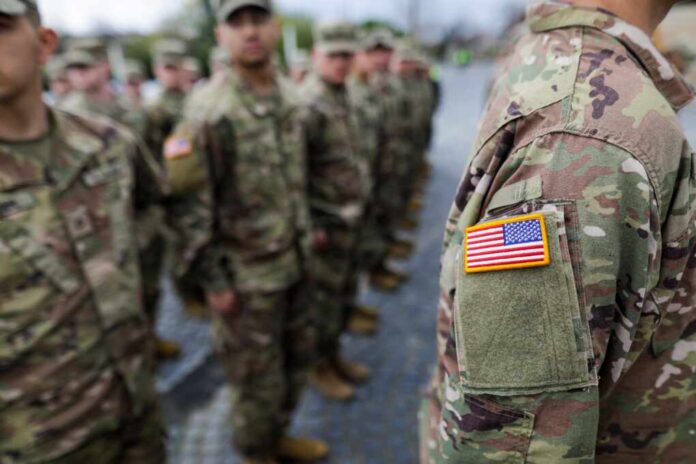
On March 13, 2026, the Pentagon announced deployment of approximately 5,000 Marines and sailors forming an ARG and MEU to the Middle East. These units support operations in the escalating war with Iran. U.S. Central Command requested these ground forces for crisis response, evacuations, embassy protection, and potential missions. This move follows stalled nuclear talks, where President Trump demands a meaningful deal. The deployment underscores America’s commitment to deterring Iranian aggression without endless entanglements.
Naval Power Projection Peaks with Carrier Strike Groups
End of January 2026 saw USS Abraham Lincoln and three guided-missile destroyers redirect to the Arabian Sea from the South China Sea, adding 5,700 personnel. Mid-February brought Trump’s order for USS Gerald R. Ford, three more destroyers, and over 5,000 personnel, expanding to at least 16 ships. Early February added over 50 aircraft at Jordan’s Muwaffaq Salti Air Base and E-3 planes to Saudi Arabia. Submarines likely join, creating the largest U.S. warships and aircraft force in the region in decades. This buildup deters threats to the Strait of Hormuz and U.S. bases.
Timeline of Escalation from Nuclear Strikes to Standoff
June 2025 bombings of three Iranian nuclear sites by U.S. B-2 bombers prompted Iranian missile strikes on Al Udeid Air Base in Qatar. U.S. responded with Patriot systems. Indirect Geneva talks yielded principles per Iran’s Abbas Araghchi, but stalled after visits to Oman and Qatar. Trump warns of military action absent a deal. Deployments under CENTCOM in Arabian Sea, Jordan, and Saudi Arabia counter Iran’s drones and missiles against Israel and U.S. assets. This sequence reflects Iran’s persistent nuclear defiance met by firm U.S. resolve.
Trump’s Strategy: Strength Secures Peace
President Trump, as Commander-in-Chief, orders these assets to coerce Iran into compliance. Envoys Steve Witkoff and Jared Kushner advance talks in Geneva, Oman, and Qatar. U.S. holds military superiority with carriers and aircraft against Iran’s asymmetric missiles and proxies. Trump states nuclear deal essential or bad things happen. A U.S. official notes Marines provide options for use. This approach prioritizes American strength, protects allies like Israel and Jordan, and avoids weak diplomacy that emboldened past threats.
Risks and Implications for Troops and Economy
Short-term, forces enable strikes on Iranian air defenses or leadership, risking retaliation via drones and missiles at bases or Israel. Long-term, potential regional war strains Navy readiness, with USS Gerald R. Ford crew exceeding eight months deployed. Over 10,000 U.S. personnel at risk; allies like Qatar and Saudi Arabia host assets. Strait of Hormuz threats disrupt global oil flows. Expert Michael O’Hanlon warns Iran may escalate if leadership targeted. Trump balances leverage with troop safety, rejecting globalist overreach.
Sources:
US military assets flock to Middle East amid Iran standoff
US military assembles largest force of warships, aircraft in Middle East in decades
Second US aircraft carrier being sent to Middle East, source says, as Iran tensions high
Pentagon eyes surging carrier group to Middle East amid