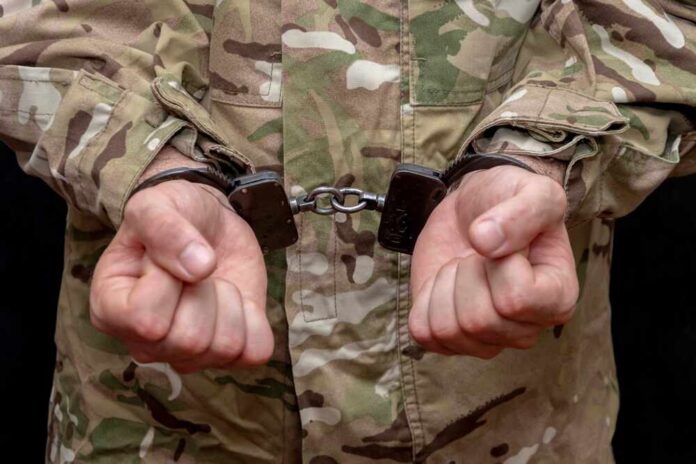
When an Army sergeant gets six life sentences after a base shooting, but his mental health crisis barely gets mentioned, you have to ask whose story our institutions really want told.
Story Snapshot
- Army Sgt. Quornelius Radford was convicted of attempting to murder five soldiers and his fiancé and given six consecutive life sentences with the possibility of parole.
- Prosecutors said he hunted unit leaders with a personal handgun and that his military weapons training proved he meant to kill.
- The defense argued Radford was suicidal, bullied, and trying to provoke police to shoot him, not to execute his chain of command.
- Media and the military system largely highlighted the “intent to kill” narrative, while deeper questions about mental health, command climate, and accountability were pushed to the side.
What Happened at Fort Stewart
On August 6, 2025, at Fort Stewart in Georgia, Army Sgt. Quornelius S. Radford walked into his unit area with a personal 9-millimeter handgun and opened fire, wounding five people, including his male fiancé.[9] Trial witnesses said he moved through two offices and a conference room, shooting four soldiers, while telling others he met in the hallway to leave.[6] Radford later admitted to the shootings and to firing on his partner’s car, but claimed he did not set out to kill anyone.[1]
A military judge convicted Radford of two counts of attempted premeditated murder and four counts of attempted unpremeditated murder, then sentenced him to six consecutive life sentences with the possibility of parole.[9] Army prosecutors said he targeted leaders in his logistics unit and used a personal handgun that was banned on base.[6] The official Army release stressed the seriousness of attacking fellow soldiers on a secure installation, calling the crimes an attempt to murder his own team.[9]
How Prosecutors Proved Intent to Kill
Army prosecutors built their case on two pillars: where Radford went and how he fired. Witnesses said he went straight to key leadership spaces, not random work areas, suggesting he was seeking out specific people.[6] Prosecutors also leaned on the pattern of shots, which doctors described as close range hits to the chest, back, abdomen, and face, the kind that often kill.[1] They argued these were not warning shots, but deliberate attempts to end lives.
Prosecutors then tied Radford’s military training to intent. They said every soldier is taught never to point and fire a weapon at a person unless they are prepared to kill.[6] In the military justice system, attempted murder requires a “specific intent” to kill plus an act that clearly moves toward that goal.[13] By combining his weapons training, his movement toward leadership offices, and his own admissions that he came to confront superiors, the government convinced the judge this was more than a breakdown. It was, in their view, a decision.
The Defense: Suicide, Bullying, and a Broken Soldier
Radford’s defense team painted a very different picture. They said he was a desperate man in the middle of a mental health crisis who wanted to die, not kill.[6] A former soldier friend told the court Radford called him minutes before the shooting, saying he was suicidal and felt bullied by leadership.[3] Radford’s fiancé testified he followed him onto post because he feared Radford would try to shoot himself in front of his chain of command to force military police to open fire.[3]
In a statement raised at trial, Radford said his unit did not believe him when he warned he might kill himself, so he “took matters into [his] own hands.”[3] His lawyer summed up the defense in one line: “Radford only wanted one person to die that day, himself.”[6] Under military law, premeditated murder requires a “consciously conceived” plan to take a life, and even unpremeditated murder needs an intent to kill or cause great bodily harm.[11] The defense argument was that his true intent was self-destruction, even if others were terribly hurt in the process.
What the Sentence Reveals About the System
After a bench trial, not a jury of peers, a single military judge decided Radford’s fate and accepted the prosecution’s version almost entirely.[9] All six victims testified at sentencing about their lasting trauma and said Radford deserved the maximum punishment, which the judge then gave.[9] Under the Uniform Code of Military Justice, a general court-martial can impose life in prison without any fixed upper limit, and multiple life terms can run one after another.[14] On paper, this shows the system treating an attack on soldiers with full seriousness.
FORT STEWART: Army Sgt. Quornelius Radford Receives 6 Life Sentences For Shooting 5 People pic.twitter.com/cyWa4xIpPJ
— SEGAMI (@segamihcfund) June 24, 2026
But for many Americans watching from the outside, this case also touches deeper worries. People on both the left and the right have seen how big institutions, from federal agencies to the Pentagon, move quickly to lock in a simple story and a harsh sentence while leaving harder questions unanswered. Here, media outlets mostly echoed the “intent to kill” frame and gave far less space to the claims of suicidal intent, bullying, and a failing support system for a struggling service member.[1] Those patterns feed the growing belief that the system protects itself first, tells the story that is easiest to manage, and keeps the public from seeing how often warning signs are missed until lives are shattered.
Sources:
[1] Web – Fort Stewart Army Sergeant Receives 6 Life Sentences For Shooting 5 …
[3] Web – Army sergeant sentenced to life in prison for attempting to murder …
[6] Web – Former Sgt. Quornelius Radford has been sentenced in … – Instagram
[9] Web – Quornelius Radford: Who is the accused Fort Stewart shooter?
[11] YouTube – Who is Quornelius Radford, alleged Fort Stewart shooter?
[13] Web – The Brief A military judge found Fort Stewart Sgt. Quornelius …
[14] Web – “I just want y’all to know that I love y’all, and I tried my hardest …