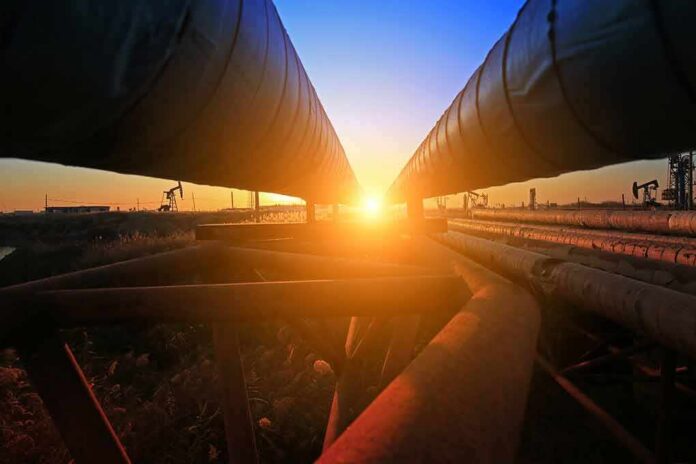
Saudi Arabia shut its East-West oil pipeline after drone strikes hit pumping areas, putting a vital global supply workaround on pause.
Story Snapshot
- Saudi officials closed the East-West pipeline as a precaution after drone attacks.
- The strikes targeted sites in the Riyadh and Medina regions and caused fires and injuries, officials said.
- Saudi Arabia said the drones originated from Iraq; Iraq announced an investigation.
- The pipeline lets Saudi exports bypass the Strait of Hormuz, so any outage raises global risk.
What Saudi Arabia Says Happened
Saudi ministries said drones struck facilities along the East-West pipeline, prompting a temporary shutdown for safety while fires were contained. Officials described the attacks as hitting areas in the Riyadh and Medina regions and acknowledged injuries, without a final count released. The government framed the step as precautionary, not a sign of long-term damage, but gave no exact downtime. Reports described smoke and localized damage near affected pumping sites.
Saudi statements said the drones came from Iraq. Baghdad said authorities were investigating, and local media reported actions to trace launch platforms. The claim tracks with past assessments by United States officials in 2019 that similar strikes had originated from Iraq, which Saudi media often cites as precedent. Responsibility was not assigned to a specific group in official Saudi comments carried by international outlets at the time of reporting.
Why the East-West Line Matters
The East-West pipeline runs from Saudi Arabia’s oil fields in the east to the Red Sea port of Yanbu. This route allows crude to avoid the Strait of Hormuz, a narrow chokepoint where tensions often flare. When that bypass is disrupted, even briefly, energy markets worry about shipping delays and price spikes. Analysts note that the line can carry millions of barrels per day, so outages, inspections, or restarts can echo far beyond the region.
Earlier in the year, Saudi Arabia reported that attacks across its energy network had cut throughput on the East-West system before later restoring capacity to about seven million barrels per day. That recovery showed resilience but also the system’s exposure to low-cost, hard-to-detect drones. Each incident adds pressure on insurers, shippers, and refiners to plan for reroutes and higher costs. That cascades into fuel prices, freight rates, and inflation risk for consumers worldwide.
The Broader Security Pattern
Regional conflicts have pushed combatants to hit energy infrastructure with drones and missiles, seeking leverage with limited resources. Governments often share partial details after such attacks, citing security needs, which leaves outside observers to piece together the timeline from official statements and satellite images. This pattern increases market stress even when physical damage is modest, because ambiguity itself can move prices and shift shipping behavior.
Saudi officials signaled restraint, saying they would not retaliate immediately, while pushing Iraq to act against any responsible networks inside its borders, according to international reporting on the statements. That stance aims to avoid a wider war that could endanger more energy sites and sea lanes. For Americans, the practical link is simple: threats to this pipeline often show up later as pain at the pump, higher delivery costs, and more pressure on family budgets.
Sources:
feedpress.me, bbc.com, aljazeera.com, apnews.com, theguardian.com, middleeasteye.net, reuters.com, dawn.com