Federal prosecutors say an Iran-backed terror commander quietly directed a global campaign that nearly brought mass-casualty attacks on U.S. synagogues and American targets in Europe right to our doorstep.
Story Snapshot
- The U.S. Department of Justice charged Iraqi national Mohammad Baqer Saad Dawood Al‑Saadi with six terrorism offenses tied to alleged plots against Jewish, American, and European targets.[1][2]
- Prosecutors say he is a high‑level commander for Kata’ib Hizballah with close ties to Iran’s Islamic Revolutionary Guard Corps and Hezbollah.[2]
- The complaint accuses him of directing at least 18 terrorist attacks in Europe and additional attacks in Canada, while plotting synagogue attacks across the United States.[1][2]
- The case highlights both the reach of foreign terror networks and ongoing public distrust of a federal government many Americans see as politicized and unaccountable.[1][2]
DOJ Alleges Iran-Backed Commander Orchestrated Global Terror Campaign
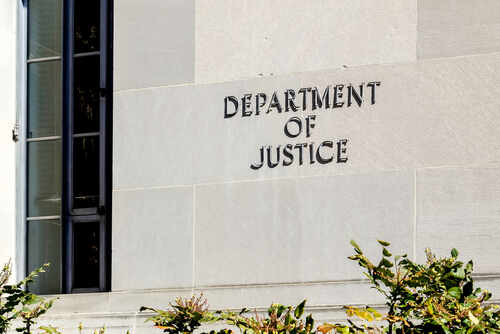
According to the U.S. Department of Justice, Iraqi citizen Mohammad Baqer Saad Dawood Al‑Saadi has been charged with six terrorism-related offenses after being brought to New York to face trial.[1][2] Prosecutors describe him as a commander in Kata’ib Hizballah, a U.S.-designated foreign terrorist organization closely aligned with Iran’s Islamic Revolutionary Guard Corps, and say he has close ties to Lebanon-based Hezbollah as well.[2] The charging documents accuse him of serving as an operational leader rather than a low-level foot soldier.[1][2]
The Justice Department press materials and the detailed criminal complaint allege that since late February 2026, as armed conflict escalated between the United States, Israel, and Iran, Al‑Saadi began directing attacks on Western and Jewish targets.[1][2] Prosecutors say he used an Iran-aligned network called Harakat Ashab al‑Yamin al‑Islamiya, described as a component of Kata’ib Hizballah, to plan, coordinate, and claim responsibility for a wave of violence.[2] These actions, if proven, would place him at the center of a coordinated campaign against American and allied interests.[1][2]
Planned Attacks on Synagogues and U.S., European, and Canadian Targets
Federal investigators allege that Al‑Saadi and associates carried out at least 18 terrorist attacks across Europe, alongside two more in Canada, targeting Jewish schools, synagogues, charities, and American, Israeli, and Iranian opposition interests.[1][2] The complaint ties him to a stabbing attack in London on April 29, 2026, that seriously injured two people, including a U.S. citizen.[2] Prosecutors also allege attempts to bomb a major financial institution in Paris, naming the Bank of America building as one specific target.[2]
Beyond Europe and Canada, the Justice Department says Al‑Saadi attempted to “export” the campaign to the United States by directing plans to attack synagogues and other Jewish institutions in New York and across the country.[1][2] According to the complaint, he publicly urged followers to kill Americans and Jews in retaliation for the Iran-related conflict and instructed others to conduct attacks on U.S. soil.[2] Media summaries of the case report that his plots extended to Jewish centers in several states and involved efforts to coordinate multiple strikes instead of a single isolated incident.[1]
Material-Support Charges, Due Process, and Public Distrust of Federal Power
The Justice Department case relies heavily on “material support” and conspiracy charges that are common in modern terrorism prosecutions, focusing on his alleged provision of personnel, training, weapons, explosives, and logistical help to designated terrorist organizations.[1][2] The complaint uses standard charging language—repeatedly describing the conduct as “alleged” and framed as a conspiracy—to emphasize that these are accusations, not yet proven facts.[2] As of now, there is no conviction; Al‑Saadi is entitled to contest the charges in court and force the government to prove its case beyond a reasonable doubt.[1][2]
Iran-Backed Iraqi Terrorist Plotted Ivanka Trump Assassination & US Synagogue Attacks
32-year-old Iraqi Kata’ib Hezbollah commander Mohammad Baqer Saad Dawood Al-Saadi was arrested in Turkey and brought to the US on terrorism charges. He allegedly directed nearly 20 attacks… https://t.co/kl6aX56WiX
— MAGA ME (@MyHandleNo) May 23, 2026
This pattern—high-profile press releases, sweeping allegations, and limited visibility into the underlying evidence—lands in a United States where many conservatives and liberals alike already distrust the federal government.[1][2] On one hand, Americans want aggressive action against genuine foreign terror threats, especially plots targeting religious communities and civilians. On the other hand, years of politicized investigations, surveillance controversies, and “forever wars” have left millions skeptical of how Washington uses national security powers and whether the same institutions would show similar urgency protecting everyday citizens at home.
Why This Case Resonates Across the Political Spectrum
For many conservatives, this case underscores longstanding concerns about border security, overseas entanglements, and the risk that hostile regimes like Iran can project violence into American neighborhoods through proxy groups.[1][2] The notion that a foreign commander allegedly tied to Iran’s Islamic Revolutionary Guard Corps could direct operations against U.S. synagogues reinforces support for strong counterterrorism tools and a tough stance against Tehran. It also raises questions about how such a figure moved personnel and resources across borders without earlier disruption.
For many liberals, the allegations highlight the danger of rising global extremism and antisemitic violence, while also reviving worries about how terrorism cases can fuel broad surveillance and erosion of civil liberties.[1][2] The same Justice Department that pursues foreign terrorists has been criticized for failing to hold powerful domestic actors accountable, feeding a sense that national security tools are selectively used. Across the spectrum, Americans see a federal system that reacts dramatically once a plot reaches headlines but struggles to provide basic safety, accountability, and a level playing field in everyday life.
Sources:
[1] Web – DOJ Charges Iranian-Iraqi Operative With Terrorism in Plot to Attack …
[2] Web – Iraqi National Arrested and Charged with Providing Material Support …