Taiwan just handed a 17-year prison sentence to its most prominent “third force” challenger—raising hard questions about whether anti-corruption justice is being applied evenly or weaponized in a polarized system.
Story Snapshot
- A Taipei court sentenced Taiwan People’s Party founder Ko Wen-je to 17 years for bribery, embezzlement, and breach of trust tied to a redevelopment case and 2024 campaign funds.
- The ruling includes a six-year loss of civil rights, effectively blocking Ko from running in 2028 under Taiwan’s election rules.
- Ko denies wrongdoing, calling the verdict a “political performance,” while TPP leaders argue the case is politically motivated.
- Prosecutors had sought 28.5 years; nine co-defendants received sentences up to 15.5 years and two were acquitted.
What the court decided—and what Ko was convicted of
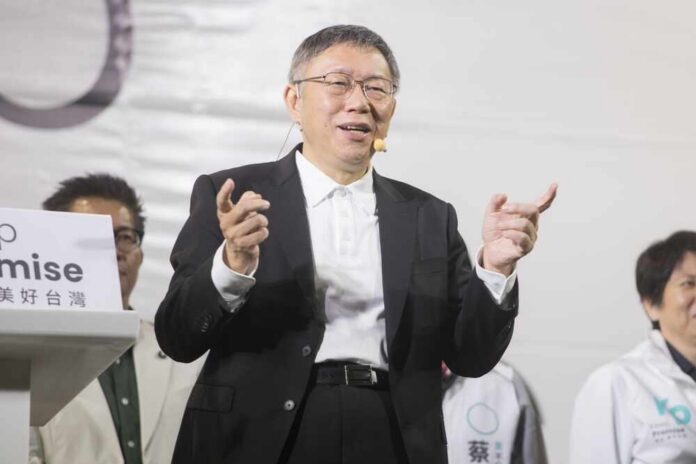
Taipei District Court judges sentenced former Taipei Mayor Ko Wen-je on March 26, 2026, to a combined 17 years in prison after finding him guilty on four counts related to corruption and political finance. Reports say the case centers on alleged bribes connected to a major Taipei real estate redevelopment during his mayoral tenure and misuse of political funds during his 2024 presidential run. The verdict also strips Ko of civil rights for six years.
Coverage of the ruling describes a split sentence structure that adds up to 17 years, including a major bribery component alongside embezzlement and breach-of-trust findings. Prosecutors alleged Ko accepted about NT$17.1 million (roughly $535,000) connected to redevelopment approvals and mishandled campaign-related funds at a scale described as “tens of millions.” Ko has maintained he did not personally profit and says he has a clear conscience, signaling he views the case as unjust.
Why this verdict hits Taiwan’s opposition politics so hard
Ko’s conviction lands like a wrecking ball on Taiwan’s “third force” experiment. Ko, a surgeon-turned-politician, founded the Taiwan People’s Party in 2019 and marketed it as an outsider alternative to the Democratic Progressive Party and Kuomintang duopoly. Ko’s 2024 presidential campaign drew roughly 25–26% of the vote, showing real demand for an anti-establishment option. With a sentence exceeding 10 years, Taiwan’s rules effectively bar his 2028 bid.
Legal consequences are only part of the story; the political timing matters because Ko has already been under heavy scrutiny since his September 2024 arrest and lengthy detention. He was reportedly detained for 368 days before being released in September 2025 on NT$70 million bail, subject to electronic monitoring. The court’s decision now puts Taiwan’s opposition landscape into motion again, forcing TPP leaders to decide whether they rally behind Ko, pivot to a successor, or risk fragmentation.
Competing claims: evidence-based prosecution or political targeting?
TPP leaders and Ko’s supporters have framed the verdict as political persecution, while prosecutors and the court point to documentary evidence and a broader set of defendants to argue the case is evidence-driven. One widely reported piece of evidence is a seized hard drive containing cryptic spreadsheet entries—such as “Little Sheen 1500”—that prosecutors presented as coded references to payments. Nine co-defendants received sentences ranging from one year to 15.5 years, and two were acquitted.
Those acquittals and the lighter-than-requested sentence could cut both ways in public perception. On one hand, a mixed outcome can signal judicial independence—judges did not simply rubber-stamp every charge. On the other hand, Ko’s status as the first leader of a major opposition party in Taiwan to be sentenced to prison makes the stakes unusually high. Prosecutors have indicated they will review the ruling for a possible appeal, and Ko’s team has not publicly finalized its next legal steps.
What U.S. conservatives should watch from afar
Americans watching global politics in 2026—especially with Washington consumed by war pressures and questions about alliance commitments—should treat the Ko case as a reminder that “anti-corruption” drives can strengthen rule of law or become a tool that sidelines challengers, depending on transparency and due process. Taiwan is a key strategic flashpoint, so political instability there matters. The best safeguard is sunlight: clear evidence, open proceedings, and consistent standards no matter which party benefits.
Former Taiwanese Presidential Candidate Sentenced To 17 Years In Corruption Case https://t.co/T3ZLnPmA9M
— zerohedge (@zerohedge) March 27, 2026
For now, the facts are straightforward: Ko was convicted and sentenced; he denies wrongdoing; his party alleges political motivation; and the ruling likely blocks a 2028 presidential run unless an appeal changes the outcome. Limited detail is available about the full evidentiary record and the rationale for the acquittals, so readers should watch for appellate filings and detailed judgments to evaluate claims of fairness versus political pressure.
Sources:
Taiwan court sentences former president election contender to 17 years in prison
Former Taipei mayor sentenced to 17 years in corruption case
Former Taipei mayor sentenced to 17 years in corruption case
Ko faces 2028 presidential race ban after receiving 17-year sentence
Former Taiwanese Presidential Candidate Sentenced to 17 Years in Corruption Case