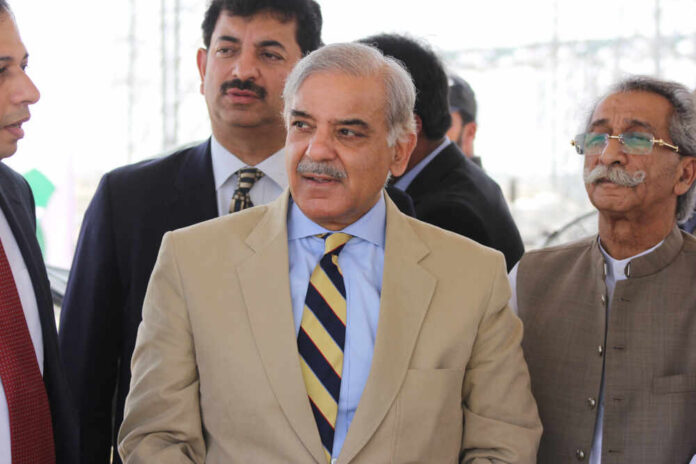
While Washington argues over talking points, Pakistan’s China trip shows how unelected power centers in Beijing, Islamabad, and Tehran are quietly reshaping the Iran war and the global energy order behind closed doors.
Story Snapshot
- Pakistan’s Prime Minister Shehbaz Sharif is heading to China for a tightly scripted visit that mixes economic deals with high-stakes Iran war diplomacy.
- China and Pakistan have already unveiled a formal five-point peace initiative on the Iran conflict, focused on ceasefire, talks, and reopening the Strait of Hormuz.
- Evidence shows the trip continues a pattern of deep Pakistan–China engagement; the Iran war looms large but does not erase trade and investment goals.
- Limited transparency about the visit’s real agenda reinforces growing fears that major decisions on war, oil, and security are made by distant elites, not accountable governments.
Pakistan’s China Visit: Official Agenda Versus War-Time Reality
Pakistani and regional media report that Prime Minister Shehbaz Sharif will visit China from May 23 to 26 for an official program including meetings with President Xi Jinping, Premier Li Qiang, and a business-to-business forum on investment and technology cooperation. Pakistani coverage frames the trip as part of a push for economic revival, digital links, and new agreements under the China–Pakistan Economic Corridor, with some outlets suggesting more than one hundred memoranda of understanding worth several billion dollars could be signed. That economic narrative sits alongside intense speculation about Iran war diplomacy.
Chinese diplomatic records and Pakistani government releases show this visit fits a long-running pattern of high-level engagement rather than a sudden, war-only mission. The Chinese Foreign Ministry’s account of a September 2025 meeting between Xi Jinping and Shehbaz Sharif emphasized the “all-weather” strategic partnership, deepening the China–Pakistan Economic Corridor, and expanding trade, energy, and connectivity projects. Pakistan’s own “curtain raiser” for that earlier China trip described a broad agenda of leadership meetings and business outreach, underscoring continuity in how both governments stage these summits.
China–Pakistan Peace Initiative on Iran and the Strait of Hormuz
Chinese and Pakistani foreign ministers met in Beijing on March 31, 2026, and issued a formal five-point initiative for “restoring peace and stability in the Gulf and Middle East region,” clearly targeting the Iran war and its spillover.[5] The document calls for an immediate cessation of hostilities, rapid start of peace talks, and protection of civilians and nonmilitary targets such as energy facilities, desalination plants, and nuclear power infrastructure.[5] It also stresses that humanitarian aid must reach all war-affected areas, framing the initiative as both a security and humanitarian proposal.[5]
The same five-point plan highlights the Strait of Hormuz, a choke point for global oil and liquefied natural gas flows, as a central concern.[5] China and Pakistan urge safe passage and early release of stranded ships and crews, rapid restoration of normal commercial traffic, and protection of civilian shipping lanes in adjacent waters.[5] Finally, they insist that any settlement must uphold the primacy of the United Nations Charter, national sovereignty, and territorial integrity, wrapping the initiative in multilateral language even as it strengthens Beijing’s and Islamabad’s diplomatic leverage.[5] This joint document gives concrete form to what might otherwise look like vague “peace talk” headlines.
Pakistan as Go-Between: Mediation Hype and Hard Limits
Statements from Pakistan’s Deputy Prime Minister and Foreign Minister Ishaq Dar indicate Islamabad has kept near-constant contact with China throughout the conflict between the United States, Iran, and Israel, coordinating views with Chinese Foreign Minister Wang Yi and other regional counterparts.[2][6] Reporting from international outlets says China and Pakistan vowed to “strengthen strategic communication and coordination” and to “jointly advocate for peace and justice” in efforts to end the Iran war and stabilize Gulf shipping.[2] Those same accounts portray Pakistan as an accepted channel for conveying messages between Washington and Tehran during the crisis.
At the same time, the evidence base for a formal, jointly recognized mediation mandate remains thin. The five-point initiative and press coverage show Beijing and Islamabad offering principles, calling for talks, and, in Pakistan’s case, acting as a messenger for ceasefire proposals.[2][5] This leaves open how much of the visit will be devoted to war diplomacy versus routine economic bargaining, even as media headlines lean heavily into the crisis narrative.[1][3]
Economic Stakes, Energy Security, and the Quiet Role of Elites
Pakistan’s government and allied business lobbies describe the upcoming China visit as a chance to secure investment, technology partnerships, and progress on special economic zones tied to the China–Pakistan Economic Corridor.[1][5] Coverage from corridor-focused outlets suggests expectations of dozens of agreements and potentially five billion dollars in new commitments, though underlying contracts and project lists have not been made public. For an economy struggling with inflation, debt, and joblessness, that promise of Chinese capital is politically critical, even if ordinary Pakistanis will see little detail about the terms.
Pakistan PM Shehbaz Sharif to Visit China Amid Reports Linking Trip to Iran War Diplomacy, Including Coordination Between Major Powers and Pakistan’s Mediation Efforts. pic.twitter.com/nJsBLFHIDD
— ME24 – Middle East 24 (@MiddleEast_24) May 21, 2026
Governments talk about prosperity and peace while real decisions on war, energy, and finance are made in back rooms by a small circle of leaders, diplomats, and corporate players. The lack of a full, public agenda for Shehbaz Sharif’s Beijing trip, combined with highly packaged messaging around the Iran war, feeds the perception that a cross-border “deep state” is managing outcomes with minimal democratic oversight.[1][2][5] Whether one worries about globalism, endless war, or captured institutions, this visit is another reminder that the biggest deals are often struck far from the citizens who live with the consequences.
Sources:
[1] Web – PM set for key China visit next month – The News Pakistan
[2] Web – China, Pakistan Coordinate On Iran Talks As War Disrupts Global …
[3] YouTube – Prime Minister Shehbaz Sharif to Visit China This Month
[5] YouTube – Prime Minister Shehbaz Sharif Likely to Visit China Next Month
[6] YouTube – Pakistani PM Shehbaz Sharif Lands in Iran to Strengthen …