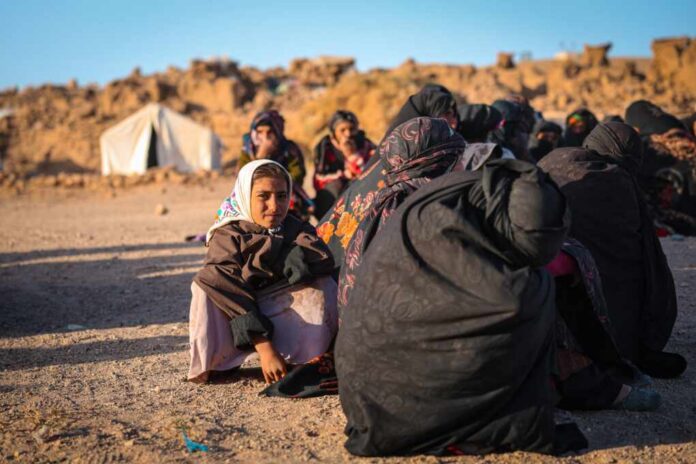
As global donors quietly slash funding, Sudanese mothers are now going into labor in makeshift camps in the Central African Republic with no drugs, no transport, and sometimes no clinic at all—another warning sign of a humanitarian system that is abandoning the people it claims to protect.
Story Snapshot
- Sudan’s war has pushed tens of thousands of refugees into a fragile corner of the Central African Republic where maternal care was already near collapse.
- New aid cuts are hitting exactly as needs spike, forcing clinics to scale back services, staff, and emergency referrals for pregnant women.
- Health experts say funding gaps, conflict, and a broken health system are combining to drive preventable maternal deaths higher.
- The crisis exposes a deeper problem: powerful governments and institutions can turn life-saving aid on and off with little accountability to the women who pay the price.
Sudanese refugees arrive in one of the world’s deadliest places to give birth
Sudan’s civil war, which erupted in April 2023, has devastated maternal health services across the country, destroying facilities, displacing health workers, and cutting women off from routine care.[2] As violence spread, more than 40,000 people from Sudan fled into the Central African Republic, many through the remote border town of Birao in the northeast.[4] They arrived in a country where women are already about 40 times more likely to die in pregnancy or childbirth than in the United States, signaling extreme baseline risk.[4]
Refugee families in Birao now depend on a thin network of humanitarian clinics that provide reproductive and maternal health services to both Sudanese newcomers and impoverished local communities. The Central African Republic has faced years of conflict, displacement, and state collapse, leaving its health system unable to meet basic needs even before the new arrivals.[3] International organizations describe a protracted humanitarian crisis marked by damaged infrastructure, insecurity, and severe shortages of trained health workers.[3] Into this setting, the arrival of thousands of pregnant refugees has sharply increased demand for already strained services.[4]
Funding cuts hit maternal care just as needs and risks climb
Global data show that maternal health in fragile settings is highly sensitive to sudden financing shocks, because local systems have almost no reserves to absorb cuts.[1] A recent study on the withdrawal of United States development assistance in several West and Central African countries, including the Central African Republic and Chad, estimated that abrupt aid cuts could drive maternal deaths up by about 45 percent among people in humanitarian need within a single year.[1] The analysis linked reduced foreign funding directly to lower health spending and fewer life-saving services such as emergency obstetric care.[1]
On the ground, these funding gaps translate into fewer midwives on duty, empty pharmacy shelves, and broken referral chains when complications arise during labor. Humanitarian assessments for Sudanese refugees in the Central African Republic list access to healthcare alongside food, shelter, and clean water as top concerns, reflecting how stretched services have become.[5] Clinics in and around Birao now serve both host communities and refugees, meaning every cut forces staff to make impossible choices about who receives care and who is turned away.[5] For women with high-risk pregnancies, those choices can be the difference between life and death.
Conflict, collapsed systems, and aid politics combine to endanger mothers
Medical teams working in Sudan and the wider region describe maternal and child health emergencies where preventable deaths mount because women cannot reach functioning facilities in time. In South Darfur, doctors report overcrowded camps, long travel distances, high transport costs, and insecurity that delays care and contributes to dozens of maternal deaths in just a few months. A PubMed-reviewed analysis of Sudan’s conflict concludes that the war has crippled maternal services nationwide, leaving many women to deliver without skilled attendants, sterile equipment, or emergency surgery when complications occur.[2]
United Nations reporting from Sudan paints a similar picture of health workers watching patients die because essential supplies such as antibiotics, sutures, and basic delivery equipment have run out amid system collapse. The United Nations Population Fund in Sudan says maternal mortality remains high but stresses that most deaths are preventable when women have access to antenatal care, skilled birth attendants, and timely emergency obstetric care. Experts describing service delivery in crisis zones highlight a web of factors—armed conflict, destroyed infrastructure, malnutrition, disease outbreaks, and mass displacement—that together overwhelm fragile health systems and make childbirth far more dangerous.
Aid cuts as a warning about who really pays for geopolitical decisions
For Americans watching from a distance, the suffering in Birao might feel remote, but the underlying pattern is uncomfortably familiar: powerful governments adjust foreign assistance budgets, and some of the poorest women on earth absorb the consequences. Studies on the recent suspension and termination of many United States global health and humanitarian programs describe patients scrambling to continue treatment and clinics struggling to keep essential services running after funding was pulled.[3][1] In countries like the Central African Republic, there is often no domestic safety net to replace that support.[1][3]
People across the political spectrum in the United States increasingly distrust both “globalist” institutions and entrenched elites in Washington, and this crisis shows why that skepticism persists. International agencies issue appeals, donors underfund them, and yet there is little transparency about who decided that only a fraction of needs would be met or what tradeoffs were made. Meanwhile, mothers in a dusty camp on the Central African Republic–Sudan border go into labor without a midwife or an ambulance. For readers who worry that distant bureaucracies make life-and-death choices with minimal accountability, the deepening maternal health emergency in Birao is another case study in how the most vulnerable families, not the decision-makers, pay the highest price.
Sources:
[1] YouTube – Aid cuts deepen maternal health crisis for Sudan refugees in Central …
[2] Web – Central African Republic: Maternal health care challenge – ICRC
[3] Web – The Crisis of Maternal Health in Conflict-Torn Sudan – PubMed
[4] Web – [PDF] Public Health Situation Analysis (PHSA)
[5] Web – Central African Republic | Sudan Regional Crisis