Pope Leo XIV’s private meeting with Vatican exorcists reveals a disturbing surge in demonic possession cases worldwide, as the Church scrambles to train priests for spiritual warfare against occult practices now amplified by artificial intelligence and New Age movements.
Story Snapshot
- Pope Leo XIV hosted International Association of Exorcists leaders on March 13, 2026, addressing urgent need for trained exorcist priests amid rising demonic activity reports
- IAE membership exploded to over 1,000 exorcists across 58 countries following Vatican recognition in 2025, with Italy alone deploying 340 exorcists
- Experts cite declining Christian belief in evil, fascination with Satanism, and AI-powered divination tools as driving factors behind possession cases
- Church leaders warn priests risk harming vulnerable believers by dismissing legitimate spiritual distress as mere psychological issues
Vatican Sounds Alarm on Demonic Possession Crisis
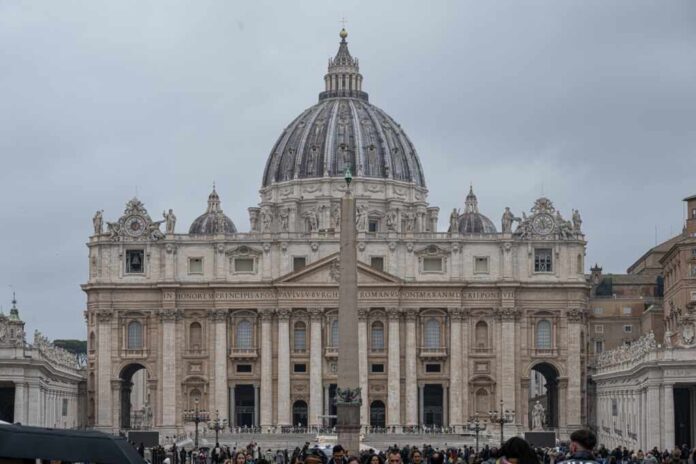
Pope Leo XIV convened a 30-minute private audience with International Association of Exorcists leadership at the Vatican focusing on the Church’s capacity to respond to what officials describe as an unprecedented surge in exorcism requests. Bishop Karel Orlita of Brno, Czech Republic, and Father Francesco Bamonte, serving as IAE president and vice president respectively, discussed training deficiencies and the challenges priests face distinguishing genuine demonic possession from mental health conditions. The meeting signals Vatican prioritization of spiritual warfare ministry as the IAE reaches over 1,000 members globally following formal recognition by the Dicastery for the Clergy in 2025.
Occult Renaissance Fuels Exorcism Demand
The surge in exorcism cases correlates with what Church experts identify as a dangerous cultural shift toward occultism, New Age practices, and satanic fascination. Dr. Valter Cascioli, a psychiatrist working with the IAE, documented an “extraordinary increase in demonic activity” linked directly to rising public interest in the occult. A September 2025 conference in Rome drew 300 exorcists from around the world, where experts highlighted emerging threats including AI-enabled divination, digital necromancy, voodoo practices, and spiritism infiltrating communities previously anchored in Christian tradition. Italy maintains 340 active exorcists, with rapid expansion occurring in Brazil, Mexico, the United States, and South Korea as demand outpaces available trained clergy.
AI Technology Opens New Front in Spiritual Warfare
Criminologist Beatrice Ugolini warned conference attendees that artificial intelligence platforms now facilitate what she termed “digital occult” practices, allowing users to simulate communication with the dead and access divination tools previously requiring specialized knowledge or ritual participation. This technological democratization of occult practices concerns Vatican officials who see vulnerable individuals, particularly young people disillusioned with traditional faith, experimenting with dangerous spiritual forces through seemingly harmless apps and websites. The IAE’s focus on AI-related threats represents adaptation to modern challenges unprecedented in the Church’s centuries-old exorcism ministry, raising questions about how traditional rites address digitally-mediated demonic influence.
Church Faces Training Crisis as Belief in Evil Declines
Father Francesco Bamonte emphasized that priests who dismiss possession cases as purely parapsychological phenomena actively harm suffering individuals seeking spiritual deliverance. This tension reflects broader decline in Christian belief regarding the reality of demonic forces, creating a shortage of young priests willing to pursue exorcism training despite escalating demand. The 2018 annual exorcism course at Pontifical Athenaeum Regina Apostolorum highlighted this crisis, with instructors noting few young clergy entering the ministry. Pope Leo XIV’s 2025 message to the IAE conference characterized exorcism as “liberation and consolation” through Christ’s invocation, framing the practice as essential pastoral care rather than medieval superstition. Bishop Orlita views the IAE’s rapid expansion as demonstrating the Church’s love for those experiencing spiritual torment, though critics worry about conflating mental illness with supernatural possession.
The Vatican’s formal recognition of the IAE in 2025 marked institutional acknowledgment of exorcism as what officials term a “living dimension” of Church ministry, not an archaic relic. Founded in 1990 by Father Gabriele Amorth, who claimed over 70,000 exorcisms before his 2016 death, the organization has grown from 250 members across 30 countries to its current global reach. Father Amorth controversially alleged satanic infiltration within Vatican walls itself, claims that generated skepticism but also heightened awareness of spiritual warfare concerns among traditionalist Catholics. The Church now emphasizes collaboration between exorcists and medical professionals to ensure proper discernment, balancing spiritual intervention with psychological care while maintaining that genuine demonic possession remains a theological and pastoral reality requiring trained specialists.
Sources:
Exorcism course highlights decline in belief and need for young exorcists – Catholic Online
300 Exorcists From Around the World Gather in Rome – Zenit
Pope says official exorcists show church’s love for suffering – National Catholic Reporter
Exorcism group gets Vatican’s blessing – ABC News
Pope Leo XIV hosts International Association of Exorcists – Magisterium