Europe is scrambling to protect the world’s most critical oil chokepoint after Iran-linked threats sent prices soaring—another reminder that energy security is national security.
Story Snapshot
- EU foreign ministers are weighing whether to extend the Aspides naval mission to the Strait of Hormuz after threats and attacks tied to the Iran war.
- The Strait of Hormuz carries roughly 20% of global oil flows, making any disruption an instant inflation trigger for Western households.
- France says it is prepared to lead a “purely defensive” escort effort, while Germany signals skepticism and rules out a German role.
- Reports suggest an EU–U.N. framework may be seen as more workable than direct talks with Tehran, though key details remain unverified.
EU Debates Taking Aspides Into Hormuz as Tensions Hit Shipping
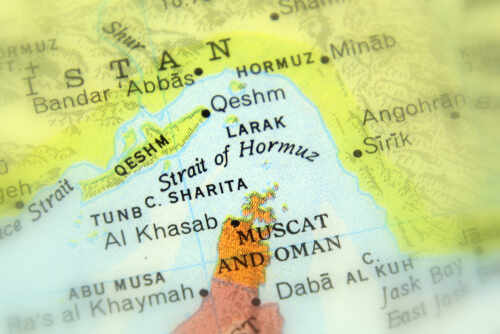
EU foreign ministers meeting in Brussels are discussing whether to expand the Aspides naval mission toward the Strait of Hormuz, the narrow passage that links the Persian Gulf to global energy markets. The talks follow escalating maritime risks connected to the Iran conflict, including threats to block the waterway and attacks on vessels. The mission’s current mandate already includes monitoring areas that touch Hormuz, but an operational shift would raise the stakes for Europe’s security posture.
European officials have framed the effort around keeping commercial shipping moving, not pursuing a broader war. Even so, the immediate driver is economic: oil prices spiked as high as about $120 per barrel before easing after U.S. signals that the conflict’s endgame could arrive within weeks. For voters already exhausted by years of inflation, the central question is simple—how quickly can leaders prevent a Middle East shock from landing on family budgets?
France Offers Leadership, Germany Signals Limits, and Unity Gets Tested
France has positioned itself as the lead European actor. President Emmanuel Macron has publicly described a France-led EU effort to escort tankers after the war’s “hot phase,” emphasizing a defensive purpose tied to protecting trade and energy flows. French naval capability and history in the region give Paris credibility, but the political math inside the EU remains complicated. Any mission that looks like escalation risks splitting the bloc, especially if objectives are unclear or open-ended.
Germany’s position highlights that tension. German Foreign Minister Johann Wadephul has confirmed the discussion but stated Berlin does not see a need for a German role, while also pressing for clarity on U.S. goals. That posture underscores a practical reality for American readers: when Washington asks allies to share burdens, allies often want tighter definitions of risk, authority, and duration. For the Trump administration, burden-sharing works best when partners commit real capability—not just statements.
Why Hormuz Matters: A Chokepoint That Can Reignite Inflation Fast
The Strait of Hormuz is not just another regional dispute zone; it is a global economic pressure point. Roughly one-fifth of the world’s oil transits the strait, and even partial disruption can ripple quickly into fuel prices, shipping insurance, and consumer costs. European leaders are weighing naval escorts precisely because the alternative—allowing threats and attacks to dictate traffic—invites price spikes that punish working families and undermine political stability across the West.
Past operations show why escorts and mine-countermeasure work are taken seriously. During the 1980s tanker war era, France ran Operation Prometheus to escort ships and clear mines over more than a year, a precedent now cited as a model. The EU’s more recent maritime experience includes Operation Atalanta against piracy and Operation IRINI enforcing Libya-related measures. Aspides launched in 2024 to address Houthi-linked attacks in the Red Sea, and its mandate has since been extended with dedicated funding.
What’s Known, What’s Not: Mission Scope and the Risk of Drift
EU officials have discussed boosting naval assets and coordinating with Gulf partners, while some indicates a joint EU–U.N. approach could be viewed as more feasible than bilateral engagement with Iran. However, at least one major report said key elements could not be independently verified, underlining how fluid the situation remains. The mission’s stated intent may be defensive, but any sustained presence near Hormuz carries escalation risk if European vessels become targets.
For conservatives who watched years of globalist “strategic ambiguity” lead to expensive commitments with murky endpoints, the lesson is to demand clarity: what triggers deployment, what rules govern engagement, and how success is measured. Protecting commerce is legitimate, but mission creep is real when politicians outsource hard choices to multinational structures. The EU’s internal divisions—France pushing forward, Germany holding back—also suggest Europe’s capacity to act decisively may depend on events forcing consensus.
JUST IN – EU to discuss extending naval mission to Strait of Hormuz https://t.co/0y5Qfw97Wh
— Insider Paper (@TheInsiderPaper) March 16, 2026
Meanwhile, the Trump administration has publicly urged allies to deploy ships, signaling that Washington expects partners to carry more of the operational load. That approach aligns with a common-sense view of alliance politics: the United States should not be the world’s default insurer when others have strong incentives and capabilities to contribute. Whether Europe delivers meaningful naval presence—or defaults to committee-driven half-measures—will help determine how quickly markets calm and how durable any security arrangement becomes.
Sources:
EU Considers Escalating Naval Mission in Strait of Hormuz
France to lead EU naval mission to protect Strait of Hormuz tankers after “hot phase” of Iran war
EU weighs extending naval mission Aspides to Strait of Hormuz amid Iran crisis
France wants to unblock the Strait of Hormuz
EU turns to Hormuz as Gulf escalation hits trade routes
EU discuss bolstering naval mission in Middle East