Two Colombian campaign staffers for a right-leaning presidential candidate were executed on a rural road, and authorities still have not named who did it—raising urgent questions about election security and political violence.
Story Snapshot
- Two aides to right-wing candidate Abelardo De La Espriella were gunned down in Meta province while traveling with campaign materials [1][3].
- The victims included a former mayor who coordinated the local campaign, underscoring that the targets were bona fide political staffers [1].
- Authorities have not assigned responsibility; the candidate blamed dissident rebels without providing evidence [1][5].
- The killings heighten fears of election intimidation as Colombia nears voting [1][5].
Confirmed Details of the Cubarral Ambush
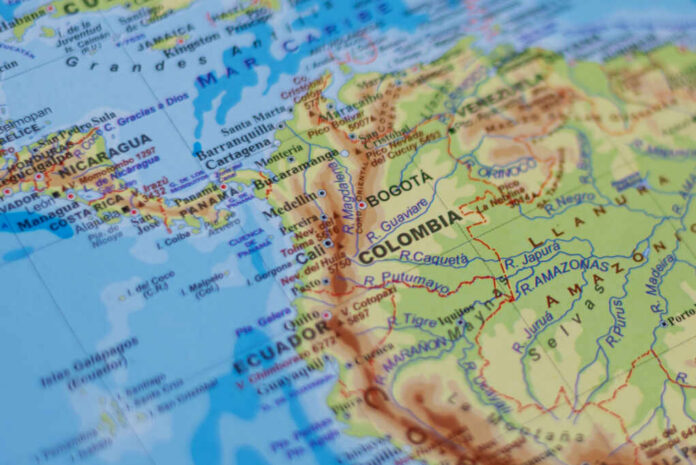
Reuters reported two campaign workers for right-wing presidential candidate Abelardo De La Espriella were shot dead Friday night in a rural area of Cubarral, Meta province, after four hooded men on motorcycles intercepted them and opened fire [1][3]. The campaign identified the victims as Rogers Mauricio Devia and Fabian Cardona, who were returning by motorcycle from Villavicencio with campaign materials when they were attacked [1]. The operational details—hooded assailants, motorcycles, rural corridor—fit a pattern seen in prior Colombian election-season violence [1][3].
The campaign said Devia, a former mayor of Cubarral, coordinated De La Espriella’s local effort, while Cardona assisted with logistics, confirming their active roles [1][3]. De La Espriella called the killings a “cowardly” cold-blooded murder in a video statement, signaling the campaign’s immediate framing of the incident as targeted political violence [1]. The presence of campaign materials and the victims’ leadership and logistics responsibilities support that they were engaged in campaign duties at the time [1][3].
Attribution Remains Unproven Despite Rapid Allegations
Authorities have not blamed any armed group for the ambush, and investigators have not released a motive, according to reporting that cites Colombian officials and the Interior Ministry’s public statements [1][5]. De La Espriella attributed responsibility to dissident elements of the former Revolutionary Armed Forces of Colombia without providing evidence, and no group has claimed the attack publicly [1]. The absence of a police report naming perpetrators, ballistics analysis, or arrests keeps attribution unsettled at this stage [1][5].
Colombia’s Public Defender’s Office in Meta warned the killings threaten political rights and participation but stopped short of assigning responsibility, underscoring the vacuum official silence creates during a heated campaign [5]. That vacuum allows narratives to harden before facts do, particularly when a candidate faces broader threat claims, including a recently alleged sniper plot he said involved members of government intelligence, which has not been verified in the public record [1].
Election Security Risks and What Evidence Is Still Missing
Election-season violence in Colombia often overlaps with territories contested by armed groups and criminal networks, blurring motives between politics, extortion, and territorial control [1][3]. The Cubarral killings fit that risk profile: rural transit, motorcycle interception, and targeted fire against identifiable campaign personnel. However, conclusive attribution requires evidence not yet public—witness depositions, forensic ballistics linking weapons to known cells, intercepted communications, or an official prosecutorial filing naming suspects [1][5]. Until those materials surface, claims of dissident responsibility remain allegations, not findings [1].
For readers focused on constitutional governance and the rule of law, the path forward is evidence-driven: transparent release of the homicide investigative file, timeline reconstruction of the victims’ route, and structured comparisons with recent attacks in Meta. Those steps would clarify whether this was a political assassination tied to insurgent dissidents or another form of organized violence exploiting the election climate. Accountability demands facts that withstand scrutiny, not narratives that race ahead of verified proof [1][5].
Sources:
[1] Web – Two members of Colombian right-wing presidential candidate’s …
[3] Web – Two members of Colombian right-wing presidential candidate’s …
[5] Web – Former mayor and aide killed in shooting in Colombia weeks before …