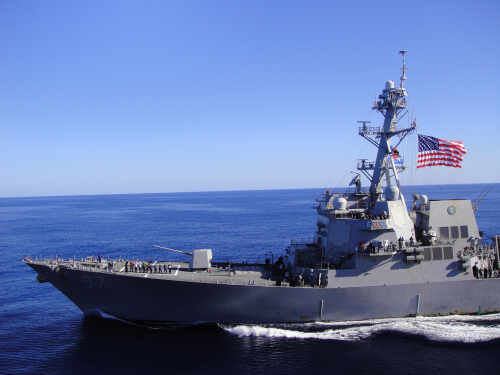
America’s Navy is paying the price for decades of shipbuilding neglect, and the latest delays show how costly that failure has become.
Quick Take
- The Navy’s major ship programs are running behind schedule, with multiple reports describing delays across surface ships and submarines [2].
- The United States still builds ships, but far too slowly to keep pace with strategic needs or replace aging hulls on time [2][3].
- Long-term industrial decline, not one bad contract, appears to be driving the shipbuilding crunch [3][4].
- Official testimony says rebuilding the defense industrial base is underway, but recent performance still raises serious questions .
Delayed Hulls, Shrinking Margin
The most alarming fact is simple: the Navy cannot reliably deliver major warships on schedule, and that weakness ripples into fleet size, readiness, and deterrence. The Government Accountability Office-linked reporting cited in the research says most ships under construction are behind schedule, while the Constellation-class frigate and Columbia-class submarine programs have both slipped badly [2]. For readers who expect competent government after years of overspending and failed priorities, that is a hard warning sign.
The problem is bigger than one program manager or one troubled yard. The research points to a long pattern of late deliveries, changing requirements, and industrial bottlenecks that have left the United States with too little capacity to build complex warships at the pace a serious navy requires [2][4]. The Congressional Budget Office says slower construction has already left the fleet smaller than it otherwise would be, which means delay is not just an accounting issue; it is a strategic one [3].
How Shipbuilding Fell Behind
American shipbuilding did not collapse overnight. The historical record in the research shows a steep decline in domestic output after the postwar era, with Navy construction falling from roughly nineteen new ships a year in earlier decades to fewer than ten a year in the 1990s [3]. Commercial shipbuilding also withered under high costs, restrictive laws, and shrinking demand, leaving many yards dependent on naval contracts or niche work [1]. Once that industrial base thinned, rebuilding it became far harder and far more expensive.
That history matters because shipbuilding is not a sector that can be revived quickly with slogans or press releases. The research says construction costs and build times in the United States remain well above foreign competitors, while workforce shortages, turnover, and aging labor pools continue to constrain output [2][4]. Conservative readers who have watched manufacturing hollowed out by globalist trade dogma and bureaucratic mismanagement will recognize the pattern: when government distorts markets and ignores capacity, the bill eventually lands on national security.
What the Navy Can Still Prove
There is still evidence that the system has not broken completely. The research notes that the USS John F. Kennedy completed initial sea trials in 2026, which shows the United States can still build highly complex capital ships . Secretary of Defense Pete Hegseth also told Congress that the administration is trying to revitalize the defense industrial base, pointing to new facilities, investment, and hiring as signs of momentum . Those are real developments, but they do not erase the backlogged programs and slow delivery rates already in the pipeline.
What this leaves is a familiar Washington contradiction: officials promise reform while the industrial record still tells a cautionary story. The public can support rebuilding American shipyards and strengthening defense production, but only if leaders stop pretending delay is normal and start treating throughput, cost, and schedule as hard measures of success [2]. If the country wants a Navy that can deter China and defend American interests, it must first rebuild the industrial muscle that makes a Navy possible.
Sources:
[1] YouTube – The US Navy’s Shipbuilding Crisis is Worse Than We Thought
[2] Web – America’s Shipbuilding Crisis: What the New Forbes Report Means …
[3] Web – [PDF] The impact of declining Navy budgets on United States shipyards
[4] Web – Outlining the Challenges to U.S. Naval Shipbuilding – CSIS