President Trump’s blunt declaration that Israel was “PROHIBITED” from striking Lebanon didn’t just shock Netanyahu—it exposed how fast U.S. foreign policy can pivot when it’s delivered by social-media megaphone instead of diplomatic cable.
Quick Take
- Trump publicly said Israel would stop bombing Lebanon and was “PROHIBITED” from doing so by the United States.
- Israeli Prime Minister Benjamin Netanyahu and senior advisers were reported “personally stunned” and sought urgent clarification from the White House.
- The written ceasefire terms released by the State Department reportedly preserved Israel’s right to self-defense against imminent or ongoing attacks.
- U.S. officials later emphasized the deal limits “offensive” operations while still allowing defensive action—suggesting Trump’s rhetoric overshot the text.
Trump’s Public “Prohibited” Message Jolts a Key Ally
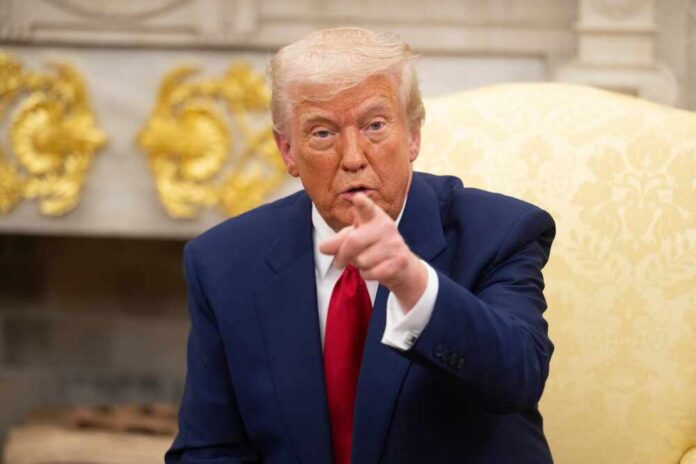
President Donald Trump announced a 10-day ceasefire between Israel and Lebanon, with the State Department releasing a written text laying out terms. The next day, Trump escalated publicly, posting that Israel “will not be bombing Lebanon any longer” and was “PROHIBITED” from doing so by the USA, adding “Enough is enough!!!” Reports said Netanyahu and his advisers learned of the shift through media coverage, not private channels.
Axios reported that Israeli officials immediately scrambled to understand whether Trump’s public warning changed the actual U.S. position—or simply amplified it. That distinction matters because U.S.-Israel coordination has historically relied on quiet, formal communication when lives and escalation risks are on the line. When major guidance arrives publicly, it can create uncertainty for military planners and invite adversaries to test boundaries, especially during a fragile ceasefire window.
What the Ceasefire Text Allowed vs. What Trump Said
The ceasefire language released by the State Department reportedly drew a line between “offensive” operations and self-defense. Under the published terms, Israel committed not to carry out offensive operations against Lebanese targets—civilian, military, and state sites—while retaining the ability to act against “planned, imminent, or ongoing attacks.” After Axios asked the administration about the contradiction, a U.S. official reiterated that self-defense rights remained intact.
That clarification narrows the practical meaning of “prohibited” and suggests Trump’s phrasing may have been broader than the formal deal. Still, for observers across the political spectrum, the episode highlights a recurring problem in modern governance: the gap between official policy documents and public messaging. When allies and citizens have to guess which statement governs—an agreement text, a spokesperson, or a presidential post—confidence in institutions erodes.
Netanyahu’s Reaction Signals a Coordination Breakdown
Israeli ambassador Yechiel Leiter was reported to be assessing whether the U.S. position had fundamentally shifted, underscoring how seriously Jerusalem took Trump’s words. Sources described the moment as something that would have been “unthinkable under other U.S. administrations,” not because Washington never pressures allies, but because sensitive operational limits are usually conveyed through secure, direct channels. Public pressure can be effective, but it can also be destabilizing.
Why the Episode Resonates With Americans Who Distrust Government
For many Americans—conservatives angry about elite mismanagement and liberals suspicious of insider power—the larger takeaway is familiar: critical decisions often look improvised, inconsistent, or insulated from accountability. Trump’s approach can look like decisive leadership to supporters who want fewer endless wars and clearer red lines. To critics, it can look like policy made in real time. Either way, the public nature of the directive put alliance mechanics on display.
Netanyahu Left 'Personally Stunned' By Trump Rhetoric Prohibiting Lebanon Strikes https://t.co/V25hbqSFza
— zerohedge (@zerohedge) April 19, 2026
The immediate policy question is whether the ceasefire holds and whether both parties interpret “offensive” versus “defensive” action the same way in practice. The political question is deeper: can Washington sustain credibility when major guidance to allies appears first as a viral statement rather than a coordinated diplomatic message? Until the administration consistently aligns its public rhetoric with written terms, both allies and adversaries may keep probing for what the United States truly means.
Sources:
Lebanon strikes: Israel, Trump, prohibited
Netanyahu Left ‘Personally Stunned’ By Trump Rhetoric Prohibiting Lebanon Strikes
Donald Trump Lebanon strike ban shocks Benjamin Netanyahu, contradicts ceasefire
Netanyahu long road to peace begins as Trump says Israel prohibited from bombing Lebanon